 The quality of "unity" is extremely important to our Father, and should also be important to those who are part of the Father's Kingdom. There are many examples in scripture that teach the preciousness of unity- the unity of the Father, Son, and Holy Spirit, the unity of believers with Christ, and the unity of the people of God with each other. Naturally, because unity is such a powerful and valuable concept, it is always under heavy spiritual attack. Many things try to rise up to separate us from each other. When we look at each other, it is easy to see the issues, and doctrines that make us determined to be opposed to each other, rather than the like precious faith that joins us so powerfully.
Recently, a group of Jewish worshippers received the first Torah to our county. The Torah is the handwritten scroll that contains parts of what we call the Old Testament. The rabbi who received the Torah on this occasion said that it represented unity to him. He said it WAS unity.
In the Passover meal, called a seder, there is a part of the meal when a piece of matzoh bread is broken into three pieces and placed in a cloth bag called a Matzoh Tosh, or afikomen. This bag is also called the "Unity". Though the pieces exist apart physically, they are united together within the Matsoh Tosh. To Christians, the unity of the Trinity is exemplified here.
In scripture there are sobering passages about the disunity among the people of God. An interesting passage is found in 2 Chron. 30. The nation of Israel is no longer a united nation, but is divided into two separate kingdoms. These two kingdoms are resentful of one another, and do not have much to do with each other. The Southern Kingdom is called Judah. The king of Judah, Hezekiah, is determined to restore the Passover Feast to his land according to the commandments found in scripture. He sends messengers into the Northern Kingdom, inviting all who wish to attend this Passover Feast to come to Jerusalem.
His messengers are received with mockery and scorn. They resented and rejected the idea that this Passover would be held in Jerusalem, part of the southern kingdom, and refused to travel there. Some, though had second thoughts as described in verse 11:
"Nevertheless some from Asher, Manasseh, and Zebulun humbled themselves and came to Jerusalem."
It requires humility to achieve unity. Humility is not an easy thing for most people.
In any case, as these northerners came to Jerusalem and joined in the Feast, it was found that the people had not properly prepared, or cleansed themselves, as was required to observe this Feast. Concerned about this,King Hezekiah prayed to the LORD that the LORD would provide atonement for everyone who "prepares his heart to seek God, the LORD God of his fathers, though he is not cleansed according to the purification of the sanctuary."
Verse 20 tells us that the LORD listened to the prayer of Hezekiah, and healed the people.
What a beautiful Passover that must have been-a Passover of unity. How many missed that blessing because of dividing viewpoints they held over the issue of worshipping in Jerusalem?
A similar issue arises in the New Testament. In Lk. 9, Jesus is on His way to Jerusalem, because the time had come for Him to offer Himself up in crucifixion. It says "He steadfastly set His face to go to Jerusalem." Jesus was to travel through the area of Samaria on His way. He sent messengers ahead to a Samaritan village to prepare for Him. Now, the Samaritans had the same despising for Jerusalem as the people of the Northern Kingdom had in the scriptures we discussed from 2 Chron. 30. So they refused to receive Jesus into their village, because He was on His way to Jerusalem. What a sad thing to miss Jesus because of a doctrine, tradition, prejudice or stubborn spiritual pride. Whether they were right to despise Jerusalem or not wasn't even the point. They missed Jesus because of it. Their divisiveness was more important to them than their Messiah, the Son of God.
There are many things that divide us. We don't have to look hard to find them. But the blessing, the power, the honor and the glory is in what unites us. The unity of brethren who have come together in their devotion to God, creates a priestly anointing like the precious anointing of Aaron that covered him completely. That place of unity is where the LORD commanded the blessing- Life forevermore (Psalm 133).
Our Father is Unity.
"We Are One in the Spirit"
https://www.youtube.com/watch?v=o7_wHi0PNHg
 It's Christmas time as I am writing this entry. Most people know the Christmas story, but to me, it represents some of the most incredible movings of our Father to fulfill His will and Word on the earth. Without going into all the amazing details of the Christmas story, there are just a few thoughts on which I would like to focus.
The prophetic promise of a coming Messiah, the Savior, is spread throughout the Old Testament. For example, Isaiah prophecies that a Son, a Child, would be born, but this child would not be ordinary, but would be God, Himself. "His name shall be called Wonderful Counselor, Mighty God, Everlasting Father, Prince of Peace..." (Isa. 9:6). Isaiah also tells us prophetically that a virgin shall bring for a child named Immanuel, which means "God with us" (Isa. 7:14). These prophesies regarding the birth of the Savior were recorded 750 years before Jesus was born. There are many powerful prophecies like the ones in Isaiah concerning His birth. It is the greatest event in the plan, will and purpose of our heavenly Father.
As Jesus is about to be conceived and born, both Mary and Joseph have received angelic visitation, making clear that the moment has come when God is about to fulfill His prophetic promise of a Savior. There can be no doubt that both knew that the One to be born was conceived supernaturally, was holy, and mighty. In Mt.1:20-21, an angel tells Joseph in a dream that "that which is conceived in her (Mary) is of the Holy Spirit." and "...you shall call His name Jesus (meaning in Greek, salvation of God), for He will save His people from their sins." In Lk. 1:31-33, Mary is told by the angel, Gabriel, that "...you...shall call His name Jesus...He will be great...Son of the Highest...". There can be no doubt of Who is about to be born!
Another prophetic promise regarding the birth of the Messiah that I would like to focus upon, is found in Micah 5:2. Here the prophetic promise states that Bethlehem will be the place out of which this everlasting Ruler will come. In Hebrew, the word Bethlehem means "house of bread". Jesus told His disciples that He is the Bread that comes down from heaven, the Bread of Life. Interestingly, the root word of "bread" in Hebrew has to do with warfare, a fierce warrior, prevailing in warfare. This place and this birth was indeed the moment in time when the enemy of mankind and God was overcome and defeated, and the Word and will of God prevailed in victory.
The Gospel of Luke, Chapter 2, tells us that Mary and Joseph are now married, and living in northern Israel, in the town of Nazareth, in the area of Galilee. Mary is very heavy with child, and it certainly is not in their plans to make a long, arduous trip anywhere. But, according to the Word of God, this special child will be born in Bethlehem, not in Nazareth. How is that to happen? THIS will be one of the miraculous workings of God.
Thousands of miles away in the city of Rome, the Emperor of the known world, Caesar Augustus, would make a decree. Israel is part of the Roman Empire, as is all of the Middle East region, and is subject to all decrees of the Emperor. This Emperor decides that "all the world should be registered." This means that all people under the rule of the Roman Empire must go back to the cities/countries of their origins to be listed, and accounted for. In order to fulfill the imperial decree, thousands will be uprooted from where they are, and will be traveling to their home cities. The whole world will be shuffled to various locations to be registered. There is only one family in the whole earth that God desires to move, however - a family, who, under their circumstances, would never have moved but by this royal decree. Joseph had to get his very pregnant wife down to Bethlehem in Judea in southern Israel, because Joseph is a descendant of King David, who's birth city a thousand years earlier was little Bethlehem. Joseph and his family must return there, although he now lives a long distance away in Nazareth.
It is not a coincidence that the Emperor issued this decree. It is a sovereign work of God. God's Word assures us that He can impart His will on any king in the earth, at any time: "The king's heart is in the hand of the LORD, like the rivers of water, He turns it wherever He wishes." Proverbs 21:1. Psalm 2 leaves us in not doubt that regardless of what the nations and rulers plan to do, and want to do, the LORD will have them do as He wishes. There are many instances in scripture where God imposes His will upon a king.
Caesar Augustus, the first and most powerful of all the Caesars that would follow him, did not know God, did not serve God, and was firmly convinced of his own absolute power. But God moved on the will of this king, and had him to issue this very odd decree that shuffled the whole world around.Why? Because God needed to move a seemingly insignificant family in a small country from Nazareth to Bethlehem in time for the most important event in human history - the birth of His precious Son, Jesus, in order to fulfill His promise to us to send us a Savior and King.
Our Father is "Bethlehem", the House of Bread.
"Unto Us a Child is Born"
https://www.youtube.com/watch?v=TN5BaOGTmGs
"Come O Come Emmanuel"
https://www.youtube.com/watch?v=7xtpJ4Q_Q-4
 Our Father gives us a beautiful prophecy in Ezekiel 37:27, speaking about His people Israel:
"My tabernacle also shall be with them; indeed I shall be their God, and they shall be My people."
Ezekiel goes on to prophesy that God's Tabernacle in the midst of His people will be a testimony to all of the nations.
The LORD may be talking about a physical building, but I think He means so much more. The language used is so much more powerful than any physical building. The language is about a deeply spiritual relationship. The word "tabernacle" in Hebrew means a dwelling place. The root meaning of the word is "to lie down, to take rest, to lie down intimately". It is the place where the Pillar of Fire, and the Pillar of Smoke came down to touch the earth. It is a place of coverings and curtains. It is like the Father is taking His people into the inner most chamber, and closing the curtains around it, so He and His people may rest together in intimacy.
The term "people" in the above verse from Ezekiel means kinsmen, but its root meaning is "to dim, to darken, to eclipse". It means to shut, to close, to hide, to conceal, to be hidden. Again, the very word carries a meaning of closeness and intimacy. If we look at the word "tabernacle" in the Greek language, we can get an even more detailed picture:
In Rev. 21:3, our Father gives us the fulfillment of the prophecy from Ezekiel above:
"And I heard a loud voice from heaven saying, "Behold, the tabernacle of God is with men, and He will dwell with them, and they shall be His people. God Himself will be with them and be their God."
Verse 4 goes on to say, "And God will wipe away every tear from their eyes; there shall be no more death, nor sorrow, nor crying. There shall be no more pain, for the former things have passed away."
The main meaning of "Tabernacle" in the Greek deals with a covering, made of green boughs, skins, or other material. One root meaning talks about a household of vessels and utensils, domestic gear, chosen instruments, etc. The other root meaning of tabernacle is very interesting, and echoes the Hebrew root of darkness: it means shadow, shade, densest darkness, a shadow image cast by an object, and representing that object, which is an express likeness, the very image of that object. The Father talks to us about that special, secret place in His presence created by the "shadow of His wings". Mary, in Luke 1:35, is told by the Angel that "the power of the Highest shall overshadow thee", meaning to throw a shadow upon, to envelope in a shadow. People even lay the sick out on the streets in Acts 5:15, that the "shadow of Peter passing by might overshadow some of them." So the darkness associated with the concept of the tabernacle is really a very special place with God.
So the picture created by the above meanings, and roots is of a very intimate relationship, an intimate place. Our Father covers His people and casts His shadow upon His people. That shadow is the exact copy of His likeness. In this place of intimacy and rest, pain, sorrow and death cannot exist. The Father touches His people and personally wipes the tears from each eye. Though the verse from Revelation may be interpreted to mean a time in the future, the spiritual truth is in the "now", in each life given into the Father's hands.
As this is written, it is the middle of the Feast of Tabernacles. This is a joyous feast, or appointment with God. It celebrates the great harvest, or in-gathering. It lasts for seven days, but on the eighth day of the feast, Shemini Atzeret, the focus changes. The feast of many in celebration becomes a moment in time when the Bridegroom goes into the wedding chamber with His bride, and the door is closed. It becomes a time and place of darkness, shadows, and intimacy. A place for Jesus and His Bride, a place for the Father and His people, for the Father and the Son are One. In that place, we are to join that Oneness and intimacy.
Come into the chamber, and close the curtains, for the Father desires to tabernacle with His people.
Our Father is a Tabernacle.
"Psalm 23"
https://www.youtube.com/watch?v=BnKvXxGlJLI
"Cover Me"
https://www.youtube.com/watch?v=w1JrNwImnw0
 There are so many scriptures that call God's people to repentance. The call is not even to the unbelieving, ungodly, worldly unsaved, but to God's own people. We sometimes get diverted seeing the sin in the world around us, that we forget the call to repentance is to us. It is one of the Father's ways of "delivering us from evil", delivering us from the plots of the enemy, delivering us from His own righteous judgment. It is a privilege and a mercy from a loving God.
"Create in me a clean heart, O God,
And renew a steadfast spirit within me." Psalm 51:10
From 2 Chron. 7:13-14, we read this familiar passage:
"When I shut up heaven and there is no rain, or command the locusts to devour the land, or send pestilence among My people, if My people who are called by My name will humble themselves, and pray and seek My face, and turn from their wicked ways, then I will hear from heaven, and will forgive their sin and heal their land."
A whole nation can be healed and forgiven from the act of repentance of God's own people. Awesome!
In Joel 2:12-14, again, God urges His people to repent:
"Now, therefore, says the LORD, "Turn to Me with all your heart, with fasting, with weeping, and with mourning." So rend your heart, and not your garments; Return to the LORD your God, for He is gracious and merciful, slow to anger, and of great kindness; and He relents from doing harm. Who knows if He will turn and relent, and leave a blessing behind Him- A grain offering and a drink offering for the LORD your God?"
The repentance of God's people causes God to relent from doing harm, and leave a blessing behind instead. Awesome!
Again from Psalm 51, God desires a repentant heart, a rent heart:
"The sacrifices of God are a broken spirit,
A broken and a contrite heart-
These, O God, You will not despise."
There is another example from Ex. 34:6-10:
"And the LORD passed before him (Moses) and proclaimed.
"The LORD, the LORD God, merciful and gracious, longsuffering, and abounding in goodness and truth, keeping mercy for thousands, forgiving iniquity and transgression and sin, by no means clearing the guilty, visiting the iniquity of the fathers upon the children and the children's children to the third and the fourth generation."
So Moses made haste and bowed his head toward the earth, and worshipped. Then he said, "If now I have found grace in Your sight, O Lord, let my Lord I pray, go among us, even though we are a stiff-necked people; and pardon our iniquity and our sin, and take us as Your inheritance."
As Moses made this repentance before the LORD, the LORD changed a nation:
"And He said: "Behold, I make a covenant. Before all your people I will do marvels such as have not been done in all the earth, nor in any nation; and all the people among whom you are shall see the work of the LORD. For it is an awesome thing that I will do with you..."
He will make a covenant.
He will do marvels that have never been done in any nation.
All the people around us will see the work of the LORD.
He will do an awesome thing with us.
One man's repentance would cause the LORD to do marvels and wonders and works - awesome things.
Awesome!
Our Father wants to do awesome things.
"Our God is Awesome!"
https://www.youtube.com/watch?v=tz8BgLSC24E
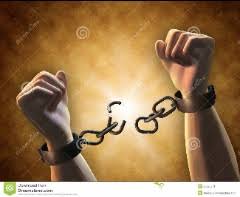 Galatians 5:22-23 lists the Fruit of the Holy Spirit. love, joy, peace, long-suffering, kindness, goodness, faithfulness, gentleness, self-control.
The word "fruit" here in the Greek is beautiful. It means the fruit of the trees, vines and fields, the fruit of one's loins, an effect, a result, an advantage, profit, praises presented to God as a thanks offering. The root meanings of the word, though, are interesting as well. The first root means to seize, claim for one's self eagerly. The second root meaning is to take for oneself, to prefer, to choose, to choose by vote, to elect for office.
Those root meanings tell me that this Fruit is something that I choose. I must make the choice to incorporate this fruit into my character. This fruit makes the difference between the liberty of the Spirit, and the bondage of the law of sin and death (Gal. 5:18). This fruit of the Spirit, by its nature, is a fulfillment of the purpose of the law which is to love thy neighbor as thyself (Gal.5:14).
The breakthrough and the victory that breaks bondage and transforms into liberty is contained in this spiritual fruit. We look sometimes desperately for the victory over the enemy that oppresses us. Sometimes that victory is not from the outside, but is birthed from the inside of each one of us. Maybe the victory finally comes when we choose to change ourselves. Perhaps this is the very victory we are looking for. Gal. 5:13 says that we have been called to liberty.
Jesus had a choice of victories, of liberties. Pilate said to Him "Don't you know that I have the power to crucify you, and to release you?", when Jesus stopped speaking with him. Right there is an opportunity for deliverance from the enemy, yet Jesus didn't take it. Jesus answered "You wouldn't have this power unless it had been given to you from above." I am paraphrasing this conversation from Jn. 19:10-11. Jesus did not take this opportunity for this particular victory or deliverance.
In another part of scripture, Mt. 26:47-54, when Judas and the armed crowd came from the chief priests and elders to arrest Jesus when He was with His disciples, one of the disciples tried to rescue Jesus with violence, cutting off the ear of one in the throng. Jesus refused this deliverance and victory by telling that disciple to put away his sword. Jesus said "...do you think that I cannot now pray to My Father, and He will provide Me with more than twelve legions of angels?" Jesus did not see escape in the form of the sword, or even angelic warriors.
Jesus did not take these opportunities of escape, these rather short-lived opportunities of deliverance. Both offers would have delivered Him from a very tight spot. That deliverance might have been temporary at best, and this was also not the victory the Father was looking for. While the enemy throng of this day might be evaded, there will be one to replace it the next day, and the day after that. No, the victory had to come from another place. Jesus chose that path-the path for which He had been purposed by His Father. That path would produce, not temporary relief, but everlasting victory and relief. It would produce liberty not just for Jesus, but for all. The victory came from a choice within Jesus. It was the choice of obedience (Phil. 2:8). Jesus asked the question in Jn. 18:11, "... the cup which my Father hath given me, shall I not drink it?"
Sometimes, we think relief and breakthrough must come as quickly as possible, and we look for it in other people, in money solutions, wherever we can find it, because the place we are at is unbearable. We think our crisis will be solved with a certain amount of money, or the right attorney, the right idea, the right person, or even the point of the sword. But sometimes that relief and breakthrough must start from within us. This is where the battle begins and ends-flesh versus spirit. The victory must come from the place of the Fruit of the Spirit, against which there is no law. Perhaps the real victory, the real liberty, is in the place of love, joy, peace, long-suffering, kindness, goodness, faithfulness, gentleness, self-control. In this place, nothing the enemy does will profit.
Our Father has called us to liberty.
"Where the Spirit of the Lord is"
https://www.youtube.com/watch?v=KMWICrct5ek
"Break Every Chain"
https://www.youtube.com/watch?v=-pD2zIuiC2g
 Exodus 34:29-35 tells us that when Moses went onto the mountain to hear from the LORD, he returned to the camp of the Israelites unaware that the skin of his face glowed from being in the presence of the glory of God. At first, the people, and even his brother, Aaron, were frightened by this very strange sight, and afraid to come near him. As Moses called to them and spoke to them, they came back to him and listened as he told them about his communication with God. After this event, Moses began to wear a veil, but would take the veil off to go before the Lord. After the Israelites saw on each occasion of his visitation with the LORD that Moses' skin glowed, he would then put the veil back on. Scripture doesn't tell us that God instructed Moses to do this. Many say he did this because the glory of God on his skin frightened the people, or that the people didn't want to see this glory of God. But the verses tell us that Moses wouldn't put the veil on each time until after the people saw him and listened to him from his meetings with God. So why did Moses veil himself at all?
The Apostle Paul reveals this mystery in 2 Cor. 3:7-18. Paul says that Moses covered his face because the people could not stand to look at end of what was passing away, the glory which was passing away (v.7). What would remain after this passing away is the ministry of the Spirit, possessing far greater glory. "For if what is passing away was glorious, what remains is much more glorious." (v.11). The glory of the Law written on tablets was never meant to be the completeness of the revelation of God. The revelation was to continue unto the revealing of the Messiah, who fulfills the Law, and the Spirit. "How will the ministry of the Spirit not be more glorious? For if the ministry of condemnation had glory, the ministry of righteousness exceeds more in glory." (v. 8-9) Those who refuse the continuing revelation are said to be wearing the same veil that Moses wore (v.14-15) - the veil that is meant to conceal the glory that is passing away. In fact, whether Jew or Greek, although Paul is speaking of the Israelite here, once we have placed this veil over our faces, only Jesus can remove it (v.14). Jesus provided the entrance through the veil, even His own flesh, to make the way by His blood to enter into the Holiest so that we might enter after Him (Heb. 10:19-20). Once the veil is in place however, we become "closed" to the glory of new revelation. It is a veil of separation, and not in a good way.
Even as Jesus was crucified, the veil of the Temple of God in Jerusalem was ripped open. But what did God's people do? They sewed the veil closed again. Are we saying that God's Word passes away, or becomes "old"? No, ALL scripture edifies, instructs, and corrects us. Neither do the Word contradict itself. However, we are expected to daily be ready to receive the new glories, the new mercies of God that are continually revealed through the Living Word - Jesus. No, the LORD "changeth not", but His mercies are new every morning (Lam. 3:21-24).
Even the manna from heaven, meant to supply the daily bread of the people of God as they traveled through the wilderness, though supernatural, could not be kept until the next day. Each day, the new manna had to be collected in the morning and eaten that same day. If the Israelites tried to keep the manna for the next day, it became worm-filled. The glory of the manna faded, and new manna was required. "Give us this day our daily bread." This was the prayer that Jesus taught. Each day has a provision from God to us: not only a physical provision, but a spiritual provision as well.
In fact, 2 Cor. 3 says that we can only be transformed into the same image of the Lord, from glory to glory, if we are willing to come before Him with an "open face", unveiled (v.18). The phrase "from glory to glory" in this verse indicates a progression in transformation, not trying to hide the glory that is passing away, but reaching for the new glory that our Father has for us each day. We are expected to go deeper, to go higher, to go closer, in our knowledge of Him. When we hold on to the glory that is passing away, it is because of our spiritual pride, a pride of revelation. As we hold to old revelation, the spiritual veil falls into place, and we are unable to receive the new, unless Jesus removes that veil from us. In the Body of Christ, separation, rather than unity is created by those veils of fading glory. From those revelations whose glory is passing away, traditions have formed, and doctrines have been set in place. "This is what the Lord revealed to us and we will not be moved from it!" But the Lord has something new to show us. Wouldn't you like to see what it is? That previous revelation was for our edification and glory yesterday. Father has new glory for us today, but we must come before Him with an open, unveiled face.
Our Father calls us to come before Him unveiled.
Special thanks to F.B. and G.S. for their thoughtful contributions that helped with this entry.
"Through The Veil"
https://www.youtube.com/watch?v=gz39eYoIxTA
 Jesus was asked a question in Mark 12:28-31. The question was, "Which is the first commandment of all?". Jesus answered saying, "Hear, O Israel, the LORD our God, the LORD is one." This response is known as the Shema, found in Deut. 6:4-5. The word "shema" comes from a word that means "to hear, listen to, obey, understand, give heed, yield to, cause to be heard". The scripture in both Deut. 6 and in Mark 12, goes on to say, "You shall love the LORD your God with all your heart, with all your soul, and with all your strength." Jesus taught that these scriptures were the most important commandment of all.
It is not surprising that scripture also prophesies that in the end times, an event will occur that will be the breaking of these most important commandments before the eyes of mankind. This event is foretold in 2 Thess. 2:3-5:
"Let no one deceive you by any means; for that Day will not come (the Day of the coming of the Lord Jesus Christ again) unless the falling away comes first, and the man of sin is revealed, the son of perdition, who opposes and exalts himself above all that is called God or that is worshipped, so that he sits as God in the temple of God, showing himself that he is God. Do you not remember that when I was still with you I told you these things?"
We live in a time of the falling away from that foremost commandment as taught by Jesus. We are not "hearing and obeying and yielding" to the knowledge proclaimed by our Father that the LORD is one, and He is to be loved with our whole being - not just worshipped, but loved. The scene is set for the son of perdition to declare himself to be God, because that commanded love of our Father has grown cold (Mt. 24:12). This command is not even to all mankind. This foremost command is to the people of God- "Hear O Israel". We cannot point to the world and condemn them for breaking this commandment. This commandment is about the relationship that our Father expects to have with us - His own people. Once we step away from this commandment, once we distance ourselves from it, and refuse to yield to it, we set ourselves up to be deceived. We usher onto the world stage that one who will bring untold horror to the earth.
We may deny it, and we may say that this command is to Israel, and the Church is still obedient to the commanded love, but this would be incorrect. In Rev. 2 and 3, the resurrected Jesus reveals to His apostle the condition of the heart of His Church. One church is told "...you have left your first love." (Rev. 2:4). Another church is told "...because you are lukewarm, and neither cold nor hot, I will vomit you out of My mouth." (Rev. 3:16). To each of the seven churches He commands "He who has an ear, let him hear what the Spirit says to the churches." - SHEMA, hear, understand, obey.
Another great indicator that the love for our Father has grown cold is revealed by the commandment that Jesus says in Mark 12 is second in importance, but like the first: "You shall love your neighbor as yourself. There is no other commandment greater than these." No one can deny that our love for our neighbor is lukewarm at best, and certainly not as great as our love of ourselves. Even the most "religious" among us cannot deny that. We have become isolated and distant from our neighbor. If we are not walking out the second most important command, it is because we are not walking in the first most important command. Without that love for our LORD, Who is one, we cannot and will not love our neighbor.
SHEMA Israel, SHEMA Church:
Our Father, His Son, and His Holy Spirit are One, and we shall love them with our whole life, with everything within us. AMEN.
"Shema Israel"
https://www.youtube.com/watch?v=82JbnMWKtSE
