Showing posts with label James 1. Show all posts
Showing posts with label James 1. Show all posts
Friday, January 8, 2021
Exposed
Reading the Sabbath portions for this week really made me stop and consider my faith, and the challenges to it. I think these issues are especially important for the time in which we live, and the days ahead. This Sabbath's portions are titled "Sh'mot", or "Names". I believe that these portions from the Old Testament, or Tanakh, are very relevant to the conditions of today, and the knowledge necessary for the days ahead, as we will see. Three examples from these readings deal with pivotal servants of God, who must contend with their fear, doubt, and unbelief.
In Exodus 3, Moses is called by God to be the deliverer of His people who were suffering not only under hard bondage (Ex. 1:12-14), but the threat of murder of their children (v. 15). Moses, in exile from Egypt, heard the voice of God saying tht He has come down to deliver His people from the oppression of Pharaoh (Ex. 3:7-8). Not only will the LORD deliver them from slavery, but will bring them to "a good and large land". The LORD told Moses that He will send Moses to Pharaoh in order to accomplish this deliverance. Moses is taken aback and asks, "Who am I that I should go to Pharaoh and that I should bring the children of Israel out of Egypt?" The LORD assured Moses that He will go with Moses. Still unsure how this great deliverance will be pulled off (Moses is very familiar with the house of Pharaoh, and the greatness of his army), Moses asks God His name, and is told: "I AM WHO I AM" (v. 14). This deliverance is not just a work of God, but it is Who God IS. Do we know God in this way? Or do we just know Him by His works? Of His name, the LORD proclaimed, "This is My name forever, and this is My memorial to all generations." Moses was still full of doubts and is shown amazing confirming signs by God: his shepherd's rod became a serpent and then a rod again, his hand became leprous and then was healed, water poured out became blood. In his fear and doubt, Moses told God that he was incapable of the assignment because he was slow of speech and tongue. Even after God assured Moses that He would "be with your mouth, and teach you what you shall say", Moses asked God to send someone else (Ex. 4:10-13). God became angry. The LORD then told Moses that He will also send his brother, Aaron, to be with Moses. Before Moses could even carefully consider all that God had shown and told him, fear, doubt, even unbelief had jumped in to make Moses resist the expressed will of God, and doubt the possibility of a miraculous deliverance of God's people from the hold of Pharaoh.
In another Sabbath portion, God calls Jeremiah to be His prophet (Jer. 1). In this calling, the LORD reveals to Jeremiah that He knew, sanctified and ordained Jeremiah as a prophet to the nations before God formed him in the womb (v. 4-5). Jeremiah's immediate response in fear, doubt and avoidance was, "Ah, LORD GOD! Behold I cannot speak for I am a youth." (v. 6). Jeremiah did go on to serve God as a prophet through three kings' reigns. He not only prophesied the beginning and ending of Judah's 70 year exile, but also the basis of the end time's 70 weeks of years later revealed in detail to Daniel.
We never plan to be overcome and respond in fear, doubt, and unbelief, but because they are our constant stalkers until they are exposed by God, they often jump in and respond for us automatically. Like Moses and Jeremiah, we often try to rationalize and make excuses for our fear, doubt and unbelief when they show themselves.
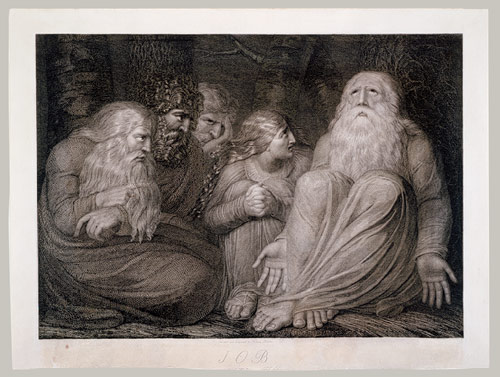
In the third example from the Sabbath portion, poor tormented Job is given a wakeup call from God regarding the doubt and unbelief that has filled his heart in the face of his many painful trials. Job, a man used mightily by God (see Job 29), started out strong, but his ongoing, unexplained, unrelenting, tragic suffering caused him to give in to those fleshly stalkers: fear, doubt, and unbelief. Perhaps the door to those staalkers had been opened because Job had come to trust more in his own righteousness than in Who God is, and His name. God hinted at this possibility as He said to Job, "Would you indeed annul My judgment? Would you condemn Me that you may be justified? Have you an arm like God?...Then adorn yourself with majesty and splendor, and array yourself with glory and beauty...Then I will also confess to you that your own right hand can save you." (Job 40:6-14, excerpt). The story of Job teaches us that we must have endurance and patience even in the most dire trials, but there was even more accomplished through the trial of Job. God revealed to us knowledge of the Accuser of the Brethren, who accuses us before God day and night, and God made an open show of him through the trial of his servant Job (Job 2, Rev. 12:10-11). These great servants of God, Moses, Jeremiah, and Job, were vulnerable, as we are, to fear, doubt, and unbelief.
In dealing with the lack of belief in Who the Person of God really is to us, what His name really indicates to us, Jesus asked, "...when the Son of Man comes, will He really find faith on the earth?" (Lk. 18:8). We think that of course we trust God, of course we rely upon Him, but Jesus then told the parable of the man who thought himself righteous, more so than others, but the man was in truth, found wanting before God (v. 10-14). It is easy to fall into the trap of believing our own righteousness, believing that we are not vulnerable to fear, doubt, and unbelief, until we are tested, and those silent stalkers become quickly exposed. The testing of God exposes these things in our lives, because they are deadly to us. These destructive companions are lying right behind us to challenge us every step of the way. We face many trials and tests by God. Although it may seem that the challenges come from unjust men, trying circumstances, or even spiritual enemies, it is the Lord who is using these hardships for good- to expose our fears, doubts, and unbelief. Why is it important for these things to be revealed, even through great hardship to us? Our lives, our salvation, our purpose depends upon it. Truths are established, judgments are set, and God's name is revealed by and through the testing of His people: "...My people went down at first into Egypt to dwell there; Then the Assyrian oppressed them without cause. Now therefore, what have I here," says the LORD, "that My people are taken away for nothing? Those who rule over them make them wail," says the LORD, "and My name is blasphemed continually every day. Therefore, My people shall know My name; Therefore, they shall know in that day that I am He that speaks: Behold, it is I." (Isa. 52:4-6).
The testing and trials, whether small or extremely great, are not for God's benefit, but ultimately for ours, by the work that God does through them. We are familiar with the verses from James: "My brethren, count it all for joy when you fall into various trials, knowing that the testing of your faith produces patience (enduring, steadfastness, sustaining, cheerful hope and endurance; to remain, abide, not recede or flee)). But let patience have its perfect work, that you may be perfect and complete, lacking nothing." (James 1:2-4). How can we take joy in the trials that we face, as James tells us? Trials do not produce joy in the heart. However, the trials produce needed perfection. Considering how closely those three silent companions, fear, doubt, and unbelief, follow us, and how quickly they take every opportunity to overtake us, if trials can expose them, then those trials are indeed to our advantage. The endurance or patience produced by the trials of God is absolutely necessary for our salvation: "And you will be hated by all for My name's sake. But he who endures to the end will be saved." (Mt. 10:22). "And because lawlessness will abound, the love of many will grow cold. But he who endures to the end will be saved." (Mt. 24:12-13). Great tests are coming, and fear, doubt and unbelief that we have not allowed God to reveal will shipwreck us.
In the end times especially, endurance or patience rather than fear, doubt and unbelief, is and will be essential in believers for our spiritual survival: "By your patience (endurance) possess your souls." (Lk. 21:19. Even the defeat of Satan and his earthly servants is affected by the endurance of the saints: "He who leads into captivity shall go into captivity; he who kills with the sword must be killed with the sword. Here is the patience and faith of the saints." (Rev. 13:10). The judgment of the Beast and those who cooperate with him is affected by the endurance of the saints: "Here is the patience of the saints; here are those who keep the commandments of God and the faith of Jesus." (Rev. 14:9-12).
May the hidden companions, the stalkers of fear, doubt and unbelief be exposed, and may the people of God endure in faith in the days ahead.
Our Father exposes those things that will destroy our faith.
If you would like to begin your journey with God through the salvation and righteousness of His Son, Jesus, you can pray:
"Lord Jesus, I understand that I cannot rely upon my own righteousness to be saved. I believe that You died and rose from the dead to become my righteousness, my faith, and my endurance. Fill me with Your Holy Spirit to help me, guide me, and teach me in the way of endurance and truth. Forgive me of my sins, and expose in me fear, doubt and unbelief. In Your holy name, which is a memorial to all generations forever, I pray. Amen."

Thursday, November 29, 2018
Fire
My mother used to have a little wooden plaque hanging over the kitchen sink. I read that plaque many times as a child and onward. On the little plaque was a proverb that read:
"It is better to keep your mouth shut and be thought a fool,
than to open it and remove all doubt!"
Perry's Nut House
Belfast, ME
Belfast, ME
Many years later, my own family was travelling through Maine, when we passed a place called, "Perry's Nut House". I had to stop there and go in. As well as selling nuts, sure enough, they also had on their walls for purchase plaques of proverbs in all different sizes. NOW I knew where my Mom had found her little plaque all those years ago.
The years have proven my Mom's plaque to be a true proverb. Our Book of Proverbs in the Bible also has numerous verses regarding the pitfalls of the tongue, and the words out of our mouths. Here are just a few, including one that must have been the inspiration for the words on my mother's plaque:
"He who has knowledge spares his words, and a man of understanding is of a calm spirit. Even a fool is counted wise when he holds his peace; When he shuts his lips, he is considered perceptive." Prov. 17:27-28
"Death and life are in the power of the tongue, and those who love it will eat its fruit."
Prov. 18:21
"A fool has no delight in understanding, but in expressing his own heart...A fool's mouth is his destruction, and his lips are the snare of his soul." Prov. 18:2, 7
How many times I remember something I have said, and wince at the stupidity of it. I say to myself, "You should have kept your mouth shut." I used to be talkative, but after hearing my own words played back in my mind, as well as the words of others, I became much more reticent to open my mouth.
To multiply the problem of careless words, the world is full of unfortunate "Tweets" and regrettable Facebook posts. We don't realize what our outpouring of words reveals about ourselves. Regardless of a desire we might have to be careful in our speech, often, it seems, the words pour out of our mouths, seemingly beyond our ability to stop them. Jesus said that what we say reflects what is in our hearts, and many times, it isn't a pretty picture:
"Brood of vipers! How can you, being evil, speak good things? For out of the abundance of the heart the mouth speaks. A good man, out of the good treasure of his heart brings forth good things, and an evil man out of the evil treasure brings forth evil things." Mt. 12:34-35
"But those things which proceed out of the mouth come from the heart, and they defile a man. For out of the heart proceed evil thoughts, murders, adulteries, fornications, thefts, false witness, blasphemies. These are the things which defile a man..." Mt. 15:18-20
We may think that because we know and sincerely love the Lord that we are not the ones for whom Jesus meant these words, but for unbelievers only. Not so. Jesus also heard what came out of His own disciples' mouths, and discerned that the source of the words spoken were evil spirits, and even Satan himself (Mt. 16:23, Lk.9:54-56). One of these instances concerned the disciples' suggestion that they call down fire from heaven in judgment, while thinking that they were speaking righteousness according to the will of God. What have we spoken that we thought was righteous, but might cause Jesus to say to us, "You don't know what manner of spirit you are of "?
Paul wrote:
"Let no corrupt (rotten, unfit for use, of poor quality, worthless) word proceed out of your mouth, but what is good for necessary edification (building up), that it may impart (give, deliver, bestow a gift, furnish, supply) grace to the hearers. And do not grieve the Holy Spirit of God, by whom you were sealed for the day of redemption. Let all bitterness, wrath, anger, clamor (loud quarreling), and evil speaking be put away from you, with all malice. And be kind to one another..." Eph. 4:29-32
Jesus said that the end times would be like the days of Noah. In the days of Noah, evil and violence totally pervaded the hearts of men (Gen. 6:5), and we know that out of the heart, the mouth speaks. We only have to hear a small portion of the news to see this same level of evil and violence flowing out of people's mouths, and filling their actions. This evil is spreading like a fire, because of the times in which we are living. We are not immune to these spirits, especially if we are careless and unwatchful.
In discussing the danger of the words that we speak, we must go to the Book of James:
"So then, my beloved brethren, let every man be swift to hear, slow to speak, slow to wrath...If anyone among you thinks he is religious, and does not bridle his tongue but deceives his own heart, this one's religion is useless...Even so, the tongue is a little member and boasts great things. See how great a forest a little fire kindles! And the tongue is a fire, a world of iniquity. The tongue is so set among our members that it defiles the whole body, and sets on fire the course (a circuit of physical effects, to incur extreme peril which requires the exertion of all one's effort to overcome) of nature ("genesis": nature, course of life, existence, lineage, human origin, generation-the whole multitude of men living at the same time); and it is set on fire by hell. For every kind of beast and bird, of reptile and creature of the sea, is tamed and has been tamed by mankind. But no man can tame the tongue. It is an unruly evil, full of deadly poison." James 1:19, 26, James 3:5-8
We are literally setting the world, a whole generation of the living and their progeny, on fire with our tongues. The Greek language used in these verses does not limit the devastating consequences of reckless words to the spiritual realm, which is serious on its own, but the Greek specifies effects to the natural realm on a huge scale as well. And James was writing to the brethren, the believers. As I see out-of-control fires destroying homes and taking lives, I never realized that these raging fires could be a manifestation of the words out of man's mouth, out of my mouth.
I did not expect to make this discovery when I started this entry, but I should have known not to take the scriptures lightly on this topic, or any other. As we saw above, Jesus took this topic very seriously and warned:
"But I say to you that for every idle word men may speak, they will give account of it in the day of judgment. For by your words you will be justified, and by your words you will be condemned." Mt. 12:36-37
And David, a man after God's own heart, prayed:
"Set a guard, O LORD, over my mouth; Keep watch over the door of my lips." Ps. 141:3
I don't want my words to kindle fires, spiritual or natural.
Our Father is urging us to bridle our tongues.
Monday, October 12, 2015
Patience
As a group, we have been studying Psalm 119. Psalm 119 is divided into sections under each letter of the Hebrew alphabet, or "aleph-bet", as it is also known. Two of the sections we recently studied were under the letters yod, and kaph. Interestingly enough, both of these letters mean "hand", but in different ways. Both sections, one following another, deal with similar things, but, again, in very different ways. This made me curious, so I thought and studied about it. Why would there be two similar sections in this Psalm, both under letters that mean "hand"? I know it is not by accident, nor coincidence. So this is the path that I followed through this study.
The first section we look at is Psalm 119:73-80. This section is under the letter yod. This letter means hand, but a fisted hand. It implies power, and strength. This letter is also the first letter of the name of God, which according to Jewish practice, is not to be spoken, YHWY. The tone of this section of Psalm 119, is appealing to God to deal with the enemies that have unrighteously persecuted this person. This section in my Bible is captioned "Confidence in the Law". The Psalmist is confident that the LORD will deal strongly (the hand as a fist) with his enemies to defend him.
The next section of Psalm 119 are the verses 81-88, and is under the letter kaph. This letter also means hand, but an outspread, open hand. This section in my Bible is captioned "A Longing for Comfort". And while the same issues are mentioned, the unfair persecution by a proud enemy, the tone is very different. It's as if the same person is speaking in both sections, but a period of time has passed between the experience of the first section, and the second. The psalmist starts out confidently, but after time passes with no relief, he is speaking from a different condition.
He describes his present condition in the following manner:
"My soul faints for Your salvation, but I hope in Your word."
"My eyes fail from searching Your word, saying, "When will You comfort me."
"For I have become like a wineskin (or bottle) in smoke, yet I do not forget Your statutes."
Psalm 119:81-83
There are several "When" questions asked of God in this section: "When will You comfort me?", and "When will You execute judgment on those who persecute me?" (v. 84). There is the direct, desperate cry, "Help me!" (v. 86), in this section. The tone of confidence found in the first section, under the hand as a fist, is beginning to change into puzzlement and desperation in the second section under the outspread, open hand, the hand of supplication, even though the circumstances are the same.
In the second section, the psalmist tells God that changes have happened in his soul, spirit (eyes), and body. The root word of the word soul used here means rest, refreshing breath. The psalmist feels his soul can no longer find rest, and does not have the refreshing breath any longer. His eyes, meaning spiritual insight, spring, or fountain, are drying and changing. His body (wineskin) is even feeling the effects of his affliction. He is not the same as he was when he began in these circumstances that are trying him.
In the first section, the psalmist tells us that it is God who has afflicted Him:
"I know, O LORD, that Your judgments are right, and that in faithfulness You have afflicted me." (V. 75).
This thought causes a problem for many of us. We can easily understand that our enemy can, and does, afflict us, but it is much more difficult to understand that our Father, who loves us, is afflicting us. On top of this, the psalmist tells us that the Father afflicts us because He is faithful, which is even more perplexing. Many cannot fit this concept into their belief, or doctrine, but those who reject this concept, or try to escape this concept, are really doing themselves a disservice spiritually. Though the affliction is a startling way to be dragged into spiritual maturity, it is very necessary, particularly living in the End Times, as we do today. I can explain why I am saying this, from what I found as I continued my path of study into the New Testament.
Something is created in us out of the affliction, the unrighteous persecution, the tribulation, that the psalmist refers to in these passages from Psalm 119, above.
Romans 5:3-5 says, "...we glory in tribulations also: knowing that tribulation worketh patience; and patience, experience; and experience, hope, and hope maketh not ashamed..." The Amplified Bible puts these verses this way: "Moreover (let us also be full of joy now), let us exult and triumph in our troubles, and rejoice in our sufferings, knowing that pressure, and affliction, and hardship produce patient and unswerving endurance."
James 1:2-4 says, "My brethren, count it all joy when ye fall into diverse temptations (adversity, affliction, trouble sent by God to test or prove one's character, faith, holiness). Knowing this, that the trying of your faith worketh patience. But let patience have her perfect work, that ye may be perfect and entire, wanting nothing."
There are many more New Testament references to the quality of patience, and the fact that this quality only comes from passing through the difficulties that can cause us such pain.
Many changes come to us spiritually, and in every way, by the reading of the Word, and through the work of the Holy Spirit, but the creation of patience in us must be accomplished through experience, rather than hearing or studying only. The experience can be painful, and long-term, and we recognize as we go through it that we are changing, as the psalmist revealed. The changes are deep, and life affecting. In every way, we are not the same as when we started. The scripture from James, above, tells us that we must make the decision to allow patience to do the work that is necessary in us. This work of patience brings us to a spiritual wholeness, or completeness, that we cannot attain without it. It is not just a case of "suffering through it", but we must make the choice to walk the path of patience, understanding, and choosing, what it accomplishes in us. The "path of least resistance" may be more popular, faster and smoother, but it accomplishes nothing in us spiritually.
Why is the quality of patience so necessary, that even our faithful God would afflict us (Ps. 119:75, above) in order to achieve it in us? Not only that, but it is to be a cause for rejoicing and celebration! (Rom. 5:3-5, above).
It very much appears that patience is a quality that will get us through the End Times. In fact, without it, we will not survive physically, nor spiritually. Jesus states this very directly when teaching His disciples about the persecution and tribulation to come:
"And ye shall be hated of all men for My name's sake. But there shall not a hair of your head perish. In your patience posses ye your souls." Lk. 21:17-19
Part of the meaning of the word "patience" in Greek is to keep steadfastness in faith and piety in even the greatest trials and sufferings, to remain, to abide, to not recede, nor flee.
If you are an individual, or church, presently being trained by God to patience, you have discovered that many flee this training. Many do not abide through the training. However, it is a faithful God who loved His people enough to train and equip them in this patience for survival. We flee this training at our own future peril and loss.
When I was born, MANY years ago, my foot was turned inward. The doctor told my mother that in order to walk when I got to the toddler age, I would need to wear a metal brace on that foot and ankle. In other words, I was lame. He told my mother that there was a possibility of turning the foot to a normal position by physically forcing the foot outward daily. This was in a time before physical therapy became a widely used, and recognized partner in medical treatment. So, in order to try and straighten that foot, my mother would twist my foot outward several times a day. As a new baby, this was painful for me, and I would scream and cry. My mother told me later that many times she would be crying with me while she did the foot twisting. My aunt, who lived upstairs, would sometimes come down when she heard me crying, and ask my mother how she could keep doing this. My mother told her "I do it because I have to do it. I want the child to be able to walk." My mother was not very happy to be questioned like this, because she certainly didn't enjoy doing this to her new baby. The end of the story is that the foot twisting worked, my foot began to straighten, and the foot and ankle were strong enough, and straight enough, for me to be able to walk normally when the time came.
I am thankful that my mother faithfully put me through those painful exercises, because they meant the difference between me being able to walk normally, or being lame for all my life. These exercises in patience are the same for our Father. He hears us crying, and perhaps He even cries with us, but He knows the fruit of the exercise will make all the difference in our lives. We may say, "But I don't want to go through the painful process of having my foot straightened." But then, we will be lame. We will not be able to endure the walk, nor run the race (with patience!). (Heb. 12:1)
The Book of Revelation instructs the people of God to patience seven times.
Scripture tells us that it is only through the acquiring of patience that we see the fulfillment of God's promises to us (Heb. 6:12-15, Heb. 10:35-39).
Patience is required as we near the return of our Lord, Jesus (James 5:7-8).
To most of us, patience is just a nice quality to have, but in the mind of God, patience is a requirement, a necessity, that will get us through the battle, and keep us alive to see the promises God has made to us fulfilled. He will do what is necessary to achieve that patience in us. Rejoice in that faithfulness of God to us. Yes, we will be changed through the experience. One of those changes will involve gaining something that we cannot gain any other way.
Our faithful Father trains us to patience.
"Psalm 23"
https://www.youtube.com/watch?v=BnKvXxGlJLI
"Praise You in the Storm"
https://www.youtube.com/watch?v=dB4eC55dh-U
"Waiting Here for You"
https://www.youtube.com/watch?v=Nrr-7YA7cfM
"While I'm Waiting"
https://www.youtube.com/watch?v=o9DTwLOxzhE
note: art at the top of the page- William Blake's 1793 engraving for The Book of Job: "Job Rebuked by his Friends"
Subscribe to:
Posts (Atom)