Showing posts with label bread. Show all posts

Friday, January 2, 2026

FoodinFAMINE

      This week's Sabbath reading portion is titled Va-y'chi, which means, "and he lived." The title comes from Gen. 47:28: "And Jacob lived (haya - breathing, live, alive, save, quicken, revive, life, recover, remain alive, live prosperously, live forever, be restored to life or health, preserve alive, to revive from discouragement or death) in the land of Egypt (misrayim/masor/sur - Egypt, Egyptians/besieged places, fortified, limit, distress, fortress/lay siege, adversaries, assault, bind up, confine, to press upon, to compress) seventeen years. So the length of Jacob's life was one hundred and forty-seven years."

     Looking at the Hebrew meanings of the words used in the above verse, we can say that Jacob (and his family) found their lives preserved, restored, and even prospered, in a place of danger, limitations and confinement. They found this preserved life because of the calling of God on Joseph's life. Joseph said: "...And God sent me before you to preserve a posterity for you in the earth, and to save your lives by a great deliverance." (Gen. 45:5-7, excerpt). Joseph was ordained to keep Jacob/Israel alive during a time of severe famine, and for the sake of the future generations of Israel, in the unlikely nation of Egypt, ruled by Pharaoh. Because of the favor that Joseph had received from Pharaoh because Joseph was a man filled with the Spirit and wisdom of God, Pharaoh gave the best land in Egypt to be occupied by Jacob and his family. (see Gen. 45:16-20).

     There were still five years of famine to endure in Egypt after Jacob and his sons came to dwell there. (Gen. 45:6). As our reading begins in Genesis Ch. 47, we are presented with a strange series of facts regarding how Joseph, as second only to Pharaoh in Egypt, dealt with the famine: "Now there was no bread (lehem/laham - bread, food, grain, meat, loaves, shewbread, provision/fight, make war, to eat, overcome, devoured, prevail, engage in battle, consume) in all the land; for the famine (ra'ab/ra'eb - famine, hunger, dearth, hunger for Jehovah's Word, scarcity of grain/suffer hunger, allow to hunger, be voracious, to cause to hunger) was very severe (kabed/kabad - great, grievous, heavy, sore, thick, massive, abundant, very oppressive, burdensome/honor, glorify, glorious, gain glory, sore, made heavy, burden), so that the land of Egypt and the land of Canaan languished (laha - to burn, to be rabid, insane, exhausted by frenzy, languish, faint, madman, tongue thrust out longing for drink, driven by a demon, scared) because of the famine." (Gen. 47:13). The suffering in the famine was so great that it drove people mad with it. We should also notice the connection in meaning between bread or grain and warfare in the Hebrew word and root lehem/laham. We will discover that famine can result from a state of war. We will see that famine is also associated with spiritual warfare as well. I would also like to note that grievous heaviness in the Hebrew meaning associated with the severity of this famine is also related to the glory of God in the words kabed/kabad above. Scripture tells us that as the glory of God filled the temple, the priests that ministered there could not continue because of its massive heaviness. (see 2 Chron. 5:12-14). The prophet asked, "But who can endure the day of His coming? And who can stand when He appears? For He is like a refiner's fire and like launderer's soap." (Mal. 3:2). This will have meaning in the last days as Christ returns also, because He comes with great glory, and the overwhelming brightness of His glory will destroy the wicked one. (see Isa. 40:5-8, Mt. 24:30-31, 2 Thess. 2:8). Jesus has given to the Body of His believers this same glory. (Jn. 17:22-24).

     As we read about Joseph's tactics for provision during the ongoing deep famine throughout the region, we should keep in mind that Jacob's and consequently Israel's survival are linked to Joseph's ongoing favor in his position with Pharaoh. Officially, Joseph has been entrusted by Pharaoh as a ruler over Pharaoh's household and everything that belongs to Pharaoh. He can only keep Israel alive as he pleases and enriches Pharaoh.

     This is how Joseph handled the distribution of grain kept in Pharaoh's storehouses during the famine: "And Joseph gathered up all the money that was found in the land of Egypt and in the land of Canaan, for the grain which they bought; and Joseph brought the money into Pharaoh's house." (Gen. 47:14). 

     When the money failed because the people had given it all to pay for grain, they came to Joseph asking for more bread, saying to him, "Why should we die in your presence?" Joseph then told them to give him their livestock since their money was gone, and he would give them bread. Joesph fed them that year in exchange for all of their livestock, which became Pharaoh's. (v. 16-17).

     The next year of the famine, the people came to him again for bread. Because they had neither money nor herds left, they sold themselves and their land to Pharaoh so that they wouldn't die: "Then Joseph bought all the land of Egypt for Pharaoh...so the land became Pharaoh's." (v. 18-20).

     Joseph moved the people off the land and into the cities across Egypt, and decreed: "Then Joseph said to the people, 'Indeed I have bought you and your land this day for Pharaoh. Look, here is seed for you, and you shall sow the land...in the harvest that you shall give one-fifth to Pharaoh. Four-fifths shall be your own, as seed for the field and for your food, for those of your households and as food for your little ones.' So they said, 'You have saved our lives; let us find favor in the sight of my lord, and we will be Pharaoh's servants." (v. 23-25). Pharaoh took twenty percent. The Egyptian priests did not have to give up their lands because Pharaoh always continued to supply them with their ration of food.

     Pharaoh became greatly enriched because of Joseph's service to him, and the people remained alive although they had to give everything including themselves to Pharaoh. What would the world be willing to do to save themselves and their families from starvation? Scripture says that many will turn away from God and turn instead to a supernaturally evil, oppressive tyrant and his world-wide economic system.

     This brings me to what I see in this part of Joseph's story as a prophetic picture and warning.

     Famine is one of the catastrophes prophesied during the time before Christ's return. Jesus prophesied: "For nation will rise against nation, and kingdom against kingdom. And there will be famines, pestilences, and earthquakes in various places. All these are the beginning of sorrows." (Mt. 24:7-8). Because of one of the horses of the Apocalypse, wheat and barley will become scarce on the earth. (see Rev. 6:5-6). This black horse followed the horse that would take peace from the earth. As we saw in the Hebrew words lehem/laham used above meaning "bread", famine often associated with warfare.

     Famine is also very prominent in the world today. 318 million people in 68 countries are facing hunger now, which is double the amount from 2019. Famine has been officially designated in the Palestinian Territories, South Sudan, Haiti, Mali, Yemen, the Congo, Myanmar, with near famine conditions reported in Chad, Somalia and Syria. Most of these famine conditions have resulted from conflicts and weather changes. Myanmar's near famine is connected to a major earthquake that occurred there. Famine is steadily crawling across the surface of the earth at this time.

     In the United States, the fifth largest wheat producer in the world, three years of drought has affected the winter wheat yields in Kansas, and too much rain has reduced the spring wheat output in North Dakota. It was during the decade of the 1930's that the great plains of the United States, known for its rich soil, was renamed The Great Dust Bowl. Several factors, including poor land management, led to this devastation. On April 14, 1935, a dust storm came to that area that was so huge the date was later called Black Sunday. It was called this because what started out as a sunny day, became darkened as the sun was obscured by the thick cloud of black dust until "it was darker than the darkest night." The Dust Bowl lasted for years as once-rich prairie land turned to dry dust, and families abandoned their useless farms.

     Also occurring in the United States, $24 trillion dollars' worth in farms and farmland is currently up for sale. Very wealthy individuals, corporations, and even foreign nations are buying some of this land. Will farming continue on this land after it is sold? Hundreds of millions of acres of farmland in the United States have already been sold - to two entities, one being a foreign government.

     The top two producers of wheat in the world are Russia and the Ukraine. Ukraine's rich black soil is considered the most fertile land on earth, and that nation has been called "The Breadbasket of Europe." Both countries have been at conflict together for several years. Together they produce 1/4 of the world's wheat. What effect will their ongoing conflict have on their production of wheat?

     The global food chain has become very vulnerable.

     Conflicts, weather changes, and natural disasters like fire and flood can change the grain production of the earth in a moment. However, as we saw above, the people of God, Jacob/Israel and his family, were provided for in the middle of a severe famine. Both Joseph and Pharaoh guaranteed the provision for God's people in the territory of Goshen (meaning "to draw near"), also known as Rameses, in Egypt. This was the richest soil in Egypt. However, men pass away, as Joseph and this Pharaoh did, and the situation changed. God does not pass away, and He continued to see and hear His people until the day of their deliverance from Egypt and after.

     The prophet of God also wrote this as a correction to God's people from the LORD: "Will a man rob God? Yet you have robbed Me! But you say, 'In what way have we robbed You?' In tithes and offerings. You are cursed with a curse, for you have robbed Me, even this whole nation. Bring (*aleph-tav/Alpha and Omega) all-the-tithes into the storehouse ('osar - treasury, store, supplies of food or drink, God's armory or magazine of weapons), that there may be food/meat (terep/tarap - prey, meat, fresh leaves, spoil, food, descending to battle like a lion, the spoil of the wicked/tear to pieces, feed, prey, catch, provide food) in My house, and try Me in this,' says the LORD of hosts, 'If I will not open for you (*aleph-tav/Alpha and Omega) the windows ('aruba/'arab - latticed like a dove-house or coop, a chimney for smoke to escape, a sluice for water to flow/to weave, to intertwine, to mingle) of heaven and pour out for you a blessing that there will not be room enough to receive it." (Mal. 3:8-10). Pharaoh received twenty percent of future earnings in addition to all of the money, herds, lands and servitude of his people that he had already received, while the LORD only asks for ten percent, and that ten percent is identified with the sacrifice of His Son, the Messiah/Christ, Jesus, who gave Himself as an offering, as indicated by the presence of the *aleph-tav in written Hebrew (see *note below). It seems a small, but spiritually powerful token for God to request from us. He would certainly be entitled to all that we have if He demanded it. Jesus said that the Kingdom of God is worth far more than everything we own combined. (Mt. 6:31-34 and Mt. 13:44-46).

     We can see how the supply of the LORD comes to us as He spoils His enemies in spiritual and physical battle according to the Hebrew words terep/tarap above. We have a record in scripture of the LORD breaking a severe famine that had come upon His people by defeating and spoiling the besieging Assyrian army that had surrounded Jerusalem. (see 2 Kings 7:1-16). The enemy's bread that they left behind in their camp fed God's starving people.

     Not only does the LORD supply His people with physical bread, and His Word, the scriptures, as spiritual bread, but He also supplies us with the Bread of salvation and eternal life, Jesus. David wrote: "I have been young, and now am old; yet I have not seen the righteous forsaken, nor his descendants begging bread. He is ever merciful, and lends; and his descendants are blessed." (Ps. 37:25-26).

     As we study these Sabbath reading portions, the special and peculiar characteristics of the Sabbaths of the LORD are revealed for us to learn. The Lord's Sabbath contains a special double provision ahead of time, as was the case with Joseph, Pharaoh and Egypt in order to carry His people through the time of rest in Him when His people cannot gather.

     If you would like to learn more about the loving provision of the Lord, you can join me in prayer: "Heavenly Father, Who owns the world and everything in it, I give You my thanks for the provision that You have made for me throughout my life, and the lives of my family. No matter the circumstances that come upon the world, You have shown Your faithfulness to me. Nothing is impossible for You as Your Son Jesus demonstrated when He multiplied the few loaves of bread to feed thousands. I hold up the bread, both natural and spiritual, that You have given to me, and I wave it before You in praise and thanksgiving. I pray for those who hunger and thirst at this time across the world. You have blessed us with abundance to share with others in Your name so that men will glorify You. Lead me in Your Word and by Your Spirit, and let me always trust in You for all things. I ask this in the name of Jesus. AMEN."

*NOTE: aleph-tav written in Hebrew as אֶת, are the first and last letters of the Hebrew alphabet. The meaning of the two pictographic Hebrew letters can also be interpreted "Adonai (Lord) of the Cross/Covenant". In the New Testament, these letters are translated as Alpha and Omega written as ΑΩ , the first and last letters of the Greek alphabet. These letters are those by which Jesus Christ identifies Himself in the Book of Revelation: see Rev. 1:8Rev. 21:6Rev. 22:13


Friday, December 26, 2025

Bread

      The title of this week's Sabbath reading portion is Va-yiggash, which means, "and he drew near." The title comes from the moment when Joseph, a governor or ruler in Egypt, revealed himself to his brothers who had come from Canaan to Egypt again for bread grain during a famine: "Then Joseph (yosep/yasap - "Jehovah has added"/more, exceed, add to, increase) said to his brothers, 'I am Joseph; does my father (Jacob/Israel) still live?" But his brothers could not answer him, for they were dismayed (bahal - afraid, dismayed, rash, thrust him out, disturb, alarm, terrify, anxious, tremble inside) in his presence. And Joseph said to his brothers, "Please come/draw near to me." So they came near. Then he said: "I am Joseph your brother, whom you sold into Egypt." (Gen. 45:3-4).

     This Sabbath reading this year also occurs during the same week as the observance of Christ's birth, Christmas. There are similarities between the story of Joseph and Jesus that helps us to understand the depths and the heights from which our salvation comes.

     Joseph had been rejected in the most extreme manner by his brethren when he was a young lad, as they even considered killing him. Now, however, his greatest wish was to be reconciled with them, and with his father, Jacob, whom Joseph dearly loved and who had remained behind in Canaan. Jesus also experienced this kind of rejection: "He (Jesus) was in the world, and the world was made through Him, and the world did not know Him. He came to His own, and His own did not receive Him." (Jn. 1:10-11). From the moment that Christ came into the world, the spirit of this world tried to thrust Him out (see bahal above).

     Joseph then said to his brothers: "Hurry and go up to my father, and say to him, 'Thus says your son Joseph: 'God has made me lord of all Egypt; come down to me, do not tarry. You shall dwell in the land of Goshen (gosen - "drawing near"), and you shall be near to me...There I will provide for you, lest you and your household, and all that you have, come to poverty; for there are still five years of famine." (Gen. 45:9-11).

     Joseph told his brothers to get their father and to "draw near" to him in Egypt. Even the place in which they would settle in Egypt, the best of the land as even Pharaoh had agreed to give to them, was called by a name that means "drawing near." (v. 17-18).

     Joseph recognized that the LORD's purpose in his life was as a saver of life - to preserve life, especially the lives of Israel (Jacob), through an extreme and long-lasting famine. He had told his brothers earlier: "But now, do not therefore be grieved or angry with yourselves because you sold me here; for God sent me before you to preserve life...And God sent me before you to preserve a posterity for you in the earth, and to save your lives by a great deliverance. So now it was not you who sent me here, but God; and He has made me a father to Pharaoh, and lord of all his house, and a ruler throughout all the land of Egypt." (v. 5-8).

     Joseph recognized that the betrayal of his brothers resulted in the elevated position of authority that he now held in Egypt. Joseph had the power to send his brothers away without the bread that they sought. He had the power and the reason to condemn his brothers and imprison them, as he himself had been imprisoned, but he did not do this because he understood the importance of the purpose of God in his life. Joseph had been sent to save life, especially the lives and household of Israel/Jacob. Jesus came with the same purpose. Jesus told Nicodemus, a teacher in Israel: "For God did not send His Son into the world to condemn (krino - to separate, put asunder, to judge, to pronounce judgment, to subject, to censure, to punish, damn, decree) the world, but that the world through Him might be saved (sozo - save, keep safe and sound, rescue from danger or destruction, to save a suffering one from perishing, to heal, make well, restore to health, be whole, to deliver from the penalties of the Messianic/Christ's judgment, to save from the evils which obstruct the reception of the Messianic/Christ's deliverance). He who believes in Him is not condemned; but he also who does not believe is condemned already, because he has not believed in the name of the only begotten Son of God." (Jn. 3:17-18). The Greek language used above indicates, the meaning of sozo, or salvation, is even deeper than we might have thought. It also includes healing, and to deliver us from those evil things that would hinder receiving the Messiah/Christ as Savior. The world is already condemned for its unbelief, so it is a waste of time and purpose for us to condemn the world. The idea is, to move those who will receive it from unbelief into belief in the Son of God. 

     Personal betrayal also played a role in the fulfilment of Jesus' purpose, as it did in Joseph's life. The infamous betrayal of Jesus by Judas was one factor necessary and prophesied that led to the cross and Christ's crucifixion. Knowing this ahead of time, Jesus even said to Judas at the Passover supper, or Last Supper: "What you do, do quickly." And Judas, being filled by Satan, left to betray Him. (see Jn. 13:21-27). Satan had filled Judas after he took the piece of bread that Jesus had handed him. The Bread that saves is also the same Bread that condemns when rejected.

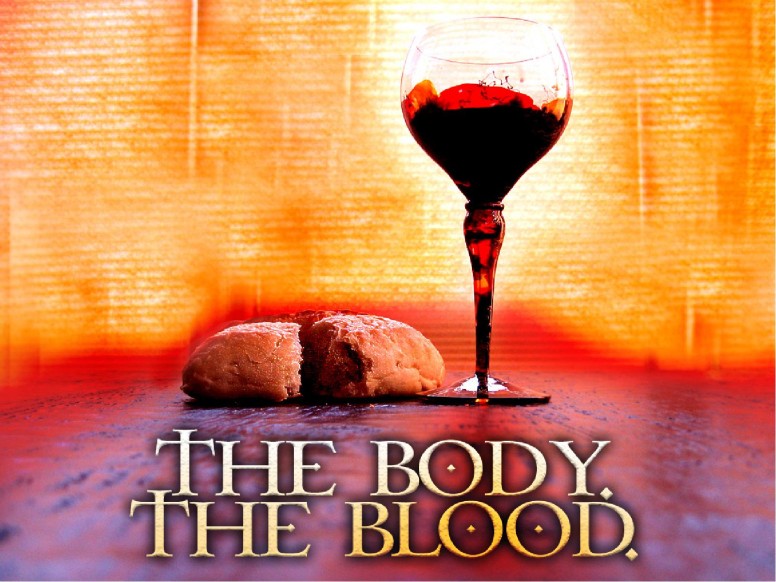
     This same betrayal also played a part in Jesus' deliverance of the New Covenant to His disciples and to us. The apostle Paul received this connection through a revelation from the Lord: "For I received from the Lord that which I also delivered to you: that the Lord Jesus on the same night in which He was betrayed took bread; and when He had given thanks, He broke it and said, 'Take, eat; this is My body which is broken for you; do this in remembrance of Me.' In the same manner He also took the cup after supper, saying, 'This cup is the new covenant in My blood. This do, as often as you drink it, in remembrance of Me." Paul then wrote: "For as often as you eat this bread and drink this cup, you proclaim the Lord's death till He comes."  (1Cor. 11:23-26). I have often wondered why the Lord specifically connected His betrayal by Judas to what we now refer to as "Communion" as He revealed it to Paul. The wisdom of God used the greatest betrayal ever recorded to create one of the great spiritual weapons of victory that has been delivered to the church of believers - the Eucharist (meaning "to give thanks") or Communion, the Table of the Lord. We will see another reference to artillery and weapons, as well as armor later. Do we think of Communion as also being an essential weapon that has been provided to us in our spiritual warfare?

     The first time that Jacob sent his sons to Egypt from Cannan, they took money with them to buy the grain: "When Jacob saw that there was grain in Egypt, Jacob said to his sons, 'Why do you look at one another?' And he said, 'Indeed I have heard that there is grain in Egypt; go down to that place and buy for us there, that we may live and not die.' So Joseph's ten brothers (the eleventh and youngest, Benjamin, was kept in Canaan by Jacob) went down to buy grain in Egypt." (Gen. 42:1-3).

     It is important to look at the Hebrew meaning of the word translated as "grain" or "corn": it is the Hebrew word and roots seber/sebar/sabar, and means "all kinds of grain, corn, broken in a mill, a breaking, a breach, a fracture, wounds, destruction/hurt, breaking, bruise, affliction, crushing/break in pieces, rend violently, bring to the birth." Jesus identified the broken bread of the Last Supper with His body having been broken for us. When Jesus was born in Bethlehem, He was placed in a manger, a vessel that holds the grain (see above) that feeds the animals. The specific circumstances surrounding the birth of Jesus were not accidents, but full of meaning.

     On the first trip to Egypt, the brothers were recognized by Joseph as they approached him to buy grain, but they did not recognize him. They paid money to purchase the grain, but when they returned home to Jacob, they found not only the grain in their (*aleph-tav/Alpha and Omega) sacks (keli/kala - vessel, bag, artillery, weapon, armorbearer, jewel, tool, yoke/end, finish, accomplish, done, fulfil, to be finished or complete) that they had purchased but also all of the money that they had given in payment for the grain, plus more provisions for their return journey, and they were afraid. (Gen. 42:25-28). They're money had not been accepted but returned to them.

     When the destruction of His body had been completed (see keli/kala above) on the cross, Jesus said, "It is finished." (see Jn. 19:28-30).

     The prophet Isaiah brought the Word of the LORD calling people to come, buy and eat, without money and without price: "Why do you spend money for what is not bread, and your wages for what does not satisfy...come to Me. Hear and your soul shall live; And I will make an everlasting covenant with you - the sure mercies of David...Seek the LORD while He may be found, call upon Him while He is near." (Isa. 55:1-6, excerpt).

     Joseph's brothers received bread grain which cost them nothing, as Isaiah also wrote above.

     Jesus spoke about being the bread of life: "And Jesus said to them, 'I am the bread of life. He who comes to Me shall never hunger, and he who believes in Me shall never thirst....Most assuredly, I say to you, he who believes in Me has everlasting life. I am the bread of life...This is the bread which comes down from heaven, that one may eat of it and not die. I am the living bread which came down from heaven. If anyone eats of this bread, he will live forever; and the bread that I shall give is My flesh, which I shall give for the life of the world." (Jn. 6:35, 47-51). 

     Jesus could not have been clearer in identifying Himself as the spiritual bread of eternal life for anyone who will receive and eat of it. We cannot buy this kind of bread, as Isaiah wrote. It is a gift of Himself from Jesus to the world to bring life to the world from death. 

     In another portion from this week's Sabbath reading, the prophet Amos warned of another famine that is coming upon God's people because of their sins and their rejection of His Word: "Behold, the days are coming,' says the LORD God, 'That I will send a famine on the land, not a famine of bread, nor a thirst for water, but of hearing (*aleph-tav/Alpha and Omega) the words of the LORD. They shall wander from sea to sea, and from north to east; they shall run to and fro, seeking (*aleph-tav/Alpha and Omega) the word of the LORD, but shall not find it." (Amos 8:11-12).

     This is a time when we are to draw near to our Savior, Jesus. He is our living Bread, the Word (see Jn. 1:1-3, 14) who became flesh, born as a babe in Bethlehem (meaning "the house of bread"), and grew into a man, and dwelt with us. He gave His flesh for us to eat of the bread of eternal life.  Draw near to Him.

     If you would like to partake of the Bread of life, you can pray this prayer with me: "Lord Jesus, You came to earth so that I could hold the Bread of life without price in my hand, which is Your body broken, crushed and wounded, so that I could eat it and live. You have saved me from destruction, and You have brought healing to me. Because of the Bread that You have given to me, I will never be hungry again. I draw near to You, Lord, and trust in You for all things concerning my life and salvation, and that of my whole household. I believe on Your name, Jesus, and pray in Your name. AMEN."

*NOTE: aleph-tav written in Hebrew as אֶת, are the first and last letters of the Hebrew alphabet. The meaning of the two pictographic Hebrew letters can also be interpreted "Adonai (Lord) of the Cross/Covenant". In the New Testament, these letters are translated as Alpha and Omega written as ΑΩ , the first and last letters of the Greek alphabet. These letters are those by which Jesus Christ identifies Himself in the Book of Revelation: see Rev. 1:8Rev. 21:6Rev. 22:13


Friday, September 8, 2017

Food


We all understand how important food is to our lives. In our culture, especially, food has become a focal point. Television networks have been created around food. Even children, who used to desire to become policemen, firemen, or doctors, now may answer that their dream is to become a chef. What has caused this huge interest and focus upon food in our generation? Perhaps the answer can be found in a spiritual need. As great a role as natural food plays in our lives, the role of spiritual food is even greater. The topic is very interesting.
Jesus often described Himself as our food:
"Then Jesus said to them, "Most assuredly, I say to you, unless you eat the flesh of the Son of Man and drink His blood, you have no life in you. Whoever eats My flesh and drinks My blood has eternal life, and I will raise Him up at the last day. For My flesh is food indeed, and My blood is drink indeed. He who eats My flesh and drinks My blood abides in Me and I in him. As the living Father sent Me, and I live because of the Father, so he who feeds on Me will live because of Me. This is the bread which came down from heaven- not as your fathers ate the manna, and are dead. He who eats this bread will live forever."  Jn. 6:53-58
"I am the bread of life...I am the living bread which came down from heaven. If anyone eats this bread, he will live forever; and the bread which I shall give is My flesh, which I shall give for the life of the world."   Jn. 6:48-51
At the Passover table, which He shared with His disciples, He again said, "Take (the bread), eat; this is My body....Drink from it (the cup of wine) all of you. For this is My blood of the new covenant, which is shed for many for the remission of sins."  
                                                                                Mt. 26:26-28 (1 Cor. 11:24-25).
Jesus emphasized the point of being the food that will yield eternal life to us. He was so emphatic and graphic about it, that, at the time, many of His disciples grumbled and complained about the nature of His "strange" declaration (Jn. 6:60-61). There is still debate in the Church over the meaning of His words spoken here-are they to be taken literally, or are they meant as spiritually symbolic? Perhaps we can all agree on one general thought. When the first Adam turned his back on God, and chose to believe instead the lying evil embodied by the serpent, God then said to the serpent, "..On your belly you shall go, and you shall eat dust all the days of your life." (Gen. 3:14). The dust the serpent would eat is the dust to which Adam would return upon his death (Gen. 3:19, Ps. 104:29). Adam literally became the serpent's food. In doing what he did, Adam also doomed all of us to the same fate. God did not create us to become food for evil powers. Jesus, the second Adam, offers Himself as the spiritual food of life on behalf of all of us. We can agree that Jesus is the Bread of Life that delivered us from the power of death. He is our primary spiritual food. Eat of Him, and we will not be eaten, so to speak.
There are other interesting references to spiritual food which God has provided to us to eat:
"For God is my King from of old (before, ancient, eternal, beforetime), working (ordaining) salvation ("yeshua" salvation) in the midst (enter into, bring near, approach, draw near) of the earth. You divided (break asunder, make void, come to naught, break to bits) the sea (to roar) by your strength; You broke the heads (captains, rulers, chiefs, company) of the sea serpents (snake, hissing, whispering, dragon, enchanter, divination, fortune telling) in the waters (waters and water springs for washing, watering, and refreshing, instead become waters of danger, violence and things that pass away, rather than the eternal). You broke the heads of Leviathan in pieces, and gave him as food to the people inhabiting the wilderness."  Psalm 74:12-14
Some consider the creature "Leviathan" referred to above to be a natural creature, such as a crocodile, or a whale, or even a dinosaur, and it may be. Job 41 describes it as a fierce-some creature, whether spiritual or natural, certainly too great a creature for man to force to his will, or overcome by his own strength. Isaiah gives us a picture of Leviathan as a spiritual creature:
"In that day the LORD with His severe sword, great and strong, will punish Leviathan the fleeing (fugitive, escaped, departed from its place, piercing, cutting through, breaking in) serpent (same as above-snake, hissing, whispering, enchanter, divination, fortune telling), Leviathan that twisted (tortuous, bent, twisted, perverted, wrong) serpent; and He will slay the reptile (serpent) that is in the sea,"  Isa. 27:1
As the verses in Psalm 74 tell us, these evil spiritual creatures are meant to become our food. We are not meant to become their food.
David describes a table that his Shepherd, the LORD, has prepared for him:
"You prepare (furnish, ordain, direct, array, arrange, set and lay in order) a table (king's table, stretch out, let loose, cast out, send away) before me in the presence of my enemies (enemy, distress, bind up, afflict, adversary, pangs, trouble, shut up, straits, press hard upon) ; You anoint (fatten, prosperity, become fat) my head with oil (fat, fatness, a feast of fat things), my cup runs over (wealth, abundance, satiated, satisfied, saturated)."  Ps. 23:5
David ate a spiritual banquet in the face of his spiritual enemies.
The bread of the tabernacle (Ex. 25:30) that David ate (1 Sam. 21:6, Mt. 12:4, Mk. 2:26, Lk. 6:4) and the food that the Prov. 31 woman, who is a very interesting person to study in depth, provides to her household (Prov. 31:14), is not just a natural bread. It is "lechem", which is also the tabernacle shewbread. It comes from the root word, lacham, which means "to fight, make war, eat, overcome, devour, prevail). This could very well be the same Bread of Life that Jesus defined as being Himself. The Prov. 31 woman "brings" (includes the meaning "besiege") the shewbread to her table from afar (distant place, be removed, thrust away, repel). How does she obtain this spiritual food for her family? Verse 15 tells us that she rises, meaning "proven, fulfilled, persist, be fixed, stand, perform, confirm, continue", while it is yet night, providing (devote, consecrate, dedicate, yield produce, report, utter, stretch out) food (meat: prey, something torn in pieces, spoil) for her household (family, including descendants, to build, establish, make permanent), and even a portion (decree, statute, ordinance, law, bounds, commandment, prescribed limit, lawgiver, engrave, inscribe, mark out) for her servants (root: youth, overthrow, shake to and from, up and down, shake oneself, tumble).
This description from Proverbs 31, gives us a clearer idea of how we attain, are given, our spiritual food. In these verses, we can see that as we confirm and continue, as we stand fast, remain fixed, persist in our faith, and in the truth of God, spiritual food is provided for us, as God defeats His enemies. Even in darkness, we are to remain under the protective covering and shadow of the Most High. We devote and consecrate ourselves, and are not moved, nor compromised. The spiritual food that we eat, builds an eternal household, continuing to future generations. As we rely upon, and eat, this spiritual food provided by God, we become lawgivers who engrave, set and decree the commandments, limits and statutes of God to all creation, including evil spiritual adversaries. This benefits not only our own households, but also those who are depending upon us because they are vulnerable, those who are likely to be shaken, tossed, to stumble and fall.
Especially because of the times in which we live, it could very well be that the reason for our unusual interest in natural food can be found in the importance and depth of meaning in our seldom considered spiritual food.

Our Father has provided us with spiritual food.

"Bread of Heaven"
https://www.youtube.com/watch?v=kjVgm9-XTqQ

"The Body and the Blood"
https://www.youtube.com/watch?v=aXzMrfzAaUk

Saturday, December 31, 2016

Manger


Before leaving the Christmas season, there is a thought that I wanted to consider. I heard a teacher say, "If we want to have Jesus in us, sometimes that means we have to be a manger."
A manger is an insignificant piece of furniture in a stable, or barn. It's only purpose is to hold the grain or feed for livestock. Our English word comes from a French/Latin root, "manger", which means to eat. The Hebrew word can mean a crib, or a stall for an animal.
None of us likes to consider ourselves an insignificant piece of farm furniture, but it is just this kind of container that held the glory of the Son of God:
"And she brought forth her first born Son, and wrapped Him in swaddling cloths, and laid Him in a manger, because there was no room for them in the inn."   Lk. 2:7
If we are this humble food trough, the Lord Jesus can inhabit us in all His glory, and the world can come to us to feed upon the living Word of God. From this humble farm furniture, the provision of life can be given and sustained. Jesus described Himself as this provision:
"Then Jesus said to them, "Most assuredly, I say to you, Moses did not give you the bread from heaven, but My Father gives you the true bread from heaven. For the bread of God is He who comes down from heaven, and gives life to the world...I am the bread of life. He who comes to Me shall never hunger, and he who believes in Me shall never thirst."   Jn. 6:32-35
The prophet Amos warned:
"Behold the days are coming", says the LORD God, "That I will send a famine on the land, not a famine of bread, nor a thirst for water, but of hearing the words of the LORD...They shall run to and fro, seeking the word of the LORD, but shall not find it."   Amos 8:11-12
The famine for the Bread of Life, the Word of God, came upon Israel because they cared more about their own pride, wealth and worldly provision, even praying upon the weak and poor, than they cared for the true provision of God (v.5-6). This suggests to us that perhaps one reason the famine came was because no one was interested in being a manger. Do we in the church have this same mindset today? Do we despise being a manger?
Jesus prayed that we would receive the same glory that He has. One way to have that glory is to contain His glory, and not our own. He worded it this way:
"And the glory which You gave Me, I have given them, that they may be one, just as We are one...Father, I desire that they also whom You gave Me may be with Me where I am, that they may behold My glory which You have given Me; for You loved Me before the foundation of the world."  Jn. 17:22, 24
We share the glory, because we share the place of glory. The glory that we have is because of the Glory we contain.
The manger of our Christmas story, had no importance of its own. It had no name, nor reputation. Men didn't come to see this manger because it was the most "special" manger ever made. Lowly animals had eaten from it unaware of any extraordinary quality of that manger. However, the world sings of that nameless, utilitarian manger, and men journeyed from distances to that manger, because of what it contained: the Glory of God, and the Bread of life come down from heaven.

Our Father has called us to be mangers, that His Son may be laid within us.

"Child in a Manger Born"
https://www.youtube.com/watch?v=bZkrBC0SZek

"He Made a Way in a Manger"
https://www.youtube.com/watch?v=gwe7GDl9-04

Monday, April 13, 2015

Eucharisteo


The Blood and the Body

The title of this entry, "Eucharisteo", refers to a Greek word translated as meaning "thanks".
One of the scripture passages where this word can be found is in 1 Cor. 11:23-24:
"For I received from the Lord that which I also delivered to you: that the Lord Jesus on the same night in which He was betrayed took bread; and when He had given thanks, He broke it and said, "Take, eat; this is My body which is broken for you; do this in remembrance of Me."
Many churches call the table of the Lord "the eucharist", from this Greek word meaning "thanks".The Apostle Paul, who was not present at what we call "The Last Supper", received a revelation from the Lord, that showed Paul what had occurred the evening that Jesus was betrayed, arrested, tried, and executed.
Paul makes sure to tell us that this was the night of Jesus' betrayal, not only by Judas, but by all men, Jew, Gentile, and even His own disciples. Even so, Jesus, knowing what awaited Him, took the Passover Seder matso, and broke it apart. As He saw the broken pieces that represented His soon to be broken body, He gave thanks-euchristeo. Eucharisteo means "to be grateful, to feel thankful, to give thanks". The root word it comes from "eucharistos" means to  find something agreeable, or pleasing because of graciousness, kindness, and benevolence shown to one's self.
It is very powerful that Jesus looked at the broken pieces and felt thankful for the kindness and benevolence that He felt in that moment. It takes a spiritually perfect and mature being to thank God, and feel His graciousness for the broken pieces of one's self. To look with thanks at those broken pieces as being precious, the vessels of the glory of God, is a powerful spiritual principle. This attitude is again shown in Heb. 12:2"
"...looking unto Jesus the author and finisher of our faith, who for the joy (joy, gladness, rejoice exceedingly) that was set before Him endured the cross, despising the shame, and has sat down at the right hand of the throne of God."
In the broken pieces, the betrayal, the torture, the false accusations, the suffering of death on the cross, which were to soon be upon Him, Jesus felt joy and thanks, because He could see the joy and victory to be brought by His Father beyond it.
How many of us, looking at the broken pieces of ourselves, broken bodies, broken health, broken families, broken finances, broken hearts and broken hope, feel and express thanks, seeing the promise of the glory of God in the midst of those broken pieces. Most of us are looking for whom to blame, human or devil.
It is true in scripture that not only did humans reject and crucify Jesus by act, but powers of spiritual wickedness actually spurred the crucifixion (1 Cor. 2:8). So Jesus could certainly lay blame on Satan, as well as the humans involved. And yet, He felt thankful. He felt the graciousness of His Father.
One might argue and say, "Well, that's Jesus, because He knew He would experience the victory of the resurrection." But Jesus is OUR resurrection as well. Are we not also to look at the broken pieces, and see the glory and graciousness of our Father, and give Him thanks, to FEEL thanks? Isn't this one of our greatest spiritual weapons? Wouldn't it be true to say from this, that the seed of resurrection in the midst of the broken things in our lives is the knowledge that our Father is ever gracious to us, and to give Him the thanks for it?
We see much the same thing in the Book of Job. Job's life had been broken into pieces. He sat amongst the broken shards of pottery, which he used to scrape his painful boils. He had been cast out from his previous life of honor and respect. He had nothing left, except his life. He looked at these broken pieces of his life and mourned, trying to understand the reason. He mourned to the point of regretting that he was ever born to experience this sorrow. God delivered Job by revealing His glory to him. Line after line of scripture is the Father giving examples to Job of His power and glory. Did God do this just to scold Job, or to make him feel stupid on top of everything else? No! God was ministering to Job. Job had to see these things in his soul. He had to see this in his spirit. His life depended upon him seeing what His Creator was revealing to him. Finally, Job was able to look past those broken pieces of his life, and see the great glory of God. This knowledge and experience frees him, delivers him, restores him.
Perhaps this is one of the reasons Jesus gave the special revelation of the Last Supper to Paul. Paul went through so many trials and challenges in his ministry of the Gospel. He recounts betrayals and physical tortures and rejections, as well as the frustration of the churches not understanding the depths of the love and power of Christ. Perhaps Paul might have felt that so much for which he had labored was broken. But Jesus held up His own example to Paul to show him a great truth, and principle that would strengthen and sustain Paul.
Later in the 1 Cor. 11 scriptures, Paul is talking about the Church, the Body of Christ in context of this Last Supper of Christ, and says "But let a man examine himself, and so let him eat of the bread and drink of the cup." Most of us prefer to examine others. It is much easier, and we see so much more clearly when we are examining someone else. But failing to examine and see what the Lord is revealing to us about ourselves, about His Body, causes some of us to be sick, and even to "sleep". 
Let's examine our own hearts, and let just one of the things we might examine be how we look at those broken pieces, and let us be convinced that the glory of God can be found in the pieces, as well as the promise, power and hope of resurrection. Let us feel thankful to our Father for all that He is.

Our Father is our "Eucharisteo".

"To God Be the Glory"
https://www.youtube.com/watch?v=0RZTYDPavEY