Showing posts with label sacrifice. Show all posts

Friday, April 11, 2025

AltarFire


      The title of this week's Sabbath reading portion is titled Tzav, meaning "Command", and comes from Leviticus 6 which says: "Then the LORD spoke to Moses, saying, 'Command Aaron and his sons, saying, 'This is the law of the burnt offering: The burnt offering shall be on the hearth upon the altar all night until morning, and the fire of the altar shall be kept burning on it...And the fire on the altar shall be kept burning on it; it shall not be put out...A fire shall always be burning on the altar; it shall never go out." (Lev. 6:8-13, excerpt).

     The word Tzav צָוָ  is made up of two Hebrew letters: Tsadde and Vaw. These two letters when joined together could have the pictographic meaning: "Joined together to the journey pulling toward a righteous harvest." The commands of the LORD always pull us toward and join us to the way of His righteousness, and to the One who fulfills the Law for us. The way of righteousness is not made up of our own failing attempts, but the commands of God pull us toward the Gift of Righteousness, God's own Son, Jesus Christ: "For Christ is the end (telos - termination, the last, purpose, the end to which all things relate, to set out for a definite point or goal) of the law for righteousness to everyone who believes." (Rom. 10:4. See also Rom. 3:21-23, 2 Cor. 5:21, 1 Cor. 1:30-31, Rom. 5:17). Jesus said that He came to fulfill the law and the prophets. (Mt. 5:17-18).

     Some of the Jewish interpretations of the always burning altar are that God desires to accept what is offered to Him as He desires to accept us. His arms are always open and awaiting us when we come to Him. This truth was also taught by Jesus in the Parable of the Prodigal Son. The younger son took his inheritance and left his father's house, eventually falling into dishonorable ways and hard times. When the son remembered his father's house, he returned home to find that his father had been watching for him and saw him coming from a great way off and received him with a feast and great joy, as if he had received his son back to him from the dead. (see Lk. 15:11-32). In another part of scripture, the LORD also said: "I have stretched out My hands all day long to a rebellious people, who walk in a way that is not good." (Isa. 65:2, Rom. 10:20-21). It is not surprising to know that Jesus died on the cross in a position of outstretched arms and hands. The Lord was and is still ready to receive any and all who would come to Him.

     Another thought from Judaism is that the eternally burning altar is a symbol of the ongoing purification, transformation, refining and elevating that God's people find at His altar. From another reading portion of this Tzav Sabbath, the LORD promises to send His Messenger of the covenant who will suddenly come: "But who can endure the day of His coming? And who can stand when He appears? For He is like a refiner's fire and like launderers' soap. He will sit as a refiner and a purifier of silver; He will purify the sons of Levi, and purge them as gold and silver, that they may offer to the LORD an offering in righteousness." (Mal. 3:2-3, see also Lk. 21:34-36 of Jesus prophesying His return, also Rev. 3:18-20). The LORD also said from our Sabbath reading: "...It shall be a statute forever in your generations concerning the offerings made by fire to the LORD. Everyone who touches them must be holy." (Lev. 6:18).

     To me, there is also a duality of meaning to the eternally burning fire of the altar.  Jesus quoted Isaiah when He spoke about the worm that doesn't die and the fire that is not quenched, describing Hell (Isa. 66:24, Mk. 9:42-49). This eternally burning fire is fed by sin until, eventually, the whole earth will be consumed in fire, to be replaced by new heavens and a new earth. (2 Pet. 3:7, 10-13). This is terrible to think about, but the good news is that there is an eternal sacrifice that was made on that burning altar of fire, of much greater power than the sacrifice of animals. This sacrifice given for all of us is the eternal nature of Messiah/Christ's offering of Himself. His sacrifice was made once for all time and that sacrifice will be our righteousness into eternity: "For by one offering He (Christ) has perfected forever those who are being sanctified." (Heb. 10:1-4, 10, 14). Simply by walking into His outstretched arms, we will never have to face the "second death" (Rev. 21:6-8) and the fire that is never quenched, because we have received "the fountain of the water of life." In the same way, the blood of the Passover lamb applied to the doorposts and lintels of the households of the Israelites, spared them from the Angel of Death that struck Egypt. (Ex. 12:21-25). We will see below how the foundational truth upon which the sacrifice that appeases God was revealed.

     The first time the word "altar" is used in scripture was in the account of Noah in Gen. 8. After the flood waters had subsided, Noah, his family and the living creatures left the ark: "So Noah went out, and his sons and his wife and his sons' wives with him. Every animal, every creeping thing, every bird, and whatever creeps on the earth, according to their families, went out of the ark. Then Noah built an altar to the LORD, and took of every clean animal and of every clean bird, and offered burnt offerings on the altar. And the LORD smelled a soothing (nihoah/nuah - satisfaction, soothing, quieting, pleasant, restful/to rest, ceased, give comfort, give rest, quiet) (*aleph-tav/Alpha and Omega) aroma. Then the LORD said in His heart, 'I will never again curse (*aleph-tav/Alpha and Omega) the ground for man's sake, although the imagination of man's heart is evil from his youth; nor will I again destroy every (*aleph-tav/Alpha and Omega) living thing as I have done. While the earth remains, seedtime and harvest, cold and heat, winter and summer, and day and night shall not cease." (Gen. 8:18-22).

     The sacrifice burned upon the altar that Noah built brought a certain fragrance up to God. Because of the fragrance of the sacrifice, the LORD was appeased and promised never to utterly destroy the living things of the earth, or the cyclical climate courses of the earth again. The aroma that the LORD smelled is noted in written Hebrew as being associated with Christ, (and with His believers) by the presence of the *aleph-tav/Alpha and Omega (see note below). According to the meaning of the Hebrew words above, the aroma causes the LORD to enter into a kind of Sabbath rest.

     We see this connection between the aroma of sacrifice and Messiah/Christ revealed in the New Testament: "Now thanks be to God who always leads us in triumph in Christ, and through us diffuses the fragrance of His knowledge in every place. For we are to God the fragrance of Christ among those who are being saved and among those who are perishing. To the one we are the aroma of death leading to death, and to the other the aroma of life leading to life. And who is sufficient for these things? (2 Cor. 2:14-16).

     How do we become this fragrance of Christ? Paul wrote in Romans: "I beseech you therefore, brethren, by the mercies of God, that you present your bodies a living sacrifice (thysia/thyo - slay and immolate as of the paschal (Passover) lamb, blow, smoke), holy, acceptable to God, which is your reasonable service. And do not be conformed to this world, but be transformed by the renewing of your mind, that you may prove what is that good and acceptable and perfect will of God." (Rom. 12:1-2). Paul is not recommending that we physically die as a sacrifice, although many believers have been and continue to be martyred. Living our lives in a manner that is dedicated to God creates the sacrificial fragrance of Christ as He came in the form of the Passover Lamb of God. Not only is it soothing to God and testifies of God's good and perfect will for mankind, but we are changed or transformed as well. The LORD has allowed us to become this sacrifice and aroma through Messiah/Christ that soothes Him while we are still alive.

     According to another reading portion from this Tzav Sabbath, one fragrance that did not please the LORD at all, but broke His heart, was when the Israelites sacrificed their own sons and daughters on the fires of demon gods. (Jer. 7:30-31). They sowed abomination and they reaped slaughter to themselves. (v. 32-34). 

     This Sabbath is also HaGadol Sabbath, meaning that it is a Great Sabbath. This Sabbath receives this designation because it is the sabbath before Passover. Scripture calls Jesus our Passover Lamb, and the Lord's Table, or Communion, was taken by Jesus from the elements of the Passover meal He shared with His disciples, specifically the bread and the wine, as we will see. The reading portion that is used during this HaGadol Great Sabbath is from Malachi 3, part of which we read above.

     After the refining, purging and purifying of the priesthood so they might "offer to the LORD an offering in righteousness," in Mal. 3, the LORD made this prophetic promise: "Then those who feared the LORD spoke (dabar - commune, pronounce, utter, tell, declare, be spokesman, teach, tell) to one another, and the LORD listened and heard them; So a book of remembrance (zikaron/zakar - reminder, memorial, remembrance/remember, remembrance, mention, record) was written before Him for those who fear the LORD and who meditate on His name. 'They shall be Mine,' says the LORD of hosts, 'On the day that I make them My jewels (segulla - possession, peculiar treasure, valued property, closely shut up), and I will spare them as a man spares his own son who serves him." (Mal. 3:16-17).

     Immediately before His death, our Passover Lamb, Jesus, told His disciples at the Passover dinner to take the bread and the wine in what we recognize as Communion (see spoke:dabar, above). He also said, "...do this in remembrance of Me." (Lk. 22:14-20, and 1 Cor. 11:23-26). Our Communion is a living Book of Remembrance before the LORD, as prophesied in Mal. 3.

     The LORD desires to give us the saving gift of His own righteousness, a gift that we cannot buy nor earn, through His Son, Jesus.

     If you would like to know more about the open arms of God, you can pray with me: "Father and God of all, You provided a way for me to be spared from the consequences of the sin in my life. Your Son, Jesus, died for me even while I was still in my sins. Help me, by Your Holy Spirit, to be a living sacrifice, the fragrance of Christ, the sacrifice that appeases Your holiness. I thank You that You have made a way for us to run into Your outstretched arms of forgiveness and acceptance. This is Your desire for all mankind. As we remember Your great deliverance and salvation this Passover, and remember Your Son's sacrifice and victory over death on this coming Resurrection Sunday, write our names in Your Book of Remembrance as those who think upon Your holy name with heart-felt thanks and praise. I ask this in Jesus' Name. AMEN."

*NOTE: aleph-tav written in Hebrew as אֶת, are the first and last letters of the Hebrew alphabet. The meaning of the two pictographic Hebrew letters can also be interpreted "Adonai (Lord) of the Cross/Covenant". In the New Testament, these letters are translated as Alpha and Omega written as ΑΩ , the first and last letters of the Greek alphabet. These letters are those by which Jesus Christ identifies Himself in the Book of Revelation: see Rev. 1:8, Rev. 21:6, Rev. 22:13.


Friday, June 28, 2019

Halal


 The Hebrew word halal is a glorious word. It  means "to shine, to be clear, to be brilliant, to flash forth light, to be praised, to be praiseworthy, glory, celebrate, rejoice, to sing". It sounds like a word that would be used regarding the Lord's glory and presence. It may surprise you to know that halal is a Hebrew word for "marriage"! In the language of God, this is what marriage is meant to be: halal. We can understand why Paul said that marriage is a type of Christ and the Church (Eph. 5:25-28). Marriage was always meant to be this, even before the beginning, since Christ was the Lamb sacrificed before the foundation of the world. Neither Adam and Eve nor other men, created the concept of marriage, and they did not define it. Halal takes natural man and transforms him, which is why the LORD said that men leave (azab- forsake, leave behind, abandon while at the same time repair, restore, set free) father and mother, and instead become joined into a halal oneness, or echad, with his wife (Gen. 2:22-25). Echad is an interconnected plurality in the same way of the trinity plurality of Father, Son, and Holy Spirit. Halal marriage leaves behind the natural condition of man, and restores and repairs the original divine echad. This halal marriage, like the union of Christ and Church, shines with glory, and sends forth that light. Yes, marriage encompasses love, but it is the sacrificial type of love, like the sacrificial love of Christ (see also 1 Cor. 13). This is what makes it shine with glory. It is the glory of Christ, which is the same glory as given Him by the Father, born out of His sacrificial love.
Man tries to define marriage in many ways, some being more profane than others, but seldom do we hear the true purpose and quality of it as God intended it. Shouldn't the Church have the true understanding of marriage, especially as we, the Church, have been spiritually defined by it in scripture? It is very evident in many cases that most of the Church does not understand halal. Can we be shocked that the world desires to define marriage in an equally ignorant manner?  If we want to pull down those carnal strongholds (root meaning: used of those joined to any one by the bonds of natural blood or marriage, to hold one's self to a thing, to adhere or cling to, to be closely joined to a person or thing) of falsehood regarding marriage that we empowered, we need to cast down our own reasonings that exalt themselves against the knowledge of God, and bring every thought into captivity to the obedience of Christ. Other disobedience is punished when our obedience is fulfilled first (2 Cor. 10:4-6). We are not to look at marriage based on outward appearance or considerations (v. 7). That is not halal marriage. This is where our warfare begins-inside our own minds, souls, and flesh.
I would like to look briefly at two marriages in scripture that I think illustrate halal. In Gen. 24, Abraham sends his servant back to his own people to find a bride for his son, Isaac. Abraham makes his servant swear to find the correct bride from Abraham's own people by putting his hand under Abraham's thigh (includes the meaning *shaft of the Holy Candlestick of the tabernacle which divides into three branches). The servant travels back to Abraham's homeland, but seeks God's help in identifying which woman is the right woman for Isaac. He bases his request to God on a spirit of generosity and sacrifice to be found in the unknown woman. Rebekah ("ensnarer of men by beauty") comes to the well, and not only gives the servant a drink, but waters all of his camels also. In fact, she runs repeatedly to water them. She runs to keep emptying buckets of water from the well into the trough as needed for thirsty camels (root-ripen fruit, recompense, to deal bountifully with). Though she is outwardly beautiful, it is her inner qualities that identify her as the halal bride. Even before the servant finds out that she is indeed one of Abraham's kin, he puts a golden (shimmer, golden splendor of the heavens, of the sun, of the purest oil, brilliant like gold) nose ring or earring on her, and golden bracelets on her wrists. To shorten the story, although Rebekah has the beauty to capture any man of her choosing, she chooses of her free will to leave her father's house and country, and accompany Abraham's servant to far away Canaan to become a bride for the master's son, a man whom she has never met. As she nears Isaac's tent, she does so covering her natural beauty, and Isaac receives her as his wife (Gen. 24:65-67). As the years go by, it is because of this halal bride Rebekah, and the revelation that she receives from God, that the patriarchal blessing and covenant inheritance is to be given to Jacob, rather than Esau. Jacob, renamed Israel by God, produced the sons and grandsons that became the tribes of Israel, from which Jesus came into the earth. Rebekah's halal marriage established the way for the coming of the Messiah.
In another example of halal, Ruth ("friendship, female companion, mate, neighbor woman") leaves her natural family and homeland, and freely chooses to accompany her mother-in-law back to Bethlehem in Judah. Ruth attaches herself to her mother-in-law in every way. Her mother-in-law was named Naomi ("my delight, favor, grace, beauty, brightness, splendor"). Ruth said to her mother-in-law, Naomi:
"Entreat me not to leave you, or to turn back from following after you;
For wherever you go, I will go;
And wherever you lodge, I will lodge;
Your people shall be my people, and your God, my God;
Where you die, I will die, and there will I be buried;
The LORD do so to me, and more also, if anything but death parts you and me." 
                                                                                                             Ruth 1:16-17
This kind of commitment to Naomi, and to Naomi's spiritual identity, laid the groundwork for the halal marriage that would soon enter Ruth's life.
After traveling back to Naomi's homeland, Ruth sacrificially gleans in the fields to feed not only herself, but Naomi. This causes Boaz to first notice her, and ask others about her identity. On her mother-in-law's advice, Ruth places herself at the feet of Boaz, who becomes her kinsman-redeemer. Looking at the situation based on natural considerations, this would seem an unlikely marriage. However, this was a halal marriage and from this marriage came the family line that produced not only King David, but again, as in Rebekah's case, established the way for the coming Messiah, Jesus, the Son of David. 
Marriages created in man's image produce various things, some of which man considers good. However, halal marriage produces Christ.
Halal marriage was created to personify kingdom glory, and the image and reign of Christ here on earth. As we are called to the marriage supper of the Lamb in eternity (Rev. 19:6-9) as a halal bride who has made herself ready, part of making ourselves ready should include gaining the revelation of what marriage in God's heart truly means. Also, because of the direct connection between halal marriage and the Lord Jesus Christ, I am sure that it must be the halal bride who joins with the Spirit to say, "Come!...whoever desires, let him take the water of life freely."  Rev. 22:17 (see also Jn. 4:13-14, Jn. 7:37-39)

Our Father has ordained and purposed halal.

Wednesday, September 30, 2015

Ram

abraham’s sacrifice

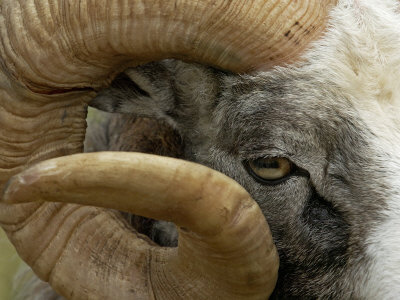
The Hebrew word and root for "ram" means the ram as food, the ram as a sacrifice, the skins dyed for the tabernacle. It means a pillar, door post, door jambs, pilaster (support). It means strong man, leader, chief, mighty tree like a terebinth, oak, or palm. In architecture, it is the term that refers to the projecting ledge or covering that surrounds the top and two sides of a door (Jesus said, "I am the door of the sheep." Jn. 10:7) on a building, often adorned with columns. It means powerful, mighty, strength, strong God. The Hebrew word for ram makes up the root of the name "El", which is part of the name of God. So the ram is identified with the Father, God.
The horns of the ram in Hebrew has the meaning to radiate, emit beams, shine, rays of light.
The ram was used as a sacrifice in the worship of the tabernacle as a peace offering(Lev. 9:4, 18, 16:3), a trespass offering (Lev. 19:22), as the ram of consecration (Ex. 29:15-22, 27, 31, 32), and as the ram of atonement (Num. 5:8).
As we know, God provided a ram caught in a thicket (entwined or braided branches, as a sukkah, or tabernacle) as a sacrifice in place of Abraham's son, Isaac (Gen. 22:13). We say that this ram represents Jesus, but I believe that the ram depicted in this encounter is the Father. Abraham travelled with Isaac to "the land of Moriah". What does "Moriah" mean? The Concordance says it means "Chosen by Jehovah". But the Hebrew words mean "to see, look at, perceive, consider, to be visible, to appear, to be shown, to look at each other, to face, Jah (Jehovah)", or the Father God. Abraham is brought to a place where he will see God face to face. He will perceive and consider God, Who is making Himself visible in this place, and in this situation, a situation of sacrifice.
I am saying that the ram in scripture is a depiction of the Father. A ram, as an animal, is a father, or sire, to its offspring, which are lambs.
I would also like to expand this thought by looking at the unconditional faithfulness and fealty of the relationship between Jesus and His Father:
"Then Jesus answered and said to them, "Most assuredly, I say to you, the Son can do nothing of Himself, but what He sees the Father do; for whatever He does, the Son also does in like manner. For the Father loved the Son, and shows Him all things that He Himself does; and He will show Him greater works than these that you may marvel."    Jn. 5:19-20
The above statement is very emphatic and clear and many times Jesus emphasizes the fact that He only says and does the things that He sees His Father doing (Jn. 8:38, 10:32, 37-38, 14:31, etc.).
I believe that one reason the Son is so determined to serve His Father so faithfully is because He saw His Father sacrifice Himself. Perhaps you may think this is a radical statement, but I believe the Son's relationship with the Father may very well be based upon this. Let us look at the following scripture:
"Then Jesus said to them, "When you lift up (crucify) the Son of Man, then you will know that I am He, and that I do nothing Myself; but as My Father taught Me, I speak these things. And He who sent Me is with Me. The Father has not left Me alone, for I always do those things that please Him."                                                           Jn. 8:28-29
The Son is emulating the Father, including even in His death. Why should we think that the crucifixion, or sacrifice, is excluded from the acts the Son sees the Father, Himself, doing?
Jesus makes it clear to us that no one takes His life from Him, but He freely gives it up:
"Therefore My Father loves Me, because I lay down My life, that I may take it again. No one takes it from Me, but I lay it down of Myself. I have power to lay it down, and I have power to take it again. This command I have received from My Father."          Jn. 10:17-18
Jesus told us in Jn. 5:19-20, (see above) that whatever the Father does, the Son does in like manner (likewise: equally, in the same way).  Can't we therefore assume that the Son willingly lays down His life because He saw His Father do it also?
We may ask how the Father can sacrifice Himself, laying His life down, when He is not flesh, but Spirit? When He is eternal and everlasting? We can only say that Jesus sacrificed Himself before He became flesh, while He was Spirit, so this is possible:
"All who dwell on the earth will worship Him, whose names have not been written in the Book of Life of the Lamb slain from the foundation of the world."        Rev. 13:8
The Lamb, the offspring of the Ram, was slain before He was ever born in the flesh on earth. Before the foundation of the world, Jesus and the Father were one, the Father being in the Son (Jn. 17:20-26), when also the Lamb was slain in the Spirit.
A father does not ask a son to do something he has not done himself, or is not willing to do himself.
A son who only does what he sees his father doing, does not give up his life, unless he has seen his father do the same.
This only begotten Son emulates His Father in all ways. Even when He sacrificed Himself, He was taking us to the place, Moriah, where He could show us the Father.
"...Lord, show us the Father...He who has seen Me, has seen the Father." (Jn. 14:8-9).

Our Father is the Ram of sacrifice.

"Now Behold the Lamb"
https://www.youtube.com/watch?v=7CK1R1suY6U

"Worthy Is The Lamb"
https://www.youtube.com/watch?v=LAplJ0_jDFc


Tuesday, November 19, 2013

Works

Faith PowerPoint Sermon

Many who practice faith understand that their walk should include works. What does it mean to do "works"? Does it mean to feed the hungry and clothe the poor? These things should certainly flow out of our character and compassion. But Jesus was speaking about specific works that He was doing. These works were directly given Him to do by His Father in heaven.

"But I have a greater witness than John's; for the works which the Father has given Me to finish- the very works that I do- bear witness of Me, that the Father has sent Me."
                                                                  John 5:36

"Jesus answered and said to them, "Most assuredly, I say to you, the Son can do nothing of Himself, but what He sees the Father do; for whatever He does, the Son does in like manner."
                                                                  John 5:19

Jesus makes it clear that all that He does, are the same as the Father does. There are no works of His own, no deeds that He decides to do because it seems the correct thing to do. He only does the works that He sees His Father doing. It has very little to do with doing "good deeds". All the works are designed and purposed to set men free from bondages of different types, whether sickness, sin, demon attacks.
Jesus even says that these works that He does, identify Him as having been sent from the Father, because they are the Father's works.
One example that shows the uniqueness of these works is found in John chapters 8 and 9.
Jesus has been trying to teach a crowd about who He is. They are a crowd who has worshipped God all of their lives. They have read the scriptures, and studied them. They have believed and accepted the interactions that God has had with their nation and their fathers. They believe themselves to be people of God, a covenant people. Jesus shockingly informs them that they are not a people of God. He says that they do not know God:

"He who is of God hears God's words, therefore you do not hear, because you are not of God."                                                      John 8:47

Imagine how shocked these people are to hear Jesus claim that they do not know God, and do not belong to Him. How was Jesus so sure that these people were no of God? Because they did not know Him, Jesus.

"...If God were your Father, you would love Me, for I proceeded forth and came from God; nor have I come of Myself, but He sent Me."          John 8:42

After Jesus made these pronouncements, the people took up stones to stone Him to death. They hated His words, and denied their truth. He supernaturally walked right through the midst of them unharmed.   
Shortly after passing through them, Jesus came upon a man who had been blind since birth. He fashioned clay from the ground, mixed with His saliva, and placed the mixture on the eyes of the blind man. He instructed the blind man to rinse his eyes in the pool of Siloam. "Siloam" means to send, in Hebrew. The root meaning of the word is to let go, to set free, to let loose.
Upon washing in this pool, the blind man could now see.
Jesus said of His actions:
I must work the works of Him who sent Me while it is day; the night is coming when no one can work."                                                                 John 9:4

So let us think about this occasion that Jesus used to do the work of His Father.
First, it was a work done immediately after a crowd tried to stone Jesus to death. Any other person might have sought to avoid people after that, at least he would have felt some resentment afterwards. But Jesus immediately saw that the Father had a work for Him to do in the blind man, and Jesus was obedient to do it. This is what the Father sent Him to do. It didn't matter what the circumstances might be, nor what Jesus' thoughts and emotions might be after dealing with the hostile crowd.
Secondly, the work the Father had for Jesus to do at this moment was a work of deliverance, according to the meaning of the word "Siloam". It was the Father's desire to liberate this man from blindness.

Not only did Jesus determine to do the works that His Father gave Him to do, but He expected all those who believe in Him to do so also:
"Do you not believe that I am in the Father, and the Father in Me? The words that I speak to you I do not speak on My own authority; but the Father who dwells in Me does the works. Believe Me that I am in the Father and the Father in Me, or else believe Me for the sake of the works themselves. Most assuredly, I say to you, he who believes in Me, the works that I do he will do also; and greater works than these he will do, because I go to My Father."
                                                                   John 14:10-12

Not only are we also to do these works of the Father, but even greater works than Jesus did.


The crowd we read about earlier claimed that Abraham was their father. Jesus disagreed. He told them, 
"If you were Abraham's children, you would do the works of Abraham."      John 8:39

What works of Abraham was Jesus talking about?  We know Abraham acted out of belief or faith in the Father. He was obedient to do what God told him to do. But there is also a specific act that Abraham was involved in that, I think, Jesus was teaching about.
James 2:21-22 says:
"Was not Abraham our father justified by works when he offered Isaac his son on the altar?"
Do you see that faith was working together with his works, and by works faith was made perfect?"
The works that Abraham did by faith was a specific kind of works. It was a works that the Father in heaven was doing. Abraham was willing to sacrifice his son of covenant. The Father's plan and will was to sacrifice His only begotten Son also. The Father's works are sacrificial. He is willing to pay with His blood for the liberation of men. The sacrifice can only be done out of the faith of knowing that God has purposed it. God has said it. God, Himself, is doing it.
As we consider these greater works of the Father that Jesus said we would do, we need to understand the depth of the sacrificial heart of the Father that lies at the center of each work. It is not about doing good deeds. It is not about religious activities and charitable works. It is about the supernatural works of deliverance that can only pour out of us through a sacrificial heart like the Father's and the Son's. We cannot separate the works, from the Father who sent us.

Our Father is works.

"I Give Myself Away"
http://www.youtube.com/watch?v=Ha3JbND1Sqg