Thursday, November 29, 2018

Fire


My mother used to have a little wooden plaque hanging over the kitchen sink. I read that plaque many times as a child and onward. On the little plaque was a proverb that read:

"It is better to keep your mouth shut and be thought a fool,
than to open it and remove all doubt!"        
Perry's Nut House
Belfast, ME

Many years later, my own family was travelling through Maine, when we passed a place called, "Perry's Nut House". I had to stop there and go in. As well as selling nuts, sure enough, they also had on their walls for purchase plaques of proverbs in all different sizes. NOW I knew where my Mom had found her little plaque all those years ago.
The years have proven my Mom's plaque to be a true proverb. Our Book of Proverbs in the Bible also has numerous verses regarding the pitfalls of the tongue, and the words out of our mouths. Here are just a few, including one that must have been the inspiration for the words on my mother's plaque:
"He who has knowledge spares his words, and a man of understanding is of a calm spirit. Even a fool is counted wise when he holds his peace; When he shuts his lips, he is considered perceptive."   Prov. 17:27-28
"Death and life are in the power of the tongue, and those who love it will eat its fruit." 
                                                                                                    Prov. 18:21
"A fool has no delight in understanding, but in expressing his own heart...A fool's mouth is his destruction, and his lips are the snare of his soul."   Prov. 18:2, 7

How many times I remember something I have said, and wince at the stupidity of it. I say to myself, "You should have kept your mouth shut." I used to be talkative, but after hearing my own words played back in my mind, as well as the words of others, I became much more reticent to open my mouth.
To multiply the problem of careless words, the world is full of unfortunate "Tweets" and regrettable Facebook posts. We don't realize what our outpouring of words reveals about ourselves. Regardless of a desire we might have to be careful in our speech, often, it seems, the words pour out of our mouths, seemingly beyond our ability to stop them. Jesus said that what we say reflects what is in our hearts, and many times, it isn't a pretty picture:
"Brood of vipers! How can you, being evil, speak good things? For out of the abundance of the heart the mouth speaks. A good man, out of the good treasure of his heart brings forth good things, and an evil man out of the evil treasure brings forth evil things."  Mt. 12:34-35
"But those things which proceed out of the mouth come from the heart, and they defile a man. For out of the heart proceed evil thoughts, murders, adulteries, fornications, thefts, false witness, blasphemies. These are the things which defile a man..."   Mt. 15:18-20
We may think that because we know and sincerely love the Lord that we are not the ones for whom Jesus meant these words, but for unbelievers only. Not so. Jesus also heard what came out of His own disciples' mouths, and discerned that the source of the words spoken were evil spirits, and even Satan himself (Mt. 16:23, Lk.9:54-56). One of these instances concerned the disciples' suggestion that they call down fire from heaven in judgment, while thinking that they were speaking righteousness according to the will of God. What have we spoken that we thought was righteous, but might cause Jesus to say to us, "You don't know what manner of spirit you are of "?
Paul wrote:
"Let no corrupt (rotten, unfit for use, of poor quality, worthless) word proceed out of your mouth, but what is good for necessary edification (building up), that it may impart (give, deliver, bestow a gift, furnish, supply) grace to the hearers. And do not grieve the Holy Spirit of God, by whom you were sealed for the day of redemption. Let all bitterness, wrath, anger, clamor (loud quarreling), and evil speaking be put away from you, with all malice. And be kind to one another..."   Eph. 4:29-32
Jesus said that the end times would be like the days of Noah. In the days of Noah, evil and violence totally pervaded the hearts of men (Gen. 6:5), and we know that out of the heart, the mouth speaks. We only have to hear a small portion of the news to see this same level of evil and violence flowing out of people's mouths, and filling their actions. This evil is spreading like a fire, because of the times in which we are living. We are not immune to these spirits, especially if we are careless and unwatchful.
In discussing the danger of the words that we speak, we must go to the Book of James:
"So then, my beloved brethren, let every man be swift to hear, slow to speak, slow to wrath...If anyone among you thinks he is religious, and does not bridle his tongue but deceives his own heart, this one's religion is useless...Even so, the tongue is a little member and boasts great things. See how great a forest a little fire kindles! And the tongue is a fire, a world of iniquity. The tongue is so set among our members that it defiles the whole body, and sets on fire the course (a circuit of physical effects, to incur extreme peril which requires the exertion of all one's effort to overcome) of nature ("genesis": nature, course of life, existence, lineage, human origin, generation-the whole multitude of men living at the same time); and it is set on fire by hell. For every kind of beast and bird, of reptile and creature of the sea, is tamed and has been tamed by mankind. But no man can tame the tongue. It is an unruly evil, full of deadly poison."    James 1:19, 26, James 3:5-8

We are literally setting the world, a whole generation of the living and their progeny, on fire with our tongues. The Greek language used in these verses does not limit the devastating consequences of reckless words to the spiritual realm, which is serious on its own, but the Greek specifies effects to the natural realm on a huge scale as well. And James was writing to the brethren, the believers. As I see out-of-control fires destroying homes and taking lives, I never realized that these raging fires could be a manifestation of the words out of man's mouth, out of my mouth.
I did not expect to make this discovery when I started this entry, but I should have known not to take the scriptures lightly on this topic, or any other. As we saw above, Jesus took this topic very seriously and warned:
"But I say to you that for every idle word men may speak, they will give account of it in the day of judgment. For by your words you will be justified, and by your words you will be condemned."   Mt. 12:36-37
And David, a man after God's own heart, prayed:
"Set a guard, O LORD, over my mouth; Keep watch over the door of my lips."  Ps. 141:3
I don't want my words to kindle fires, spiritual or natural.

Our Father is urging us to bridle our tongues.

Sunday, November 11, 2018

Innocents


There is a judgment that follows the shedding of innocent blood. The ground becomes defiled by the curse of the innocent blood. Let us look at the scriptures:
"...keep all these commands and do them...lest innocent blood be shed in the midst of your land which the LORD your God is giving you as an inheritance, and thus guilt of bloodshed be upon you...but you shall put away (to burn, remove, consume, be kindled-as in purge) the guilt of innocent blood from Israel that it may go well with you."  Deut. 19:10, 13
"They gather together against the life of the righteous, and condemn (be guilty, act wickedly, to do wrong) innocent blood."  Ps. 94:21
"They even sacrificed their sons and their daughters to demons, and shed innocent blood, the blood of their sons and daughters..and the land was polluted with blood." Ps. 106:37-38
"Their feet run to evil, and they make haste to shed innocent blood...whoever takes that way shall not know peace."   Isa. 59:7, 8 (excerpt)
"Do no wrong and do no violence to the stranger, the fatherless, or the widow, nor shed innocent blood in this place...Yet your eyes and your heart are for nothing but your covetousness, for shedding innocent blood, and practicing oppression and violence."
                                                                                                            Jer. 22:3, 17
"...do not consent if they say, "Come with us, let us lie in wait to shed blood; let us lurk secretly for the innocent without cause; let us swallow them alive like Sheol..."  Pro. 1:10-12
"These...things the LORD hates...hands that shed innocent blood..."  Pro. 6:16-17

In this nation, and perhaps in your nation as well, there has been a long history of the shedding of innocent blood. Whole peoples were killed because their land was coveted. People were murdered for racial or cultural reasons. We have seen murders of people because of the faith they follow. During this present generation, millions of unborn children have been murdered, principally because of the inconvenience of their birth. Every day, the news is filled with individual and mass killings committed for no rational reason at all. Our land is awash in innocent blood. The land becomes defiled, polluted, cursed as a result.
There was a King of Judah, Manasseh, who flooded Judah and Jerusalem with the blood of children who had been sacrificed to idols and demons at his command. The LORD executed judgment and justice for the innocent killed:
"So I will forsake the remnant of My inheritance and deliver them into the hand of their enemies...because they have done evil in My sight."... Moreover, Manasseh shed very much innocent blood, till he had filled Jerusalem from one end to another, besides his sin by which he made Judah sin, in doing evil in the sight of the LORD...And the LORD sent...them against Judah to destroy it, according to the word of the LORD which He had spoken by His servants the prophets...this came upon Judah to remove them from His sight because of the sins of Manasseh, according to all that he had done, and also because of the innocent blood that he had shed, for he filled Jerusalem with innocent blood, which the LORD would not pardon."   2 Kings 21:14-16, 24:2-4
Innocent blood cries to the LORD until the LORD gives justice. We see this from the very first recorded murder, which was the murder of Abel by his brother, Cain:
"Then the LORD said to Cain, "Where is Abel your brother?...What have you done? The voice (call aloud, bleating, cry, lowing voice, thundering) of your brother's blood cries (call for help, clamor, to be summoned, cry aloud in grief) out to Me from the ground. So now you are cursed from the earth, which has opened its mouth to receive your brother's blood from your hand..."    Gen. 4:9-11
Also, cries from those who have been killed for their faith in Christ sound before God:
"...And they cried with a loud voice saying, "How long, O Lord, holy and true, until You judge and avenge our blood on those who dwell on the earth?"   Rev. 6:10
Imagine the cries that continually sound before God from the blood of the millions of innocents killed in our nation during its relatively short history? Like Jerusalem under King Manasseh, our land is filled with shed innocent blood "from one end to another". How long, do we suppose, the LORD can delay the judgment and justice that this blood demands? This has been very much on my mind recently, because I think that the time is drawing very near. The LORD said to Noah:
"Surely for your lifeblood I will demand a reckoning; from the hand of every beast I will require it, and from the hand of man. From the hand of every man's brother I will require the life of man. Whoever sheds man's blood, by man his blood shall be shed; for in the image of God He made man."   Gen. 9:5-6
I am praying for God's mercy. I am praying that He can change our hearts. Scripture says, "For with God nothing will be impossible." (Lk. 1:37).
King Manasseh, who was responsible for the murder of many innocents, and had drawn all of Judah into the same evil, was dragged away from his kingdom in Jerusalem to Babylon in nose hooks and chains by the invading Assyrian army. In great affliction, "...he implored the LORD his God, and humbled himself greatly before the God of his fathers, and prayed to Him; and He received his entreaty, heard his supplication, and brought him back to Jerusalem into his kingdom. Then Manasseh knew that the LORD was God." (2 Chron. 33:12-13). Upon his restoration, Manasseh also brought Judah back to the worship of God by command. Although Manasseh was restored and Judah returned to the worship of God, Judah was still later carried away into Babylonian captivity for 70 years. The only thing that would cleanse the land that had been cursed by the shedding of innocent blood was enforced years of Sabbath rest for the land.
The shed blood of the innocents is crying out to God for justice. How then can our land be cleansed from the curse? Scripture says that if the people of God will humble themselves, pray, recognize and turn from the wickedness in our own hearts, and seek God's face of mercy and truth, God promises us that He will hear, forgive, and heal our land (2 Chron. 7:14). Jesus redeemed us from the curse, having been made a curse for us (Gal. 3:13). Can you imagine Him carrying the crushing weight of this terrible curse upon Himself? We who believe must humbly apply this redeeming sacrifice of Christ to ourselves, and to our land.
If we truly understand the seriousness and the urgency of this issue, perhaps we will do it. I very much love the people and land that God has given to us for a nation. Because this has been very much on my mind recently, and in my prayers, I have written about this to you.

Our Father hears the cries of the blood of the innocents.


Friday, November 2, 2018

"Abad-Shamar"


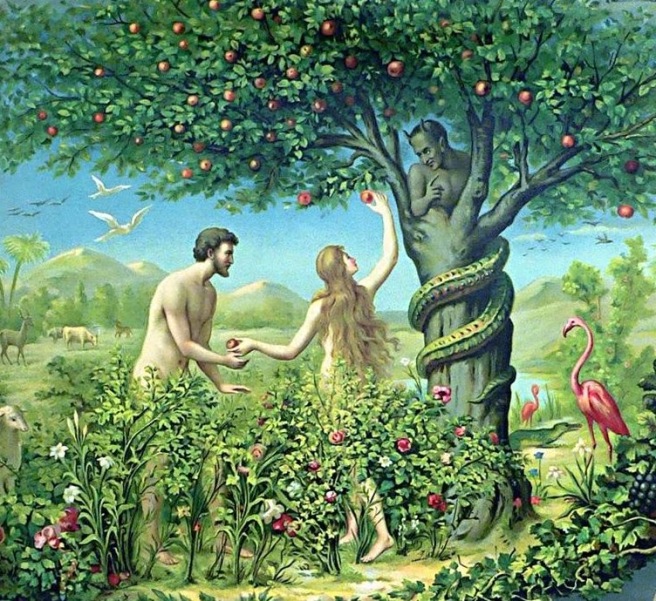
Satan drew man into sin by telling a lie. It is a lie that not only worked then, but is still working now. It is not a lie directed only towards those who are already perishing, but it is especially directed towards those who, like Adam, were created, or reborn, in the image of God, and who are called the "sons of God". Scripture tells us that, if possible, even the elect will be deceived (Mt. 24:24). After all, it does not benefit Satan to deceive those already condemned, but to deceive the sons of God. If the whole world is deceived at the same time, so much the better.
The custom-tailored lie with which Satan chose to deceive Adam questioned the truth of what God had instructed Adam:
"Has God indeed said, "You shall not eat of every tree of the garden?"....Then the serpent said to the woman, "You will not surely die."  Gen. 3:1, 4
We may say, "But it was Eve who was deceived." This is true, but Adam was recorded as being present every step of the way, and consenting (Gen. 3:6). Being present at the scene at the time, if Adam had not also been deceived, he would have stopped his wife from partaking of a death sentence, and he certainly would not have also partaken himself: "She also gave to her husband with her, and he ate."
As devastating as the lie has proven to be, there is a story behind the lie. The lie with which Satan chose to lure Adam was not chosen at random. Satan perceived a weakness in Adam, and custom-tailored his lie to successfully exploit the weakness. The weakness did not die with Adam, the son of God. The weakness, like the lie, persists today even regarding each of us, the sons of God through Christ. What did Satan see in the man that led this cunning, wily creature to choose the lie that he chose? It is important for us to know for ourselves.
We cannot say that Adam didn't know the Word of God. He was told the Word before Eve was created (see Gen. 2:15-18). Not only did he know it, but he even overemphasized the wording and danger of it, according to Eve's understanding (Gen. 3:3).   
So, how did Satan know that Adam would choose to ignore the Word of God? Adam was given two other instructions by God even before the command regarding the Tree of the Knowledge of Good and Evil. We tend to overlook these two commands, thinking we understand what they involved by the common English words used to describe them. However, the two preceding commands are extremely important, and anything but common, in the Hebrew language. God "took" (take away, carry off, carry away) the man He had created, and "put" (to rest, give rest to, make quiet, to cause to rest, to be granted rest, to pacify) him in the Garden (enclosed, fenced garden, to defend, cover, surround, to hedge about, protect) of Eden (pleasure, delight, luxury, dainty, finery, delicate, to be soft or pleasant, to conduct oneself softly), and then instructed him. In the commands from God, Adam was told to dress ("abad"- servant, to work, to make oneself a servant, bond-servant, enslave, worshipper) and to keep ("shamar"- to be on one's guard, to keep, guard, observe, give heed, watch, watchman, protect, save life, preserve, reserve, beware, pay heed) the garden (Gen. 2:15). 
As we will see later, these same commands were also the understanding of the Son of God, Jesus, and He fulfilled much of His Messianic purpose around them. When the Apostle Paul referred to himself as a "slave" or "bond-servant" of Christ (Rom. 1:1, Phil. 1:1, Titus 1:1), he was referring to "abad". We can know for sure that Adam neglected these first two commands, because of what occurred afterwards. Satan, in the form of a serpent, was allowed to come into the garden by Adam, and challenge the Word of God. Even before Satan's lie, Adam had failed to "shamar" - to protect and preserve. He failed as a watchman. He failed to beware, letting his guard down. When Satan began to challenge the truth of the Word that God had given the man, Adam failed as an "abad" worshipper and bond-servant, who should have immediately defended His Father's truth. Satan had seen by these failures that Adam could be successfully challenged in the commands he had been given by God.
Knowing the Word is a necessary thing. However, Adam's weakness was a weakness in character, as much, if not more, than a lack of Word knowledge, and Satan was able to overcome him. It is the same for us today. We strive to know the scriptures, but if we are not transformed by them in nature and character, we also can be easily deceived:
"And do not be conformed (to the same pattern) to this world, but be transformed (change into another form, transfigure) by the renewing (renovation, complete change for the better)of your mind (understanding, reason, thoughts, feelings, purposes, desires, the capacity for spiritual truth, perceiving divine things, considering and judging soberly, recognizing goodness and hating evil), that you may prove what is that good and acceptable and perfect will of God."  Rom. 12:2
Jesus was also tempted in the wilderness by Satan, as Satan again tried to twist, turn, and challenge a Son (Mt. 4:6) with the Word of God. As we see from His responses to that temptation, Jesus overcame the temptation with a faithful knowledge of the Word. However, every response He gave to the temptations also expressed His obedience in character to the abad and shamar commands of God to a Son (Mt. 4:4, 7,10).  
Jesus viewed Himself as an "abad" servant to His Father, and He was always discerning and determined to keep, or "shamar", and preserve what had been given into His care:
"For I have come down from heaven, not to do My own will, but the will of Him who sent Me. This is the will of the Father who sent Me, that of all He has given Me, I should lose nothing, but should raise it up at the last day."   Jn. 6:38-39
"While I was with them in the world, I kept them in Your name. Those whom You gave Me, I have kept; and none of them is lost except the son of perdition, that the Scripture might be fulfilled."   Jn. 17:12, 18:9
This is what it means to be a Son. This is what it means to be transformed by the abad and shamar of the Word. This is also our challenge. We must also be abad servants, being the shamar the Father has ordained us to be. Unfortunately, the prevailing sentiment of our time, and of this world is, "It's all about me." It seems that by the manner in which Adam so quickly accepted the lie that God was withholding good things to which Adam felt entitled (Gen. 3:5), he showed that he believed this philosophy of the world also. The lie of Satan played right into Adam's already revealed heart of resentment and rebellion towards his God Who had saved him out of the dust of the world, created him as His son, carried him away from danger, and set him in a protected place of restful delight.
The lie is still around, and the same weak character of Adam is still drawn to it. However, we have been called to abad and shamar.

Our Father has called us to be sons of God.

Friday, October 19, 2018

Foreknown


Man lives in the confines of time, but while God appoints times, He is not confined to time. All of our perceptions, even about most of scripture, are built around a measured past, present, and future, but God is not limited in this same way. 
As I read the Word, however, sometimes I get the feeling that I am being shown glimpses of an eternity beyond the yesterday, today and tomorrow timeframe that we automatically relate to scripture. An example of this occurred during my reading of the following verses:
"Save me, O God! For the waters have come up to my neck (soul). I sink in deep mire, where there is no standing; I have come into deep waters, where the floods overflow me. I am weary with my crying; my throat is dry; my eyes fail while I wait for my God...But as for me, my prayer is to You, O LORD, in the acceptable time; O God in the multitude of Your mercy, hear me in the truth of Your salvation. Deliver me out of the mire, and let me not sink; let me be delivered from those who hate me, and out of the deep waters. Let not the floodwater overflow me, nor let the deep swallow me up; and let not the pit shut its mouth on me....Draw near to my soul and redeem it...My soul waits for the LORD more than those who watch for the morning- yes, more than those who watch for the morning...I waited patiently for the LORD; And He inclined to me, and heard my cry. He also brought me up (rise, depart, spring up) out of a horrible (noise, tumult, like a house crashing down, roar, destruction, waste, desolate, be in ruins, to cause to be desolated) pit (well, cistern, dungeon, lowest sepulcher of stone-root meaning: declare, make plain, letters on a tablet), out of the miry (mud, dregs of wine) clay (damp dirt, root meaning includes: demon, dirt to be swept away, destruction as being swept clean) , and set my feet upon a rock (a fortress, a refuge, a stronghold of security), and established my steps (follow the footsteps of God, go straight, be happy, be blessed, prosper)."   Ps. 69:2, 13-15, 18, Ps. 130:6, Ps. 40:1-2
As I read these verses, I strongly felt that these words of David's could have been spoken  by Adam to God in the midst of a desolated, empty, void that was in the beginning (Gen. 1:2) before the work of creation began. After reading the verses above, does anyone else feel that way?
I began to picture God, having heard Adam's cry, pushing back darkness, and speaking light, establishing mornings of hope and new mercies where there had been no mornings. We know from the Word that God established these mornings even before the sun was created (Gen. 1:5, 14-18). For whose benefit did God break out these supernatural mornings? Perhaps He did so in answer to a soul crying to Him from an abysmal, dark emptiness. The message of hope that these mornings would carry to such a soul would be, "I hear you. I'm coming. I will save you." God divided and restrained flooding waters until the dry land appeared. Later, God formed the man and blew His breath into the man's nostrils, and man became a living soul. The term "living" also includes the idea of quickening, reviving, repairing or restoring life. God then fastened a garden (enclosure, root meaning: to defend, to cover, surround, protect, hedge about) to the earth, and placed man in it to provide him with protection and security. This coincides in meaning with what David said, "He set my feet upon a rock". 
This impression of God's rescue of Adam that I had while reading these verses from the Psalms would, if accurate, make the account of Adam's subsequent fall even more pathetic. God re-formed and recreated out of vast void and desolation to answer the cry of Adam's soul, yet Adam rejected His will after he was rescued, revived and safe. This similar falling away could also apply to many believers as well as we choose our will over His.
You may say that I am taking a giant leap from scripture into interpretation or impression, and I agree that I cannot prove my impression with specific scriptures. However, I can prove a scriptural precept and foundation which could include such a scenario. According to scripture, a spiritual place of foreknowledge exists in God that is more profound than even Einstein's physics of time and space. If you will bear with me a little further, I promise I will establish this foundation, and it is that foundation in truth that is most important, rather than personal "impressions":
-David is not just a psalmist, but a prophetic and Messianic messenger. One thousand years before the birth of Christ, David revealed the words that Christ would speak (Psalm 22), and many events that that would relate directly to Christ. If David had an intimate spiritual knowledge of the Last Adam (1 Cor. 15:45, Rom. 5:14before He became flesh, why couldn't David have intimate spiritual knowledge pertaining to the First Adam? Both Adams were connected to each other as "types" (figure, image: see Gen. 1:26, root meaning: wound, beat, smite, strike). Similarly, scripture also calls Adam "the son of God" (Lk. 3:38).
Is it possible for God to know a person before they are physically born or created? Absolutely:
- David wrote that God knew him before he was born: "My frame was not hidden from You, when I was made in secret, and skilfully wrought in the lowest parts of the earth. Your eyes saw my substance, being yet unformed. And in your book they all were written, the days fashioned for me, when as yet there were none of them."   Psa. 139:15-16
-God knew Jacob, and his descendants, all of Israel, before Jacob was born (Isa. 44:2, 24).
- The prophet Jeremiah was known by God before he was born, even before the womb: "Before I formed you in the womb I knew you; before you were born, I sanctified you; I ordained you a prophet to the nations."  Jer. 1:5
-The priesthood tribe of Levi was known by God, and offered tithes to God, generations before Levi was actually born, while his generation was still in his ancestor Abraham's loins (Heb. 7:9-10).
- WE were known before we were born, even before the creation- not only known, but called to salvation:
   "...just as He chose us in Him before the foundation of the world, that we should be holy and without blame before Him in love...being predestined according to the purpose of Him who works all things according to the counsel of His will.." Eph.1:4, 11(also see Rev. 13:8)
    "For whom He foreknew, He also predestined to be conformed to the image of His Son that He might be the firstborn among many brethren. Moreover, whom He predestined He also called; whom He called, these He also justified; and whom He justified, these He also glorified."  Rom. 8:29-30. This is also why scripture can say that we were already crucified, buried, and raised with Christ, when He was crucified, buried, raised and living again (Rom. 6:3-8).
    "...elect according to the foreknowledge of God the Father, in sanctification of the Spirit, for obedience and sprinkling of the blood of Jesus Christ."  1 Pet. 1:2
Regarding my impressions of Adam and his pre-creation cries to God as being the impetus of the startling creative work of God let me pose the question:
If God knew David, Jeremiah, Levi, and all of Israel before they were born, and knew and saved us even before the foundation of the world was established (and we were in Adam), why could He not also have known, heard, revived, and rescued Adam in the same manner?
I understand if you do not think that my impression concerning Adam is scripturally accurate, nor is it right for anyone to hang their faith upon any "impression", but upon the Word of God only. The speculation regarding Adam is not even the main point of this entry, which is the foreknowledge that God possesses, especially concerning our lives and purpose. This view of Adam as the impetus of the creation work of God that we read in Gen. 1 was only valuable because of the impact it had upon me, and the impression it made on me, to start me on a search that taught me something about the awesome magnitude of God our Father, and the depth of His omniscient, omnipresent, omnipotent, power and knowledge in eternity. It helped to illustrate for me His driven, unconquerable love to rescue and save us from before the foundation of the world. Its personal message to me is the assurance that He knew me in eternity and heard my cry, and moved heaven and earth to save me. I hope it has a similar impact for you.
 
Our Father knows and declares the end from the beginning.

"Morning Has Broken"
https://www.youtube.com/watch?v=3Rifby1tVE8


Friday, October 5, 2018

Giving


This entry is for "the givers", and you know who you are. Many of us give faithfully to a ministry, a church or a synagogue, a leader of a congregation, a building fund, a denomination, a critical need, an emergency, a church program such as "missions", or the church food pantry, and so on. The needs are very real for ministries, but the "supply" often seems to fall short of the need. I think that in the times ahead, economic pressures on ministries may even increase. It is time to examine our giving.
For some of us perhaps, as conscientious as we try to be regarding the giving of tithes and offerings, we can often leave out the most important factor. Although we are sincerely trying to fill a need with what we have in our pocket, we are leaving out the Miracle Worker, the Multiplier, our Father in heaven. This is about the heart of the one who gives. We don't want to be like ones who honor God with their lips, but who have removed their hearts far from Him (Isa. 29:13, Mt. 15:8).
Paul said:
"Indeed I have all and abound. I am full, having received from Epaphroditus ("lovely, "devoted", root meaning-superimposition of time, place, order, etc.) the things sent from you, a sweet smelling aroma (fragrance of incense or the pleasing smell to God of sacrifice), an acceptable sacrifice, well pleasing to God. And my God shall supply all your need according to His riches (root-to fill, to be filled) in glory (good opinion concerning (God) resulting in praise, honor, and glory, judgment, splendor, belonging to God) by Christ Jesus."   Phil. 4:18-19
Our offering is made not to a church, or to a need, or to a leader, but to God. His riches in glory in this case, as Paul describes, are created from praise, honor, glory given to Him with our offerings. He then supplies us from those riches. This is a supernatural conversion of an act of loving worship from a giver's heart, into a miraculous supply. Our Father certainly knows when we have bypassed Him, and have tried to supply the need from our own natural riches, whether large or small. These needs cannot be met by natural wealth. These needs are met when we give in glory, honor and praise to the One who turns natural wealth into supernatural abundant provision. Natural wealth is depleted. The supernatural wealth of God in Christ never runs out. Give to God with all praise, honor, thankfulness, gratitude, love, devotion, loveliness, holiness, glory, and He will abundantly supply from the riches in His glory created by what our heart offers to Him. We make a great mistake when we leave our Father out of the picture of giving, when we leave Him out of our hearts in this activity of worship. He is the whole, miraculous, vital ingredient. Giving in God's kingdom is not about what is in your wallet, but about what is in your heart. The sweet savor that comes up to Him doesn't come from the smell of our money when we offer it. It comes from the sacrifice of love from the soul that should be offered to Him with and through that giving. 
When even something meant for good, like giving, comes out of our own strength, it is limited by the flesh through which it was given. Giving out of our own strength is giving without Spirit, without the miracle life that it was created to have. In another place, the scriptures say, "And whatever you do, do it heartily, as to the Lord, and not to men, knowing that from the Lord you will receive the reward of the inheritance; for you serve the Lord Christ."  Col. 3:23-24
It is also interesting that God, according to the Philippian scriptures, supplies us with His riches in glory by Christ Jesus. When Jesus performed the miracles of the multiplication of the fish and the loaves, He offered them first to God with a blessing to Him: "And He took the five loaves and the two fish, and looking up to heaven, He blessed (to give thanks) and broke and gave..."  also, "Jesus took the loaves, and when He had given thanks, He distributed them...and likewise the fish, as much as they wanted."   Mt. 14:19, Jn. 6:11
I know Jesus did not offer empty words and feelings to His Father, but heartfelt thanks. From that kind of heart of giving, came the miracles of loaves and fishes by which He fed thousands, to be forever remembered throughout the earth. We also know the attitude and heart with which Jesus gave with thanks and love to His Father, even in the giving of His own life. In the breaking of the bread and drinking of the wine that represented His own body broken, and His own blood poured out for us, He gave thanks (1 Cor. 11:24, Mt. 26:26). The term, Eucharist, which we use in connection with communion, means "thanks". This is the heart that Jesus had toward the Father in giving, that He could give heartfelt, miracle working thanks to Him even in His own death. That very love and thankfulness assured the miraculous multiplication from the giving of Christ in His death, burial and resurrection that no man could have anticipated. That multiplication of souls and lives continues today, and will continue past the end of this age, and past the end of measured time itself. If I reduce my own giving from this height of glory to God, into an exercise of duty, or natural effort, thought and expectations, I remove it from the realm of exponential multiplication power in God's riches in glory.
When we are first saved, many of us are thrilled to be able to give something back to God. I couldn't wait to give. I would search for things to give, even after I had given in the form of money. All I wanted to do was to express my gratitude and love, even in this small way, for the supernatural thing He had done in my life. Have we lost that precious love and appreciation in our giving?
To one of the churches, Ephesus, Jesus said this:
"...and you have persevered and have patience, and have labored for My name's sake and have not become weary. Nevertheless I have this against you, that you have left your first love....repent and do the first works..."  Rev. 2:3-5
From these verses, and from looking at my own experience, I can clearly see that the works we do out of our first love, are different than the works we do without that earnest love. This would include our giving as well. While Jesus recognized the natural, even obedient efforts that the church at Ephesus made for His name's sake, He warned them and us to return to our first fresh love and gratitude to Him, and the resulting works we had previously done. This is where the life is. This is where the miraculous is. This is where God's riches in glory are. Jesus said that the failure to restore that first love in Him would cause our lampstand to be removed from us (v. 5). What is a church or a believer without the lampstand of Christ in the midst? It is not much at all.
To all of "the givers" out there: If you can relate to what I am talking about, join me, and together we will stir up our first love in every work of faith, especially our giving, bringing us into the miraculous realm of our Father's riches in glory.
"So let each one give as he purposes in his heart, not grudgingly or of necessity; for God loves a cheerful giver. And God is able to make all grace abound toward you, that you, always having all sufficiency in all things, may have an abundance for every good work."
                                                                                                              2 Cor. 9:7-8

Our Father is calling us back to our first love in our giving.

The Doxology

The Doxology (Another Version)

Saturday, September 29, 2018

Debate


We are currently in the season of the last of the fall feasts of the LORD, as He commanded Israel. It is the Feast of Tabernacles. It is the feast that joyously celebrates the harvest, and recalls the time in the wilderness when God's people dwelled in tents, and God dwelled among them. This feast also includes the promise of God that He will dwell again in the midst of men.
We have an account of this feast, and Jesus' attendance of it, in the New Testament:
"On the last day, the great day of the feast, Jesus stood and cried out saying, "If anyone thirsts, let him come to Me and drink. He who believes in Me as the scripture has said, out of his heart will flow rivers of living water." But this He spoke concerning the Spirit, whom those believing in Him would receive; for the Holy Spirit was not yet given, because Jesus was not yet glorified."   Jn. 7:37-39
Many in the crowd who heard Jesus that day thought that He surely was the Prophet, and the Messiah. There was, however, a great division among the people because of Him (v. 43). Even at the time of this feast, which was months before the Passover feast during which Jesus would be crucified, the leaders of the Temple had dispatched the Temple officers to arrest Jesus. The officers came back empty handed because they also were divided when they heard Jesus speak. The chief priests and the Pharisees asked them why they had not brought Jesus back with them, and the officers replied, "No man ever spoke like this Man!"
The Pharisees scolded them saying, "Are you also deceived? Have any of the rulers or the Pharisees believed in Him?"  The leaders also pointed out that the crowd believed Jesus because they were ignorant of scripture (v. 32, 45-48).
Their argument was that if none of the rulers or Torah experts believed in Him, then it couldn't be so, and Jesus must be a charlatan.
The people's own ears and hearts were telling them, "He must be", but the Torah experts were saying, "He couldn't be."
One of the issues that the Torah experts clung to in denying that Jesus was the Messiah, and an issue that also divided the people, was the fact that Jesus was from Galilee. According to their knowledge of scripture, none of the prophets had said that the Messiah was to come from Galilee. Instead, the Messiah was to be from Bethlehem (v. 42, 52).
We know from the Gospels, that Jesus was indeed born in Bethlehem as the result of an order from the Roman emperor to take a census of the people. Joseph, as a descendant of David, had to return to the birth town of his family, Bethlehem, in order to be accounted for and registered. He had to bring his very pregnant wife, Mary, with him. Thus Jesus did fulfill that Messianic prophecy, and many others.
As far as Galilee is concerned, the very great prophet Isaiah gave us a subtle hint regarding the mystery of Galilee:
"...In Galilee of the Gentiles...The people who walked in darkness have seen a great light; Those who dwelt in the land of the shadow of death, upon them a light has shined."
And just a handful of verses later, we read:
For unto us a Child is born, unto us a Son is given; and the government will be upon His shoulder. And His name will be called Wonderful, Counselor, Mighty God, Everlasting Father, Prince of Peace..."    Isa. 9:1-2, 6
The verses around Isaiah's prophecy regarding Galilee is a promise that the yokes of burdens will be broken. The staff and rod of the oppressor will be removed. Though Galilee was held in low esteem in Jesus' day, even the meaning of its name has a connection to the One whom we know as our Messiah, Jesus. In Hebrew, Galilee refers to a circle, or ring shape. Its root meaning includes "to roll (away) a stone". Those who know the details of the resurrection of Christ, will recognize the rolling of the stone away from the opening of the grave in which He had been buried (Mk. 16:1-4).
Though the Torah experts of Jesus' day could not find Him in the scriptures, He is present from Genesis through Revelation. Jesus told those who made scripture their study:
"You search the scriptures, for in them you think you have eternal life; and these are they which testify of Me. But you are not willing to come to Me that you may have life." 
                                                                                                               Jn. 5:39-40
However, many of those who were unlearned in the scriptures, whom the religious leaders scorned for their ignorance (Jn. 7:49), were able to identify Jesus as the Messiah because of what they heard Him say, and what they witnessed Him do. Their souls identified Him, and knew Him. When the disciples came in contact with Jesus after His resurrection, but did not recognize His form, they realized that Jesus had been with them, and they exclaimed.
"Did not our heart burn within us while He talked with us on the road, and while He opened the scriptures to us?"   Lk. 24:32
The Messiah is also discerned in the heart.
The Feast of Tabernacles that Jesus attended was a time of division and debate, much like today. God the Son, the Messiah, the Savior, was in tabernacle with them in their midst, but the most scripturally trained could not, or would not discern it.
There's a lesson in that for all of us. As I was reading this account of the Feast of Tabernacles in scripture, and the tragically wrong opinions of those scriptural experts during that great feast, the thought occurred to me that just when we think we know the scriptures, we find out how little we really do know. That's the way it should be, I think.

Our Father fills our hearts, as well as the scriptures, with the knowledge of His Son.

Saturday, September 22, 2018

Revolution!


More and more lately, I am thinking about prayer. I know most of us have learned a certain format for prayer, or maybe "pattern" would be a better word. Some are even given the exact words they must pray. I keep feeling the urge to "break out" of the pattern, though. 
Jesus' disciples, born, raised and living within the Jewish faith, felt they had to ask Jesus how to pray. They had heard and, most likely, prayed all of their lives, yet they were asking to be taught how to pray. They knew that Jesus in prayer was different than anything they had ever witnessed in their religion and tradition. Jesus, going off by Himself, had unspeakably powerful and intimate prayer experiences with the Father. The disciples wanted this incredible spiritual experience that they witnessed placed into a learnable format. It seems strange, though, for prayer to have a format, when we consider how personal and interpersonal it should be with our Creator. Maybe our Lord is looking for a "prayer revolution"!
Scripture contains examples of some really strange "pray-ers" and prayers- prayer revolutionaries for their time. It is very likely that the people who prayed in these examples, and the manner in which they prayed, were considered unacceptable in their day, and possibly would not be considered acceptable in many churches, synagogues, or prayer groups today either. Yet these "inappropriate" people, and their "unacceptable" prayers, wrought the miracle power of God.
Jesus described prayer this way: He said to go into our innermost room, to shut the door, and "to pray to your Father who is in the secret place." Again, this was a departure from the usual prayer formula of the day, and from the example that was set by the religious authorities (Mt. 6:5-6).
Hannah is an example from scripture of someone who unknowingly ventured into a different realm of prayer. The LORD had shut her womb, so she could not bear children. Desperate, she went to the tabernacle in Shiloh to pray for a child. She prayed from a soul burdened with bitterness, and she wept in anguish. In praying for a child, Hannah made an oath to the LORD that if He would give her a son, she would dedicate that son back to the LORD for service to Him all the days of his life. The priest, Eli, seated at the doorpost of the tabernacle, watched Hannah as she was praying. Eli thought Hannah had been drinking because she prayed silently in her heart, with only her lips moving, and he scolded her for being drunk (1 Sam. 1:13-14). She answered Eli's accusation:
"No, my lord, I am a woman of sorrowful spirit. I have drunk neither wine, nor intoxicating drink, but have poured out my soul before the LORD. Do not consider your maidservant a wicked (daughter of Belial) woman, for out of the abundance of my complaint and grief I have spoken until now."  v. 15-16
The religious of her day would have considered Hannah to have been a judged and cursed woman, since the LORD was the One Who shut her womb in the first place. She was also a woman coming by herself to the tabernacle of the LORD without a male, specifically her husband, Elkanah, to accompany her. Her manner of prayer was unacceptable. All of these assumptions might have been made by people because of the outward appearance and circumstances that Hannah presented that day. They would have been wrong.
God heard Hannah's prayer that day, and her son, Samuel was born. He became a prophet, a judge, and a minister to the LORD under Eli, the priest. He anointed kings, including David, who would establish the royal line of the coming Messiah. Samuel, who heard and obeyed the voice of the LORD, served the LORD in the tabernacle under the priest, even though he was not a Levite. Samuel was an Ephraimite - another pattern broken.
Hannah, after the birth of her miracle son, prayed a prayer that is one of the most powerful prayers of spiritual warfare and revelation, even the revelation of life from the grave, seen in scripture (1 Sam. 2:1-10). Hannah's very name means "grace, entreaty, prayer". The root meaning is "show favor, have mercy, seek favor, implore favor". The root also contains the meaning "to be loathsome". There's the paradox of Hannah: she is considered loathsome because of her circumstances, but from the misery of that condition, her soul poured out miraculous prayer that moved the hand of God. It could be said that God closed Hannah's womb for the purpose of bringing her to the very spiritual place and to the exact moment, in order to birth a Samuel (meaning "His name is EL", "Heard of God") in the earth. This Samuel was one who heard and obeyed God, but "Samuel" was also about God "hearing, listening to, obeying, granting requests to, agreeing with, yielding to, consenting with, hearing with attention to" man.
Another great prayer revolutionary in scripture was at the opposite end of the spectrum from our little Hannah. However, he was also one whom others would consider least likely to forge a prayer revolution because he was a king. David created prayer songs from his most personal experiences. Some of the prayers are of the most intimate nature-between himself and God, revealing his private heart, even though he knew that they would be sung in public. Out of David's personal circumstances of fear, victory, betrayal, shameful sin and deepest personal repentance, utmost joy, personal worship and reverence, came miracle prayers of deliverance, victory, healing, provision, salvation and more. Each psalm is different with no set pattern, beginning or ending. Of course, we have taken his prayers, and have included them into some of our prayer "format"! Maybe there is a greater lesson to be learned from those precious prayers of David than a formula.
Prayer is the eternal hope of man that he may speak to God. It is a personal, spiritual blessing given by the Almighty to man, which can never be silenced except by man himself. All creation depends upon the prayers of man. It is too big to be confined within the structure that we assigned for it. Eli would have sent Hannah away based upon his perceptions of who should pray, and how one should pray, and if he had done that, a moment and a miracle would have been lost.
God does not see as man sees. Men judge by the outward appearance, but the LORD looks upon the heart (1 Sa, 16:7). The LORD had to make this very correction to our miracle son, Samuel, when he would have anointed the wrong man to be king. Sometimes the most unlikely person may carry a miracle prayer in their heart.
I know that somewhere out there there are prayer revolutionaries. They are probably unknown and unrecognized, but they are in their prayer closets exposing their deepest heart to God. That's where I want to be also.

Don't be afraid to break out of the prayer box. Don't feel that you are insignificant in prayer, or that your prayer is not as valuable as others'. As with Hannah, each of us has been brought through personal circumstances, to a moment before God. We have carried this precious seed of prayer that is unique to each one. No one else can bring this same seed to birth like you can, or like I can, as a unique individual. We have been brought to these prayer moments with that seed, in order to birth a Samuel in the earth. Like Hannah and David, the "Samuel" we birth at any given moment of a day, might be a Samuel of thanks and gratitude, provision, healing, peace, life, hope, rest, salvation, repentance, forgiveness, resurrection, reconciliation, revival, revelation, justice, love, faith, renewal, restoration, mercy, grace, truth, holiness, righteousness - the possibilities are as limitless as a life, or as God, Himself.

Our Father is calling us to a prayer revolution!