Showing posts with label 14. Show all posts
Showing posts with label 14. Show all posts
Thursday, August 11, 2016
Cities
To borrow an expression, this is a tale of two cities. It is also a tale of two men, both called "righteous" in Scripture, who are on two different journeys, with two very different destinations in mind, even though for part of the way, over 1,000 miles, they walked side by side. The fact that their destinations were different, affected their futures.
The two who walked together for a time were Abraham and his nephew, Lot.
As they walked together they prospered. Because each of their flocks and herds had increased so greatly, they could no longer graze and water the two flocks together. Disputes and arguments developed because of the close proximity of the flocks and shepherds (Gen. 13:6-7).
Abraham told Lot to separate himself from him and he offered his nephew first choice of where he would like to move and settle his flock. Perhaps Abraham began to suspect that he and Lot were not looking for the same thing. Lot saw the distant green valley which looked like the best location, and made his decision (Gen. 13:10-13). Abraham went in the opposite direction. Abraham did not depend on the greenness of a location in order to prosper. He depended upon God. Lot was looking for a place of increase, and Abraham was looking for a place where he could continue to hear and see God, continue to be in His presence, which also happens to be a place of increase.
In this green valley that Lot chose, stood the cities of Sodom and Gomorrah. Others coveted this valley, and these prosperous cities as well, and war between kings broke out over them. In this large war between multiple kings, Lot was taken captive with many others, and their possessions were taken as well (Gen. 14:11-12). Abraham, with the help of God, rescued Lot, and all of his possessions. After this miraculous deliverance, Abraham came face to face with the supernatural priest, Melchizedek ("King of Righteousness"), King of Salem ("Peace"), a manifestation before His birth as Christ, the King of Righteousness, and Prince of Peace, Himself. Lot, on the other hand, had returned to Sodom ("burning, conflagration").
We know what happened in God's judgment of sinful Sodom and Gomorrah ("ruined heap, treat as a slave, tyranny"). Angels had to physically pull Lot and his family out of Sodom, in order to rescue them out of the judgment that was about to fall (Gen. 19:16).
Lot begged the angels to let him go to nearby Zoar, rather than into the mountain as the angels had instructed. From Zoar, Lot's wife looked back at the destruction of Sodom, and became a pillar of salt. The word "Zoar" means insignificance, to grow small, to become despised, mean. This place was Lot's preference.
Abraham also looked upon the destruction of Sodom, but he looked from the place where he had previously stood before the LORD in intercession: the plain, or terebinths, of Mamre.
The word "plain" or "terebinth" means great tree, oak grove. The root meaning is the word for the ram of sacrifice, the ram from whose skin the tabernacle of God would be constructed in the future, the strength of the ram, chief, mighty man. The root word also means pillar, door post, door jambs (imagery of Passover). "Mamre" means strength, also, and fatness. It means to flap the wings in order to hasten, lift up, and rise.
Ultimately, the difference between the two men was that Lot was looking for Sodom and Zoar. Abraham was looking for a city built by God, the place of his inheritance:
"For he looked for a city which hath foundations ("principles, system of truth established, set forth, ordained"), whose builder ("founder, bring forth, travail, be born, produce fruit from seed") and maker ("author, work, undertaking for a mass of people knitted together") is God." Heb. 11:10
Two righteous men, two cities, two outcomes. Abraham became the father of nations and the father of faith in God. Lot became the father of Moab ("seed of his father"), a son from incest (Gen. 19:36-37), and a nation that was a frequent opponent of Israel.
Though both men knew God, and were accounted righteous, their lives turned out very differently. Their lives were determined, in part, upon the spiritual city for which they searched. Lot's choices were based on the outward appearance of wealth and success. Perhaps he sought a life of comfort and convenience that these cities represented. Even though his choice resulted in his captivity, he went back to it. Although his soul was vexed deeply by the sin he saw daily in this city (2 Pet. 2:7-8), he remained until he was forced out by angels. His family, and his future generations, were threatened and ultimately destroyed by his choice. We look at Lot's life and we see the errors, and the fruit of the errors. We face the same choices everyday. We live in the midst of Sodom, ourselves. What will make our choices different from Lot's? Perhaps we need to keep Abraham in mind:
Abraham travelled to and remained in places where he stood before God, and interceded before God. His reliance was upon the covenant, provision, prophetic promises and strength of God. His generations were numbered as many as the stars in the sky, and the grains of sand by the sea. His life continues to teach us about faith, dedication, and obedience to God. Scripture tells us that he continually sought the City of God.
God allows us the ability to make choices, but once He has put the knowledge and direction of His City into our hearts, all of our choices should lead us there. All else is built upon sinking sand.
This is a tale of two men and two cities.
Our Father teaches us to look for His City.

Wednesday, September 30, 2015
Ram
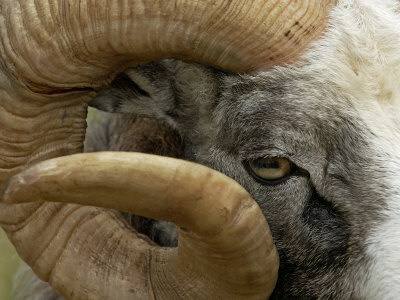
The Hebrew word and root for "ram" means the ram as food, the ram as a sacrifice, the skins dyed for the tabernacle. It means a pillar, door post, door jambs, pilaster (support). It means strong man, leader, chief, mighty tree like a terebinth, oak, or palm. In architecture, it is the term that refers to the projecting ledge or covering that surrounds the top and two sides of a door (Jesus said, "I am the door of the sheep." Jn. 10:7) on a building, often adorned with columns. It means powerful, mighty, strength, strong God. The Hebrew word for ram makes up the root of the name "El", which is part of the name of God. So the ram is identified with the Father, God.
The horns of the ram in Hebrew has the meaning to radiate, emit beams, shine, rays of light.
The ram was used as a sacrifice in the worship of the tabernacle as a peace offering(Lev. 9:4, 18, 16:3), a trespass offering (Lev. 19:22), as the ram of consecration (Ex. 29:15-22, 27, 31, 32), and as the ram of atonement (Num. 5:8).
As we know, God provided a ram caught in a thicket (entwined or braided branches, as a sukkah, or tabernacle) as a sacrifice in place of Abraham's son, Isaac (Gen. 22:13). We say that this ram represents Jesus, but I believe that the ram depicted in this encounter is the Father. Abraham travelled with Isaac to "the land of Moriah". What does "Moriah" mean? The Concordance says it means "Chosen by Jehovah". But the Hebrew words mean "to see, look at, perceive, consider, to be visible, to appear, to be shown, to look at each other, to face, Jah (Jehovah)", or the Father God. Abraham is brought to a place where he will see God face to face. He will perceive and consider God, Who is making Himself visible in this place, and in this situation, a situation of sacrifice.
I am saying that the ram in scripture is a depiction of the Father. A ram, as an animal, is a father, or sire, to its offspring, which are lambs.
I would also like to expand this thought by looking at the unconditional faithfulness and fealty of the relationship between Jesus and His Father:
"Then Jesus answered and said to them, "Most assuredly, I say to you, the Son can do nothing of Himself, but what He sees the Father do; for whatever He does, the Son also does in like manner. For the Father loved the Son, and shows Him all things that He Himself does; and He will show Him greater works than these that you may marvel." Jn. 5:19-20
The above statement is very emphatic and clear and many times Jesus emphasizes the fact that He only says and does the things that He sees His Father doing (Jn. 8:38, 10:32, 37-38, 14:31, etc.).
I believe that one reason the Son is so determined to serve His Father so faithfully is because He saw His Father sacrifice Himself. Perhaps you may think this is a radical statement, but I believe the Son's relationship with the Father may very well be based upon this. Let us look at the following scripture:
"Then Jesus said to them, "When you lift up (crucify) the Son of Man, then you will know that I am He, and that I do nothing Myself; but as My Father taught Me, I speak these things. And He who sent Me is with Me. The Father has not left Me alone, for I always do those things that please Him." Jn. 8:28-29
The Son is emulating the Father, including even in His death. Why should we think that the crucifixion, or sacrifice, is excluded from the acts the Son sees the Father, Himself, doing?
Jesus makes it clear to us that no one takes His life from Him, but He freely gives it up:
"Therefore My Father loves Me, because I lay down My life, that I may take it again. No one takes it from Me, but I lay it down of Myself. I have power to lay it down, and I have power to take it again. This command I have received from My Father." Jn. 10:17-18
Jesus told us in Jn. 5:19-20, (see above) that whatever the Father does, the Son does in like manner (likewise: equally, in the same way). Can't we therefore assume that the Son willingly lays down His life because He saw His Father do it also?
We may ask how the Father can sacrifice Himself, laying His life down, when He is not flesh, but Spirit? When He is eternal and everlasting? We can only say that Jesus sacrificed Himself before He became flesh, while He was Spirit, so this is possible:
"All who dwell on the earth will worship Him, whose names have not been written in the Book of Life of the Lamb slain from the foundation of the world." Rev. 13:8
The Lamb, the offspring of the Ram, was slain before He was ever born in the flesh on earth. Before the foundation of the world, Jesus and the Father were one, the Father being in the Son (Jn. 17:20-26), when also the Lamb was slain in the Spirit.
A father does not ask a son to do something he has not done himself, or is not willing to do himself.
A son who only does what he sees his father doing, does not give up his life, unless he has seen his father do the same.
This only begotten Son emulates His Father in all ways. Even when He sacrificed Himself, He was taking us to the place, Moriah, where He could show us the Father.
"...Lord, show us the Father...He who has seen Me, has seen the Father." (Jn. 14:8-9).
Our Father is the Ram of sacrifice.
"Now Behold the Lamb"
https://www.youtube.com/watch?v=7CK1R1suY6U
"Worthy Is The Lamb"
https://www.youtube.com/watch?v=LAplJ0_jDFc
Subscribe to:
Posts (Atom)