 The prophet Isaiah gave us a name for the coming Messiah. He was the only one in scripture to use this name, and he only used it twice. It is the name, "Immanuel", and means "God with us". The name's meaning goes even deeper than that simple interpretation, as we will see.
Enemies came up against Jerusalem. Rezin (firm, stable, pleasure, delight, self-will, goodwill), king of Syria had joined with the king of the northern kingdom of Israel, named Pekah (open the eyes), to plan the attack. These kings even planned to replace the weak king of Judah, Ahaz, with a man who was the son of Tabeal (God is good, pleasing to God, to be better). Sounds good, right? But their plans were not God's plans. The names of the kings are interesting in this account. Scripture uses the term "open the eyes" to describe two kinds of events. In the first, Satan is beguiling Eve to eat of the fruit of a forbidden tree of the knowledge of good and evil. He assures her "For God knows that in the day you eat of it your eyes will be opened, and you will be like God knowing good and evil." Not only did Eve eat, but Adam did as well. "Then the eyes of both of them were opened, and they knew that they were naked; and they sewed fig leaves together and made themselves coverings." (Gen. 3:5, 7)
Adam and Eve were drawn to a way to open their own eyes, with their own strength and self-determination. As a result, they saw only the natural circumstances, and self. Seeing these things, they tried to make for themselves their own feeble natural coverings, which can never substitute for the omnipresent covering of the Almighty. They also determined to hide themselves from God.
The other way for the eyes to be opened, is if God opens them (Gen, 21:19, Num. 22:31, 2 Ki. 6:17-20, and many more). When God opens your eyes, you see saving truth. You see beyond the natural circumstances, and into the greater spiritual reality.
In this case, we may be able to say that the king of Israel, Pekah, chose to open his own eyes, and saw the king of Syria as pleasing, firm, and stable, and therefore joined with him against Jerusalem, and assured himself that by so doing, Judah would end up with a better king. The king of Judah, Ahaz (to be caught, to be affrighted), was not a spiritually strong man, and he was involved in idolatry. The prophet Isaiah goes before King Ahaz to inform him of the approaching danger, and to give him a promise from the LORD. The LORD promised that the attacking kings' plans would not stand, and would not come to pass (Isa. 7:7, 8:8-10). However, Isaiah warns Ahaz, "If you will not believe, surely you shall not be established." Because the defeat of the attacking kings hinges on Ahaz' belief of the prophetic promise, Isaiah tells Ahaz to seek a confirming sign from the LORD, no matter how large or difficult, but Ahaz refuses to do so, perhaps in some religious self-righteousness, but really in fear, as his name implies. Isaiah, fed up with such reticence, prophesies the sign himself. However, Isaiah isn't just dealing with one king. What happens to this king, even though he is a weakling, will affect God's elected Messianic bloodline that God has chosen from out of David, by His own covenant promise. So Isaiah prophesies in this manner: "Hear now, O house of David!..." (Isa. 7:13). Isaiah reaffirms the Messianic promise to David as the sign:
"Therefore, the LORD Himself will give you a sign: Behold, the virgin shall conceive and bear a Son, and shall call His name Immanuel." Isa. 7:14
God also warns the prophet Isaiah that the prophet was not to conform to the ways and ideas of the people, but should remain faithful to the revelation of Immanuel (Isa. 8:11-12).
This prophesied child, Immanuel: God with us, will eat "curds (intoxicating power, to join, a wall of protection, even double walls) and honey (stickiness, gumminess)", and "shall know to refuse the evil and choose the good". The stickiness of the honey is like the power that will join God to men. Through Immanuel, He will be joined to them in power, and be double walls of defense around them.
The meaning of the word "Immanuel" itself, comes from el, God as the ram of sacrifice, even whose very skins are used to cover the tabernacle, and im and amam meaning "with, among, near, communion, together, at the same time, join together, gather together, to overshadow, to shut, to hide, to conceal".
Jesus revealed Himself as "Immanuel" several times:
"O Jerusalem, Jerusalem...How often I wanted to gather your children together, as a hen gathers her chicks (brood) under her wings, but you were not willing!" Mt. 23:37, Lk. 13:34
"...that they all may be one, as You, Father, are in Me, and I in You; that they also may be one in Us, that the world may believe that You sent Me. And the glory which You gave Me I have given them, that they may be one just as We are one: I in them, and You in Me; that they may be made perfect in one...Father, I desire that they also whom You gave Me may be with Me where I am...the love with which You loved Me may be in them, and I in them."
Jn. 17:21-26 (excerpt)
All of these words of Jesus reveal His identity as Immanuel. In the Concordance, the commentator likens the concept of the word "Immanuel" with the German word, "zusammen". Zusammen literally means "to the same", usually translated as "all together".
What does Immanuel mean to all of us today? It is in the idea that God is not only "with us", but He has made us a part of Himself through Messiah, Christ. He has placed us together with Him, in Him. Where we are weak, He is strong. Where we are poor, He is rich. Where death has claimed a hold on us, He is the overcoming life, and so forth. Paul also stressed our inseparability with Christ (Rom. 6:5, Eph. 2:5-6, 1 Thess. 5:10). All of this is the manifestation of Immanuel. And so we are also therefore joined together with each other as Paul taught (1 Cor. 1:10, 5:4, Eph. 1:10, 2:22).
To me, personally, Immanuel has special meaning. Several years ago, I had a serious illness, and required surgery. In the world's "open eyes", the odds were against me. As I awoke from the surgery, I could only think and say aloud repeatedly one phrase, "Immanuel, God with me". Those who were there probably thought the drugs had dulled my mind, but the Lord set my identity with His, and placed that confession in my mouth, before I could even "reason" it out, or decide it myself. And I am healed.
Let the same belief and confession of Immanuel also be in your heart and mouth.
Our Father has sent Immanuel, God with us.
Excerpt From Charles Spurgeon's Sermon:
https://www.youtube.com/watch?v=Xc9Z43YPF-Q
"Jesus, Name Above All Names"
https://www.youtube.com/watch?v=JEBAHFFJdW8
"O Come, O Come, Emmanuel"
https://www.youtube.com/watch?v=VCDvc4G7EgI
The prophet Isaiah gave us a name for the coming Messiah. He was the only one in scripture to use this name, and he only used it twice. It is the name, "Immanuel", and means "God with us". The name's meaning goes even deeper than that simple interpretation, as we will see.
Enemies came up against Jerusalem. Rezin (firm, stable, pleasure, delight, self-will, goodwill), king of Syria had joined with the king of the northern kingdom of Israel, named Pekah (open the eyes), to plan the attack. These kings even planned to replace the weak king of Judah, Ahaz, with a man who was the son of Tabeal (God is good, pleasing to God, to be better). Sounds good, right? But their plans were not God's plans. The names of the kings are interesting in this account. Scripture uses the term "open the eyes" to describe two kinds of events. In the first, Satan is beguiling Eve to eat of the fruit of a forbidden tree of the knowledge of good and evil. He assures her "For God knows that in the day you eat of it your eyes will be opened, and you will be like God knowing good and evil." Not only did Eve eat, but Adam did as well. "Then the eyes of both of them were opened, and they knew that they were naked; and they sewed fig leaves together and made themselves coverings." (Gen. 3:5, 7)
Adam and Eve were drawn to a way to open their own eyes, with their own strength and self-determination. As a result, they saw only the natural circumstances, and self. Seeing these things, they tried to make for themselves their own feeble natural coverings, which can never substitute for the omnipresent covering of the Almighty. They also determined to hide themselves from God.
The other way for the eyes to be opened, is if God opens them (Gen, 21:19, Num. 22:31, 2 Ki. 6:17-20, and many more). When God opens your eyes, you see saving truth. You see beyond the natural circumstances, and into the greater spiritual reality.
In this case, we may be able to say that the king of Israel, Pekah, chose to open his own eyes, and saw the king of Syria as pleasing, firm, and stable, and therefore joined with him against Jerusalem, and assured himself that by so doing, Judah would end up with a better king. The king of Judah, Ahaz (to be caught, to be affrighted), was not a spiritually strong man, and he was involved in idolatry. The prophet Isaiah goes before King Ahaz to inform him of the approaching danger, and to give him a promise from the LORD. The LORD promised that the attacking kings' plans would not stand, and would not come to pass (Isa. 7:7, 8:8-10). However, Isaiah warns Ahaz, "If you will not believe, surely you shall not be established." Because the defeat of the attacking kings hinges on Ahaz' belief of the prophetic promise, Isaiah tells Ahaz to seek a confirming sign from the LORD, no matter how large or difficult, but Ahaz refuses to do so, perhaps in some religious self-righteousness, but really in fear, as his name implies. Isaiah, fed up with such reticence, prophesies the sign himself. However, Isaiah isn't just dealing with one king. What happens to this king, even though he is a weakling, will affect God's elected Messianic bloodline that God has chosen from out of David, by His own covenant promise. So Isaiah prophesies in this manner: "Hear now, O house of David!..." (Isa. 7:13). Isaiah reaffirms the Messianic promise to David as the sign:
"Therefore, the LORD Himself will give you a sign: Behold, the virgin shall conceive and bear a Son, and shall call His name Immanuel." Isa. 7:14
God also warns the prophet Isaiah that the prophet was not to conform to the ways and ideas of the people, but should remain faithful to the revelation of Immanuel (Isa. 8:11-12).
This prophesied child, Immanuel: God with us, will eat "curds (intoxicating power, to join, a wall of protection, even double walls) and honey (stickiness, gumminess)", and "shall know to refuse the evil and choose the good". The stickiness of the honey is like the power that will join God to men. Through Immanuel, He will be joined to them in power, and be double walls of defense around them.
The meaning of the word "Immanuel" itself, comes from el, God as the ram of sacrifice, even whose very skins are used to cover the tabernacle, and im and amam meaning "with, among, near, communion, together, at the same time, join together, gather together, to overshadow, to shut, to hide, to conceal".
Jesus revealed Himself as "Immanuel" several times:
"O Jerusalem, Jerusalem...How often I wanted to gather your children together, as a hen gathers her chicks (brood) under her wings, but you were not willing!" Mt. 23:37, Lk. 13:34
"...that they all may be one, as You, Father, are in Me, and I in You; that they also may be one in Us, that the world may believe that You sent Me. And the glory which You gave Me I have given them, that they may be one just as We are one: I in them, and You in Me; that they may be made perfect in one...Father, I desire that they also whom You gave Me may be with Me where I am...the love with which You loved Me may be in them, and I in them."
Jn. 17:21-26 (excerpt)
All of these words of Jesus reveal His identity as Immanuel. In the Concordance, the commentator likens the concept of the word "Immanuel" with the German word, "zusammen". Zusammen literally means "to the same", usually translated as "all together".
What does Immanuel mean to all of us today? It is in the idea that God is not only "with us", but He has made us a part of Himself through Messiah, Christ. He has placed us together with Him, in Him. Where we are weak, He is strong. Where we are poor, He is rich. Where death has claimed a hold on us, He is the overcoming life, and so forth. Paul also stressed our inseparability with Christ (Rom. 6:5, Eph. 2:5-6, 1 Thess. 5:10). All of this is the manifestation of Immanuel. And so we are also therefore joined together with each other as Paul taught (1 Cor. 1:10, 5:4, Eph. 1:10, 2:22).
To me, personally, Immanuel has special meaning. Several years ago, I had a serious illness, and required surgery. In the world's "open eyes", the odds were against me. As I awoke from the surgery, I could only think and say aloud repeatedly one phrase, "Immanuel, God with me". Those who were there probably thought the drugs had dulled my mind, but the Lord set my identity with His, and placed that confession in my mouth, before I could even "reason" it out, or decide it myself. And I am healed.
Let the same belief and confession of Immanuel also be in your heart and mouth.
Our Father has sent Immanuel, God with us.
Excerpt From Charles Spurgeon's Sermon:
https://www.youtube.com/watch?v=Xc9Z43YPF-Q
"Jesus, Name Above All Names"
https://www.youtube.com/watch?v=JEBAHFFJdW8
"O Come, O Come, Emmanuel"
https://www.youtube.com/watch?v=VCDvc4G7EgI
There are many learning environments, but not all learning is the same. Not all teaching is the same either. There is a special learning experience that goes beyond teaching, and into something more: impartation. It goes beyond the sharing of information, and involves a giving of an actual portion of one's self that contains experiential knowledge. This is done, especially, within the relationship between parent and child.
In scripture, fatherhood and sonship hold tremendous importance. Individuals are identified by who their father and grandfather were. Even in the Hebrew names given in the mentions of fathers and grandfathers, we can see the spiritual impartation that has passed through the generations. For example, the prophet Jeremiah's name means "whom Jehovah has appointed". His father is listed as Helkiah, meaning "my portion is Jehovah".
We see a great example of the impartation of experiential knowledge of God from parent to child in the Book of Proverbs. Proverbs is recognized as a book of Godly wisdom, written by King Solomon, whose reputation throughout history is one of great wisdom. The first thing Solomon does is identify himself as a son, in this case, the son of David:
"The proverbs of Solomon the son of David, king of Israel..." Prov, 1:1
Solomon is also specifically imparting his experience of God to his son:
"My son, hear the instruction of your father, and do not forsake the law of your mother;
Prov.1: 8
"My son, if you receive my words, and treasure my commands within you, so that you incline your ear to wisdom, and apply your heart to understanding....then you will understand the fear of the LORD, and find the knowledge of God." Prov. 2:1-5 (excerpt)
As we can see from the verses above, the impartation comes not only from the father, but from the mother as well. Chapter 31 of Proverbs, for example, is an impartation to Solomon from his mother.
Solomon's intent was to pass down to his son what he had learned from his father and mother, and from his own experiences with God. In amazing revelation, he is imparting to his son that wisdom is not a quality or thing, but it is a person, and this person is to be found above everything else:
"Wisdom is the principal thing; therefore get wisdom..." Prov. 4:7
So great is the impartation from Solomon to his son (and consequently to all of us), that the Person of Wisdom, actually begins to speak directly to us, revealing, or imparting truths from eternity (Prov. 8:12-36). Wisdom tells us here, "...whoever finds me finds life"
(v. 35). Wisdom imparts all of these things to us in this chapter, referring to us as "my children" (v. 32 NKJV).
This is also how God imparts to us: as a Father to His son, or child. The power of it is not just a teaching of truth, but a giving of a part of the Father to us, His children. Jesus described the impartation this way:
"For I have given to them the words which You have given to Me; and they have received them, and have known surely that I came forth from You...all Mine are Yours, and Yours are Mine, and I am glorified in them...Holy Father, keep through Your name those whom You have given Me, that they may be one as we are...You, Father, are in Me, and I in You; that they also may be one in Us...I in them, and You in Me; that they may be made perfect in one..." Jn. 17:8-23 (excerpt)
The words that Jesus gave to His disciples, and to us, as we read in the above verses, were not just a teaching, but an impartation from Him, and from His Father within Him, a giving of Himself, even as His Father gave to Jesus from Himself.
The Apostle Paul wanted to make clear to us that we are sons, and receive impartation from our heavenly Father as sons:
"And because you are sons, God has sent forth the Spirit of His Son into your hearts, crying out, "Abba, Father!" Therefore, you are no longer a slave, but a son, and if a son, then an heir of God through Christ." Gal. 4:6-7
The LORD commands parents to teach their children His precepts:
"You shall teach (exercise in, train diligently and skilfully) them to your children, speaking of them when you sit in your house, when you walk by the way, when you lie down, and when you rise up. And you shall write them on the doorposts of your house and on your gates, that your days, and the days of your children may be multiplied..." Deut. 11:19-21 (excerpt)
As these verses tell us, impartation of Godly knowledge from parent to child is so powerful that it can extend both the parent's and child's life. One of His great commandments tells us to "honor your father and mother, that your days may be long upon the land which the LORD your God is giving you" (Ex. 20:12). The word "Honor" used here is the Hebrew word kabad, which is the root word of kabode, meaning the awesome glory and honor that belong to God. He has imparted His own glory to fathers and mothers. Fathers and mothers, in turn, impart this same glory knowledge of God to their children. Fatherhood and motherhood is more than just a biological process, but a spiritual impartation of the experiential knowledge of God that can extend life and purpose.
We can see the great difference between teaching and impartation. We can also understand the importance of sharing, or imparting, our experiential Godly knowledge with our children. It becomes easy to see why the forces of evil have worked so hard to destroy relationships between parents and children, especially between fathers and children, in families today. "Fatherhood" has become marginalized, and this started generations ago. Our focus should not be only about spending "quality time" with our children and grandchildren, but about impartation, which has become a forgotten practice in many households. We can see the cumulative effects of this neglect in our society today. I am going to have to do much better in this with my family than I am doing now.
Our children's Godly education at church, synagogue, and some schools is important in every way, but impartation is a powerful and essential spiritual truth that takes place in the home between both parents and their children, and between grandparents and their grandchildren. Many "old timers", for example, tell of the powerful experience of learning to pray or praise from their grandmothers. I know someone who has continually had his son with him, even from an early age, when he has followed the leading of the Holy Spirit on excursions of intercession and ministry. He has imparted a special experiential knowledge of God to his son, and, hopefully, his son, following this example, will impart these things to his own children when they are born. Also, let us not be neglectful- impartation is not only to sons. We have these examples to show us that Jesus imparted His great experiential knowledge to women as well:
"...whoever drinks of the water I shall give him will never thirst. But the water that I shall give him will become in him a fountain of water springing up into everlasting life." Jn. 4:14
"But the hour is coming and now is when the true worshippers will worship the Father in spirit and truth; for the Father is seeking such to worship Him. God is Spirit, and those who worship Him must worship in spirit and truth." Jn. 4:23-24
"Jesus said to her, "I am the resurrection and the life. He who believes in Me, though he may die, he shall live. And whoever lives and believes in Me shall never die. Do you believe this?" Jn. 11:25-26
Impartation from parent to child is such a vital spiritual precept, that God prophesies that He will send an earthshaking miracle in order to restore it:
"Behold, I will send you Elijah the prophet before the coming of the great and dreadful day of the LORD. And he will turn the hearts of the fathers to the children, and the hearts of the children to their fathers, lest I come and strike the earth with a curse." Mal. 4:5-6
Godly impartation between parent and child can save the whole earth from being cursed!
God's people can no longer afford to ignore this powerful provision that God has made for our children, and our land.
Our Father does not just teach, but imparts to His children.
"Ancient Words"
https://www.youtube.com/watch?v=3vmTkXNpwzs
"Days of Elijah" (American Marines singing)
https://www.youtube.com/watch?v=hjZ_IlP9c5A
Scientific Study-Gazing into child's eyes while speaking synchronizes both brain waves:
https://www.sciencenews.org/blog/growth-curve/staring-baby-eyes-brain-waves-sync
 In the last entry, we considered what occurred with God's people in a particular gap. That gap involved a physical location between two mountains, but it was a spiritual gap as well, as God's people turned away from Him. It comes up again in this entry.
Ezekiel was a very unusual prophet. He was carried away into captivity from Judah, Israel to Babylon with thousands of others. He was trained as a priest, but in captivity, he was physically separated from the Temple in Jerusalem, and the service for which he, and his fathers before him, had been trained. His father's name was Buzi, meaning "contempt, despised, shame", and this was the condition of the priesthood in Israel. So, looking at Ezekiel's situation in the natural, we would think that he had lost everything. However, Ezekiel tells us that his home in captivity in Babylon was by the River Chebar (Ez. 1:1). This is important because Chebar means "far off, length of space, continuance of time, already, long ago, formerly, now, joining together, length". The very length of the river was used to express the connection between past, present, and future, and between near, and far away. The picture this river gives us is of a connection among those things, and a lack of limitation or boundary between them. Ezekiel's prophetic visions were of the same nature. He saw into places that were far in distance, and he saw into the spiritual realm in a way that few others experienced.
The elders of Judah in captivity would come to Ezekiel and ask for the word of the LORD. In chapter 8, Ezekiel is given a vision of what is occurring at the Temple in Jerusalem, many hundreds of miles away. There were bizarre idol images and worship within the Temple walls. Elders that remained in Jerusalem, including Jaazaniah ("The LORD Hears"), were burning incense, waiving their censors in front of the abominable images. They were practicing abominable things in private as well saying, "The LORD does not see us, the LORD has forsaken the land" (Ez. 8:12). They were practicing sun worship from the Temple site, as they faced eastward (v. 16). The land became filled with violence as a result. Yet, here was Ezekiel, far away in the land of captivity, "seeing" everything they were doing, whether in public, or private, because the LORD did indeed see it.
As we go to chapter 22 in Ezekiel, the physical and spiritual condition of Jerusalem and Judah has continued to decline with their idolatry, presumably because they continued to think that the LORD did not see. The land was filled with violence, injustice, greed so brutal that souls are destroyed, and evil, debauched sexual behavior from the princes who govern, to the priesthood, to the prophets who prophesy falsely. They looked at other men and women as prey for their greed, use and abuse.
The description from this chapter sounds very similar to what we have become in our country. We also live as though we believe that the LORD does not see, that we also can do as we please in the secrecy of our minds, in our private chambers, and even in the open places.
Then the LORD says something pitiful:
"So I sought for a man among them who would make a wall, and stand in the gap before Me on behalf of the land, that I should not destroy it; but I found no one." Ez. 22:30
The LORD wasn't looking for thousands. All it would have taken was a single man who would stand and intercede in this spiritual gap. He couldn't find even that one.
Could it be possible that Jaazaniah, the only person Ezekiel specifically mentioned by name, whose name means "The LORD Hears", was one of those who had been called and purposed to stand in the gap? If he had been standing in the gap, would the LORD have heard, stopped the judgment, and healed the land? We don't know for sure, but instead of standing in the gap, he was waving a burning incense censor (representing prayer) before abominable idols with the others-idols that couldn't hear, and couldn't save.
The LORD says in another place to the prophet Jeremiah:
"Run to and fro through the streets of Jerusalem; see now and know; and seek in her open places if you can find a man, if there is anyone who executes judgment (justice), who seeks the truth, and I will pardon her." Jer. 5:1
He is looking for a person who does not just talk, but whose heart, desires and actions are to seek God. It just takes one.
The scriptures say of Moses:
"Therefore He said that He would destroy them, had not Moses, His chosen one stood before Him in the breach, to turn away His wrath, lest He destroy them." Ps. 106:23
How did Moses make this intercession for the people? How did He move the LORD to spare hundreds of thousands from destruction after they chose to worship idols instead of God? Moses said to the LORD:
"Yet now, if You will forgive their sin-but if not, I pray, blot me out of Your book which you have written." Ex. 32:32
Words are easy. Sacrifice is not. Moses interceded, stood in the gap, from a place of self-sacrifice.
In another place in scripture, we are told that in order to stand in the gap for our land, we who are called by His name must humble ourselves, pray, seek His face, and turn from our own wicked ways (2 Chron. 7:14). It requires more from us in order to stand in that position. The prophet Isaiah was a tremendous prophet of God, one of the greatest in scripture, who had the devastating and humbling experience of having his spiritual uncleanness revealed to him. His cleansing took the form of a spiritual hot coal taken from the altar in heaven and touched to Isaiah's unclean lips. Only at that point, could Isaiah volunteer to fill the need and say, "Send me." (Isa. 6:1-8).
We might say, "But this is the Old Testament. Jesus already sacrificed Himself to stand in the gap for us." However, the Apostle Paul tells us to let this same mind be in us which was also in Christ Jesus, being that Jesus humbled Himself, became of no reputation, leaving kingship to become a servant, obedient to death, even a humiliating death (Phil. 2:5-8). So even after Christ died for us, we are still expected to have the same mind regarding our purpose. Our purpose involves walking in His character.
I am not talking about a physical death here for us, but I think it does require more than the words that come so easily out of our mouths. This is probably why it is so difficult for the LORD to find someone who is spiritually prepared, to do it. It just takes one.
Our nation, according to the path it has rebelliously chosen while believing that God does not see, may soon come to the point of impending destruction as a result. God will look, is looking now, for someone who will make a wall, and stand in the gap. I need to develop the spiritual character necessary for that coming moment now, otherwise, I will not be ready and able to do it.
Our Father is asking, "Is there any man who would make a wall, and stand in the gap?"
"PRAY"
https://www.youtube.com/watch?v=MC4kbteMLCg&sns=em
"Take Me Into the Holy of Holies"
https://www.youtube.com/watch?v=tfZp8ev1MD0
In the last entry, we considered what occurred with God's people in a particular gap. That gap involved a physical location between two mountains, but it was a spiritual gap as well, as God's people turned away from Him. It comes up again in this entry.
Ezekiel was a very unusual prophet. He was carried away into captivity from Judah, Israel to Babylon with thousands of others. He was trained as a priest, but in captivity, he was physically separated from the Temple in Jerusalem, and the service for which he, and his fathers before him, had been trained. His father's name was Buzi, meaning "contempt, despised, shame", and this was the condition of the priesthood in Israel. So, looking at Ezekiel's situation in the natural, we would think that he had lost everything. However, Ezekiel tells us that his home in captivity in Babylon was by the River Chebar (Ez. 1:1). This is important because Chebar means "far off, length of space, continuance of time, already, long ago, formerly, now, joining together, length". The very length of the river was used to express the connection between past, present, and future, and between near, and far away. The picture this river gives us is of a connection among those things, and a lack of limitation or boundary between them. Ezekiel's prophetic visions were of the same nature. He saw into places that were far in distance, and he saw into the spiritual realm in a way that few others experienced.
The elders of Judah in captivity would come to Ezekiel and ask for the word of the LORD. In chapter 8, Ezekiel is given a vision of what is occurring at the Temple in Jerusalem, many hundreds of miles away. There were bizarre idol images and worship within the Temple walls. Elders that remained in Jerusalem, including Jaazaniah ("The LORD Hears"), were burning incense, waiving their censors in front of the abominable images. They were practicing abominable things in private as well saying, "The LORD does not see us, the LORD has forsaken the land" (Ez. 8:12). They were practicing sun worship from the Temple site, as they faced eastward (v. 16). The land became filled with violence as a result. Yet, here was Ezekiel, far away in the land of captivity, "seeing" everything they were doing, whether in public, or private, because the LORD did indeed see it.
As we go to chapter 22 in Ezekiel, the physical and spiritual condition of Jerusalem and Judah has continued to decline with their idolatry, presumably because they continued to think that the LORD did not see. The land was filled with violence, injustice, greed so brutal that souls are destroyed, and evil, debauched sexual behavior from the princes who govern, to the priesthood, to the prophets who prophesy falsely. They looked at other men and women as prey for their greed, use and abuse.
The description from this chapter sounds very similar to what we have become in our country. We also live as though we believe that the LORD does not see, that we also can do as we please in the secrecy of our minds, in our private chambers, and even in the open places.
Then the LORD says something pitiful:
"So I sought for a man among them who would make a wall, and stand in the gap before Me on behalf of the land, that I should not destroy it; but I found no one." Ez. 22:30
The LORD wasn't looking for thousands. All it would have taken was a single man who would stand and intercede in this spiritual gap. He couldn't find even that one.
Could it be possible that Jaazaniah, the only person Ezekiel specifically mentioned by name, whose name means "The LORD Hears", was one of those who had been called and purposed to stand in the gap? If he had been standing in the gap, would the LORD have heard, stopped the judgment, and healed the land? We don't know for sure, but instead of standing in the gap, he was waving a burning incense censor (representing prayer) before abominable idols with the others-idols that couldn't hear, and couldn't save.
The LORD says in another place to the prophet Jeremiah:
"Run to and fro through the streets of Jerusalem; see now and know; and seek in her open places if you can find a man, if there is anyone who executes judgment (justice), who seeks the truth, and I will pardon her." Jer. 5:1
He is looking for a person who does not just talk, but whose heart, desires and actions are to seek God. It just takes one.
The scriptures say of Moses:
"Therefore He said that He would destroy them, had not Moses, His chosen one stood before Him in the breach, to turn away His wrath, lest He destroy them." Ps. 106:23
How did Moses make this intercession for the people? How did He move the LORD to spare hundreds of thousands from destruction after they chose to worship idols instead of God? Moses said to the LORD:
"Yet now, if You will forgive their sin-but if not, I pray, blot me out of Your book which you have written." Ex. 32:32
Words are easy. Sacrifice is not. Moses interceded, stood in the gap, from a place of self-sacrifice.
In another place in scripture, we are told that in order to stand in the gap for our land, we who are called by His name must humble ourselves, pray, seek His face, and turn from our own wicked ways (2 Chron. 7:14). It requires more from us in order to stand in that position. The prophet Isaiah was a tremendous prophet of God, one of the greatest in scripture, who had the devastating and humbling experience of having his spiritual uncleanness revealed to him. His cleansing took the form of a spiritual hot coal taken from the altar in heaven and touched to Isaiah's unclean lips. Only at that point, could Isaiah volunteer to fill the need and say, "Send me." (Isa. 6:1-8).
We might say, "But this is the Old Testament. Jesus already sacrificed Himself to stand in the gap for us." However, the Apostle Paul tells us to let this same mind be in us which was also in Christ Jesus, being that Jesus humbled Himself, became of no reputation, leaving kingship to become a servant, obedient to death, even a humiliating death (Phil. 2:5-8). So even after Christ died for us, we are still expected to have the same mind regarding our purpose. Our purpose involves walking in His character.
I am not talking about a physical death here for us, but I think it does require more than the words that come so easily out of our mouths. This is probably why it is so difficult for the LORD to find someone who is spiritually prepared, to do it. It just takes one.
Our nation, according to the path it has rebelliously chosen while believing that God does not see, may soon come to the point of impending destruction as a result. God will look, is looking now, for someone who will make a wall, and stand in the gap. I need to develop the spiritual character necessary for that coming moment now, otherwise, I will not be ready and able to do it.
Our Father is asking, "Is there any man who would make a wall, and stand in the gap?"
"PRAY"
https://www.youtube.com/watch?v=MC4kbteMLCg&sns=em
"Take Me Into the Holy of Holies"
https://www.youtube.com/watch?v=tfZp8ev1MD0
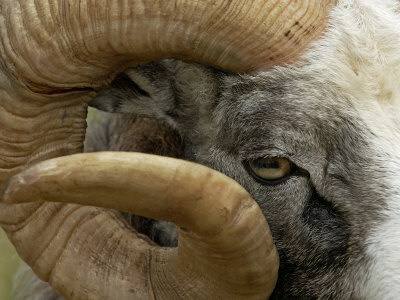 The Hebrew word and root for "ram" means the ram as food, the ram as a sacrifice, the skins dyed for the tabernacle. It means a pillar, door post, door jambs, pilaster (support). It means strong man, leader, chief, mighty tree like a terebinth, oak, or palm. In architecture, it is the term that refers to the projecting ledge or covering that surrounds the top and two sides of a door (Jesus said, "I am the door of the sheep." Jn. 10:7) on a building, often adorned with columns. It means powerful, mighty, strength, strong God. The Hebrew word for ram makes up the root of the name "El", which is part of the name of God. So the ram is identified with the Father, God.
The horns of the ram in Hebrew has the meaning to radiate, emit beams, shine, rays of light.
The ram was used as a sacrifice in the worship of the tabernacle as a peace offering(Lev. 9:4, 18, 16:3), a trespass offering (Lev. 19:22), as the ram of consecration (Ex. 29:15-22, 27, 31, 32), and as the ram of atonement (Num. 5:8).
As we know, God provided a ram caught in a thicket (entwined or braided branches, as a sukkah, or tabernacle) as a sacrifice in place of Abraham's son, Isaac (Gen. 22:13). We say that this ram represents Jesus, but I believe that the ram depicted in this encounter is the Father. Abraham travelled with Isaac to "the land of Moriah". What does "Moriah" mean? The Concordance says it means "Chosen by Jehovah". But the Hebrew words mean "to see, look at, perceive, consider, to be visible, to appear, to be shown, to look at each other, to face, Jah (Jehovah)", or the Father God. Abraham is brought to a place where he will see God face to face. He will perceive and consider God, Who is making Himself visible in this place, and in this situation, a situation of sacrifice.
I am saying that the ram in scripture is a depiction of the Father. A ram, as an animal, is a father, or sire, to its offspring, which are lambs.
I would also like to expand this thought by looking at the unconditional faithfulness and fealty of the relationship between Jesus and His Father:
"Then Jesus answered and said to them, "Most assuredly, I say to you, the Son can do nothing of Himself, but what He sees the Father do; for whatever He does, the Son also does in like manner. For the Father loved the Son, and shows Him all things that He Himself does; and He will show Him greater works than these that you may marvel." Jn. 5:19-20
The above statement is very emphatic and clear and many times Jesus emphasizes the fact that He only says and does the things that He sees His Father doing (Jn. 8:38, 10:32, 37-38, 14:31, etc.).
I believe that one reason the Son is so determined to serve His Father so faithfully is because He saw His Father sacrifice Himself. Perhaps you may think this is a radical statement, but I believe the Son's relationship with the Father may very well be based upon this. Let us look at the following scripture:
"Then Jesus said to them, "When you lift up (crucify) the Son of Man, then you will know that I am He, and that I do nothing Myself; but as My Father taught Me, I speak these things. And He who sent Me is with Me. The Father has not left Me alone, for I always do those things that please Him." Jn. 8:28-29
The Son is emulating the Father, including even in His death. Why should we think that the crucifixion, or sacrifice, is excluded from the acts the Son sees the Father, Himself, doing?
Jesus makes it clear to us that no one takes His life from Him, but He freely gives it up:
"Therefore My Father loves Me, because I lay down My life, that I may take it again. No one takes it from Me, but I lay it down of Myself. I have power to lay it down, and I have power to take it again. This command I have received from My Father." Jn. 10:17-18
Jesus told us in Jn. 5:19-20, (see above) that whatever the Father does, the Son does in like manner (likewise: equally, in the same way). Can't we therefore assume that the Son willingly lays down His life because He saw His Father do it also?
We may ask how the Father can sacrifice Himself, laying His life down, when He is not flesh, but Spirit? When He is eternal and everlasting? We can only say that Jesus sacrificed Himself before He became flesh, while He was Spirit, so this is possible:
"All who dwell on the earth will worship Him, whose names have not been written in the Book of Life of the Lamb slain from the foundation of the world." Rev. 13:8
The Lamb, the offspring of the Ram, was slain before He was ever born in the flesh on earth. Before the foundation of the world, Jesus and the Father were one, the Father being in the Son (Jn. 17:20-26), when also the Lamb was slain in the Spirit.
A father does not ask a son to do something he has not done himself, or is not willing to do himself.
A son who only does what he sees his father doing, does not give up his life, unless he has seen his father do the same.
This only begotten Son emulates His Father in all ways. Even when He sacrificed Himself, He was taking us to the place, Moriah, where He could show us the Father.
"...Lord, show us the Father...He who has seen Me, has seen the Father." (Jn. 14:8-9).
Our Father is the Ram of sacrifice.
"Now Behold the Lamb"
https://www.youtube.com/watch?v=7CK1R1suY6U
"Worthy Is The Lamb"
https://www.youtube.com/watch?v=LAplJ0_jDFc
The Hebrew word and root for "ram" means the ram as food, the ram as a sacrifice, the skins dyed for the tabernacle. It means a pillar, door post, door jambs, pilaster (support). It means strong man, leader, chief, mighty tree like a terebinth, oak, or palm. In architecture, it is the term that refers to the projecting ledge or covering that surrounds the top and two sides of a door (Jesus said, "I am the door of the sheep." Jn. 10:7) on a building, often adorned with columns. It means powerful, mighty, strength, strong God. The Hebrew word for ram makes up the root of the name "El", which is part of the name of God. So the ram is identified with the Father, God.
The horns of the ram in Hebrew has the meaning to radiate, emit beams, shine, rays of light.
The ram was used as a sacrifice in the worship of the tabernacle as a peace offering(Lev. 9:4, 18, 16:3), a trespass offering (Lev. 19:22), as the ram of consecration (Ex. 29:15-22, 27, 31, 32), and as the ram of atonement (Num. 5:8).
As we know, God provided a ram caught in a thicket (entwined or braided branches, as a sukkah, or tabernacle) as a sacrifice in place of Abraham's son, Isaac (Gen. 22:13). We say that this ram represents Jesus, but I believe that the ram depicted in this encounter is the Father. Abraham travelled with Isaac to "the land of Moriah". What does "Moriah" mean? The Concordance says it means "Chosen by Jehovah". But the Hebrew words mean "to see, look at, perceive, consider, to be visible, to appear, to be shown, to look at each other, to face, Jah (Jehovah)", or the Father God. Abraham is brought to a place where he will see God face to face. He will perceive and consider God, Who is making Himself visible in this place, and in this situation, a situation of sacrifice.
I am saying that the ram in scripture is a depiction of the Father. A ram, as an animal, is a father, or sire, to its offspring, which are lambs.
I would also like to expand this thought by looking at the unconditional faithfulness and fealty of the relationship between Jesus and His Father:
"Then Jesus answered and said to them, "Most assuredly, I say to you, the Son can do nothing of Himself, but what He sees the Father do; for whatever He does, the Son also does in like manner. For the Father loved the Son, and shows Him all things that He Himself does; and He will show Him greater works than these that you may marvel." Jn. 5:19-20
The above statement is very emphatic and clear and many times Jesus emphasizes the fact that He only says and does the things that He sees His Father doing (Jn. 8:38, 10:32, 37-38, 14:31, etc.).
I believe that one reason the Son is so determined to serve His Father so faithfully is because He saw His Father sacrifice Himself. Perhaps you may think this is a radical statement, but I believe the Son's relationship with the Father may very well be based upon this. Let us look at the following scripture:
"Then Jesus said to them, "When you lift up (crucify) the Son of Man, then you will know that I am He, and that I do nothing Myself; but as My Father taught Me, I speak these things. And He who sent Me is with Me. The Father has not left Me alone, for I always do those things that please Him." Jn. 8:28-29
The Son is emulating the Father, including even in His death. Why should we think that the crucifixion, or sacrifice, is excluded from the acts the Son sees the Father, Himself, doing?
Jesus makes it clear to us that no one takes His life from Him, but He freely gives it up:
"Therefore My Father loves Me, because I lay down My life, that I may take it again. No one takes it from Me, but I lay it down of Myself. I have power to lay it down, and I have power to take it again. This command I have received from My Father." Jn. 10:17-18
Jesus told us in Jn. 5:19-20, (see above) that whatever the Father does, the Son does in like manner (likewise: equally, in the same way). Can't we therefore assume that the Son willingly lays down His life because He saw His Father do it also?
We may ask how the Father can sacrifice Himself, laying His life down, when He is not flesh, but Spirit? When He is eternal and everlasting? We can only say that Jesus sacrificed Himself before He became flesh, while He was Spirit, so this is possible:
"All who dwell on the earth will worship Him, whose names have not been written in the Book of Life of the Lamb slain from the foundation of the world." Rev. 13:8
The Lamb, the offspring of the Ram, was slain before He was ever born in the flesh on earth. Before the foundation of the world, Jesus and the Father were one, the Father being in the Son (Jn. 17:20-26), when also the Lamb was slain in the Spirit.
A father does not ask a son to do something he has not done himself, or is not willing to do himself.
A son who only does what he sees his father doing, does not give up his life, unless he has seen his father do the same.
This only begotten Son emulates His Father in all ways. Even when He sacrificed Himself, He was taking us to the place, Moriah, where He could show us the Father.
"...Lord, show us the Father...He who has seen Me, has seen the Father." (Jn. 14:8-9).
Our Father is the Ram of sacrifice.
"Now Behold the Lamb"
https://www.youtube.com/watch?v=7CK1R1suY6U
"Worthy Is The Lamb"
https://www.youtube.com/watch?v=LAplJ0_jDFc
