Showing posts with label lamb. Show all posts
Showing posts with label lamb. Show all posts
Friday, March 26, 2021
Priesthood
Peter wrote about the profound meaning of the priesthood of the believer in Christ: "...you were not redeemed with corruptible things, like silver or gold...but with the precious blood of Christ, as of a lamb without blemish and without spot...having been born again, not of corruptible seed but incorruptible, through the word of God which lives and abides forever...Coming to Him as a living stone, rejected indeed by men, but chosen by God and precious, you also, as living stones, are being built up a spiritual house, a holy priesthood, to offer up spiritual sacrifices acceptable to God through Jesus Christ...you are a chosen generation, a royal priesthood, a holy nation, His own special people, that you may proclaim the praises of Him who called you out of darkness into His marvelous light;" (1 Pet. 1, 2, excerpts).
We entered into this priesthood by the blood of the Lamb without spot, Jesus. Thousands of years ago, by the blood of a lamb without spot, a people were "born again" out of the darkness of their bondage to the Egyptians, and into the marvelous light of bondservice to the God Who delivered them. This is remembered by command of the LORD as Passover, which is this weekend. Shortly after the Israelites' deliverance out of Egypt, the LORD commanded the assembly of the tabernacle. He then commanded Moses regarding the setting apart and consecration of the priesthood, who would serve Him in the tabernacle. This priesthood would have no earthly inheritance, but would receive an inheritance from a portion of the sacrificial offerings to God (which propheticlly pointed to the sacrifice of Christ).
This week's Sabbath Torah reading, titled Tzav, or "Command!", is from Leviticus, a Book also known as Torat Kohanim or "The Teachings of the Priests". In Chapter 8, Moses himself, had to prepare Aaron and his sons for the priesthood according to the command of the LORD. He had to wash Aaron and his sons. Moses had to dress them in their priestly garments, which differentiated them, or set them apart, for their service in the tabernacle. These garments of several pieces included the breastplate containing the Urim and the Thummim, the Lights and Perfection. After Aaron and his sons laid their hands on the animals to be sacrificed for purification, Moses had to kill and burn the offerings that would sanctify the area in which Aaron and his sons would minister, the altar and the laver. Following the same practice again as God commanded, Moses had to sacrifice a second ram, the ram of consecration, and touch Aaron and sons with its blood, and with the anointing oil. At the end of the solemn process, Moses told Aaron and his sons the command of the LORD: "And you shall not go outside the door of the tabernacle of meeting for seven days, until the days of your consecration are ended. For seven days he (Moses) shall consecrate you...to make atonement for you. Therefore you shall stay at the door of the tabernacle of meeting day and night for seven days and keep the charge of the LORD, so that you may not die...so Aaron and his sons did all the things that the LORD had commanded by the hand of Moses." (Lev. 8:33-36). All of these preparations had to be completed before Aaron and his sons could perform their ministry which included the handling of the blood sacrifices and offerings. It is interesting that according to some Jewish commentaries, the period of seven days, or a week, as mentioned above, represents natural, physical time. By extension, the eighth day goes beyond physical time into the realm of eternity. So the consecration process that lasts for "seven days", really means for a lifetime.
In this Sabbath's haftarah reading portion from the Book of Malachi, the LORD issues a prophetic warning for His priesthood: "...And the Lord, whom you seek, will suddenly come to His temple, even the Messenger of the covenant, in whom you delight. Behold, He is coming," says the LORD of hosts. But who can endure the day of His coming? And who can stand when He appears? For He is like a refiner's fire...He will purify the sons of Levi, and purge them as gold and silver, that they may offer to the LORD an offering in righteousness. Then the offering of Judah and Jerusalem will be pleasant to the LORD, as in the days of old, as in the former years." (Mal. 3:1-4). As the priesthood ("sons of Levi") no longer took their consecration seriously, the sacrificial offerings and tithes were also devalued in the eyes of the whole nation, according to Malachi 3. Because of the loss of consecration among the priests, the proud and the wicked seemed to prosper without suffering consequences. Then the priests and the people began to think that there was no benefit for them to serve God or to keep His ordinances. The LORD explained the blessings in every area that follows a people who fear the LORD and meditate upon His name: "They shall be Mine says the LORD of hosts, on the day when I make them My jewels (special treasure). And I will spare them as a man spares his own son who serves him. Then you shll again discern between the righteous and the wicked, between one who serves God and one who does not serve Him." (Mal. 3:17-18). The effect of the priesthood upon the people and the nation was so great, that the Messiah Himself would judge and purge the worldly condition of the priesthood with His coming. Notice that the priesthood in Malachi has an expectancy of the coming of this Messenger, the Lord, the Messiah, "whom you seek...in whom you delight", but they were not in the spiritual condition necessary to receive His looked-for coming, nor, consequently, to prepare the people for His coming.
This coming Sabbath is a very special Sabbath. It is Shabbat haGadol, the Sabbath before Passover. It is the Sabbath that focuses on the selection and separation of the lamb without spot, whose blood was applied on the doorposts of the Israelites to protect them from the plague of death in Egypt. As the holy and royal priesthood, sanctified and set apart by the Blood of the Lamb, Jesus, as Peter wrote, we must take our consecration in that precious Blood solemnly and seriously. Our attitude regarding our sanctification as priests of Christ, and our priestly service to God cannot be allowed to be profaned or compromised by the world and its ways and thoughts, as was the case in Malachi. If our handling of the incorruptible Sacrifice that sanctified us, the Blood of the Lamb, becomes devalued in our own eyes and lives, it will become devalued in the eyes of other men, as happened in Malachi. If we fail to realize that the consecration of our royal priesthood is not just for certain days or seasons, but for a lifetime, then we fail to handle the Blood of the Lamb with consecrated hands. If we leave the tabernacle of meeting (with the LORD), leave His presence, and enter into the presence of the profane and corrupt, or perhaps try to keep one foot in the tabernacle, and one foot out, we lose our consecration to handle the precious Blood. The living tabernacle of God, which we are, containing the priesthood of salvation, which we are, is in the world, but not of the world (Jn. 17:14-18). We are to act upon the world, not the world upon us.
As part of the work of salvation, Isaiah prophesies of rebuilding and repairing of ruins and desolations. He also prophesies concerning the priesthood of salvation: "But you shall be named the priests of the LORD, they shall call you the servants of our God...For I the LORD love justice; I hate robbery for burnt offering; I will direct their work in truth, and will make with them an everlasting covenant." (Isa. 61:6,8). In the same manner of the robes of Aaron's priesthood, the priesthood of salvation is also distinctively arrayed according to Isaiah: "For He has clothed me with garments of salvation, He has covered me with the robe of righteousness, as a bridegroom decks himself with ornaments, and as a bride adorns herself with her jewels." (v. 10). The blessing of this salvation priesthood not only transforms the spiritual wasteplaces, but will affect future generations: "Their descendants shall be known among the nations, and their offspring among the people. All who see them shall acknowledge them, that they are the posterity whom the LORD has blessed." (v. 9). This is a priesthood of transformation, because they have been born from the Blood of the Lamb, Jesus Christ, an incorruptible seed.
The priesthood not only served in the tabernacle and the temple of the Old Testament, but, as an earthly shadow of the heavenly priesthood, they also had a prophetic significance. In the events leading up to the first coming of Christ, the priesthood played a foundational role. A certain priest experienced an angelic visitation while he was performing his service in the temple at the altar of incense before the veil in the Holy Place. The angel prophesied to this priest, Zacharias, that he and his wife, who was barren, would miraculously conceive a son who would prepare the way of the Lord. The angel struck this consecrated priest, who was anointed with the spiritual authority of his office, dumb to prevent him from speaking any word of doubt that would prevent the miraculous prophesied birth. His miracle son was indeed born, and as an only son of a priest, this son would also have been a kohan, a priest. This miraculous son, John the Baptist, fulfilled his priestly role in the coming of Jesus by using the Jordan River as a giant laver in which he washed the people in a baptism of repentance to prepare them to receive their Messiah. This same priest, John, would be the first to recognize and announce Jesus as the Lamb of God who takes away the sin of the world (Lk. 1:5-25, 39-45, 57-80, 3:1-22, Jn. 1:19-35).
Can we doubt that God will continue to follow the pattern that He established, and use us, the priesthood of salvation, in the events leading up to the second coming of Christ, as He did with the first?
In the Book of Revelation, the royal priesthood spoken of by Peter, above, is seen. In the first chapter, it is identified: "To Him who loved us and washed us from our sins in His own blood, and has made us kings and priests to His God and Father, to Him be glory and dominion forever and ever. Amen." (Rev. 1:5-6). The salvation priesthood sings a new song as the end time events are unfurled in heaven by the Lamb: "And You have redeemed us to God by Your blood out of every tribe and tongue and people and nation, and have made us kings and priests to our God; and we shall reign on the earth." (Rev. 5:9-10, excerpt).
Let's read again the verses from 1 Peter that began this entry, and determine that on this Shabbat haGadol before Passover, may we be consecrated once again, re-enter the tabernacle of His presence, and offer the spiritual sacrifices worthy of God, in our holy and royal priesthood service to Him. Our Father "commands!" regarding His priesthood.
If you would like to enter the royal priesthood to our Father through His Son, Jesus, you can pray:
Heavenly Father, I come to You through Jesus, Your son, who makes the way for me by His Blood, as the Lamb of God slain before the foundation of the world. This Passover, I pray that this precious sacrifice that delivered me from slavery to sin and death, and cleanses me from all unrighteousness, would consecrate me fresh and new as a priest bringing my spiritual sacrifice to You. I believe Jesus died for me and rose again from the dead. I believe He is returning soon, as Malachi wrote. I believe that He baptizes me with the fire of the Holy Spirit, so that I may serve You in consecration all the days of my life. I pray and receive these things in Jesus' name. Amen."

Saturday, July 14, 2018
Hakal-HaShem
This is part 2 of the discussion that we began in the last entry. In the previous post, we looked at the house of God, built by the Son of David, Jesus, which is a house, or temple, for the Father's name, Hakal HaShem. It is a place of miraculous, delivering, restoring, overcoming prayer for all nations. We are that living house, built out of the death and resurrection of Jesus Christ (Jn. 2:18-22). This spiritual and living house, which we are, is built after the same prophetic pattern of the natural temple built by David's son, King Solomon (1 Kings 8). We should understand what scripture has said about that house, as we become built into the spiritual house after the pattern, so please read the previous entry. Jesus has great, even violent zeal for this house built from His blood and body (Mt. 21, Mk. 11, Lk. 19, Jn. 2). This living house worships God in Spirit and in Truth. This place for the Father's name, both in the earth, in the Spirit, and as we will see, in heaven, will become the focal point in the showdown between the holiness of God, and the eternal evil of Satan.
Both a natural temple, the spiritual temple, and the heavenly temple of the name of God, have important roles in the End Times, leading up to the return of Christ. We are living in that time, and we must become aware of our vital, spiritual role.
The Apostle Paul described the events that must take place before the day of Christ's return, and our gathering together to Him:
"Let no one deceive you by any means; for that Day will not come unless the falling away comes first, and the man of sin (lawlessness) is revealed, the son of perdition, who opposes and exalts himself above all that is called God, or that is worshipped, so that he sits as God in the temple of God, showing himself that he is God....And then the lawless one will be revealed, whom the Lord will consume with the breath of his mouth and destroy with the brightness of His coming. The coming of the lawless one is according to the working of Satan, with all power, signs, and lying wonders..." 2 Thess. 2:3-9 (excerpt)
The goal of the one we know as the Antichrist, empowered by Satan, is to inhabit the physical temple of God, as God. Although sometimes we don't recognize the importance of the place of God's name, the Antichrist evidently will know and understand it, and desire it above all things. He reflects Satan's covetous desire in this (Isa. 14:12-15). This spirit of lawlessness is already at work in the earth (2 Thess. 2:7), as we can also plainly see as we look at the events of today. "Lawlessness" describes our times perfectly.
Those who are deceived by the antichrist succumb to that condition because they have chosen to turn away from the truth of God: "...because they did not receive the love of the truth, that they might be saved." (v. 10).
We may say that though the antichrist may seat himself in the earthly temple of God yet to be built, he will not be able to inhabit us, the living, spiritual temple of Christ. Actually, Jesus warns that the spiritual temple is in danger as well:
"Then if anyone says to you, "Look, here is the Christ!", or "There!" do not believe it. For false Christs and false prophets will rise and show great signs and wonders to deceive, if possible, even the elect (eklektos: picked out, chosen by God to obtain salvation; choose out for one's self as Christ chose the disciples). See, I have told you before hand."
Mt. 24:23-25
As we, the chosen for salvation, turn further and further from the truth of God, as we are currently doing, we become very vulnerable to all spiritual lies and deceptions, and particularly this deception. Yes, it is very possible that the antichrist may try to inhabit even this living temple of God's name. If he cannot inhabit it by our permission, he is not averse to inhabiting it by force. We must be prepared against that. Paul exhorts the church in 2 Thess. 2 to "stand fast" and hold to what we have been taught (v. 13-15). If we doubt the elect's vulnerability, we can see it in the pitiful question that Jesus asked: "Nevertheless, when the Son of man comes, will He really find faith on the earth?" Lk. 18:8
The Book of Revelation, chapter 13, describes the antichrist as a "beast" (dangerous, venomous, wild animal, preparing destruction, and hunting for men as prey). Also said of the beast:
"Then he opened his mouth in blasphemy against God, to blaspheme (speaking evil, slanderous, railing, abusively) His name, His tabernacle, and those who dwell in heaven." v.6
He is allowed to make war on the saints, and to overcome them. Authority is given to him over every tribe, tongue and nation (v. 7).
What is the living tabernacle of God, the place of His name, to be doing in all this? I can tell you that the heavenly tabernacle is singing to the Lamb, Jesus, and declaring with all of their might:
"You are worthy to take the scroll, and to open its seals; for You were slain and have redeemed us to God by Your blood out of every tribe and tongue and people and nation, and have made us kings and priests to our God; and we shall reign on the earth...Worthy is the Lamb who was slain to receive power and riches and wisdom, and strength and honor and glory and blessing!" Rev. 5:9-12
This is what the heavenly temple of God is saying. This is to be our song and declaration as God's spiritual temple, as well. Like the heavenly temple, this living spiritual temple within us is the place where the Lamb of God is enthroned. Within this spiritual temple, miraculous intercessory prayer takes place, by which the Father sends the answer of all-powerful deliverance.
After the proclamation in the heavenly temple, all creation, every creature in heaven, on earth, under the earth, and in the sea, also begins to proclaim the eternal rulership of Christ. And the judgment seals begin to be opened by Him.
As the persecution of the people of God becomes intense, as they are being chased down to be devoured (Rev. 12), again, we see the worship and praise in the heavenly temple calling forth the destruction of those who destroy the earth (Rev. 11:16-18). And then intercession of the temple of God:
"Then the temple of God was opened in heaven, and the ark of His covenant was seen in His temple. And there were lightnings, noises, thunderings, an earthquake, and great hail."
Rev. 11:19
God's people are miraculously delivered from the flood of destruction (Rev. 12:14-16).
Are we getting a picture of the enormous importance of the temple of God in all of these events?
Before the destruction of the beast, and the bloody system of wealth called Babylon, that sits upon him, the seven angels with the seven bowls full of the wrath of God, the seven last plagues that complete the wrath of God, are released. Yes, these angels are released by the song of Moses, and the song of the Lamb (Saved Israel and the Church together) that come froth out of the temple of God (Rev. 15:1-4).
"And after these things I looked, and behold, the temple of the tabernacle of the testimony in heaven was opened....The temple was filled with smoke from the glory of God and from His power, and no one was able to enter the temple till the seven plagues of the seven angels were completed." Rev. 15:5, 8
The innermost Holy of Holies of the temple of God is opened to be seen by all.
Can we see the importance of our role as the living, spiritual temple, the place for God's name, hakal HaShem, built by the sacrifice of the Lamb of God, cleansed by His zeal for His Father's name, the place where the Lamb of God is enthroned, the place filled with His Spirit and with His glory, with the Father's power of prayer, especially for the very days in which we live now, and will soon see? Can we understand how important it is for us to "stand fast" in the truth that we have been taught, as Paul instructed us to do? A great deal depends upon it.
This topic is huge, but alas, my space here is not! I have learned much in this sturdy, and I hope I have been able to share some of it with you in these last two posts.
Our Father has a living temple, on earth, in heaven, in us, built by His Son. AMEN!
"Bow Down and Worship Him"
https://www.youtube.com/watch?v=4ks05wY8m0s
"Worthy Is The Lamb"
https://www.youtube.com/watch?v=LAplJ0_jDFc
"I Bowed on My Knees"
https://www.youtube.com/watch?v=wc2xGXONv4I
Wednesday, September 30, 2015
Ram
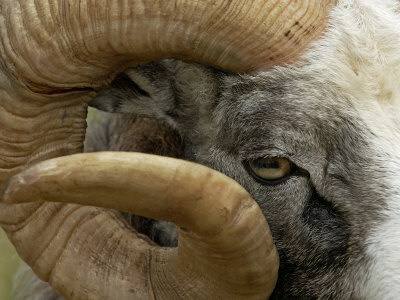
The Hebrew word and root for "ram" means the ram as food, the ram as a sacrifice, the skins dyed for the tabernacle. It means a pillar, door post, door jambs, pilaster (support). It means strong man, leader, chief, mighty tree like a terebinth, oak, or palm. In architecture, it is the term that refers to the projecting ledge or covering that surrounds the top and two sides of a door (Jesus said, "I am the door of the sheep." Jn. 10:7) on a building, often adorned with columns. It means powerful, mighty, strength, strong God. The Hebrew word for ram makes up the root of the name "El", which is part of the name of God. So the ram is identified with the Father, God.
The horns of the ram in Hebrew has the meaning to radiate, emit beams, shine, rays of light.
The ram was used as a sacrifice in the worship of the tabernacle as a peace offering(Lev. 9:4, 18, 16:3), a trespass offering (Lev. 19:22), as the ram of consecration (Ex. 29:15-22, 27, 31, 32), and as the ram of atonement (Num. 5:8).
As we know, God provided a ram caught in a thicket (entwined or braided branches, as a sukkah, or tabernacle) as a sacrifice in place of Abraham's son, Isaac (Gen. 22:13). We say that this ram represents Jesus, but I believe that the ram depicted in this encounter is the Father. Abraham travelled with Isaac to "the land of Moriah". What does "Moriah" mean? The Concordance says it means "Chosen by Jehovah". But the Hebrew words mean "to see, look at, perceive, consider, to be visible, to appear, to be shown, to look at each other, to face, Jah (Jehovah)", or the Father God. Abraham is brought to a place where he will see God face to face. He will perceive and consider God, Who is making Himself visible in this place, and in this situation, a situation of sacrifice.
I am saying that the ram in scripture is a depiction of the Father. A ram, as an animal, is a father, or sire, to its offspring, which are lambs.
I would also like to expand this thought by looking at the unconditional faithfulness and fealty of the relationship between Jesus and His Father:
"Then Jesus answered and said to them, "Most assuredly, I say to you, the Son can do nothing of Himself, but what He sees the Father do; for whatever He does, the Son also does in like manner. For the Father loved the Son, and shows Him all things that He Himself does; and He will show Him greater works than these that you may marvel." Jn. 5:19-20
The above statement is very emphatic and clear and many times Jesus emphasizes the fact that He only says and does the things that He sees His Father doing (Jn. 8:38, 10:32, 37-38, 14:31, etc.).
I believe that one reason the Son is so determined to serve His Father so faithfully is because He saw His Father sacrifice Himself. Perhaps you may think this is a radical statement, but I believe the Son's relationship with the Father may very well be based upon this. Let us look at the following scripture:
"Then Jesus said to them, "When you lift up (crucify) the Son of Man, then you will know that I am He, and that I do nothing Myself; but as My Father taught Me, I speak these things. And He who sent Me is with Me. The Father has not left Me alone, for I always do those things that please Him." Jn. 8:28-29
The Son is emulating the Father, including even in His death. Why should we think that the crucifixion, or sacrifice, is excluded from the acts the Son sees the Father, Himself, doing?
Jesus makes it clear to us that no one takes His life from Him, but He freely gives it up:
"Therefore My Father loves Me, because I lay down My life, that I may take it again. No one takes it from Me, but I lay it down of Myself. I have power to lay it down, and I have power to take it again. This command I have received from My Father." Jn. 10:17-18
Jesus told us in Jn. 5:19-20, (see above) that whatever the Father does, the Son does in like manner (likewise: equally, in the same way). Can't we therefore assume that the Son willingly lays down His life because He saw His Father do it also?
We may ask how the Father can sacrifice Himself, laying His life down, when He is not flesh, but Spirit? When He is eternal and everlasting? We can only say that Jesus sacrificed Himself before He became flesh, while He was Spirit, so this is possible:
"All who dwell on the earth will worship Him, whose names have not been written in the Book of Life of the Lamb slain from the foundation of the world." Rev. 13:8
The Lamb, the offspring of the Ram, was slain before He was ever born in the flesh on earth. Before the foundation of the world, Jesus and the Father were one, the Father being in the Son (Jn. 17:20-26), when also the Lamb was slain in the Spirit.
A father does not ask a son to do something he has not done himself, or is not willing to do himself.
A son who only does what he sees his father doing, does not give up his life, unless he has seen his father do the same.
This only begotten Son emulates His Father in all ways. Even when He sacrificed Himself, He was taking us to the place, Moriah, where He could show us the Father.
"...Lord, show us the Father...He who has seen Me, has seen the Father." (Jn. 14:8-9).
Our Father is the Ram of sacrifice.
"Now Behold the Lamb"
https://www.youtube.com/watch?v=7CK1R1suY6U
"Worthy Is The Lamb"
https://www.youtube.com/watch?v=LAplJ0_jDFc
Monday, May 27, 2013
Shepherd

"The LORD is my shepherd, I shall not want."
Psalm 23:1
We are very familiar with this beautiful Psalm. Our Father in heaven, and His Son, Jesus, are both referred to as shepherds. When we consider this, we have a very pastoral and gentle image of a kind shepherd gently tending to the everyday needs of his sheep. And so the Father does for us continuously. Scripture says of Him:
"He will feed His flock like a shepherd;
He will gather the lambs with His arm,
And carry them in His bosom,
And gently lead those who are with young."
Isa. 40:11
Another image of the shepherd is given in scripture. Jesus says of Himself in Jn 10:11, "I am the good shepherd: the good shepherd giveth His life for the sheep."
What Jesus reveals here is part of the special nature of the shepherd, that we sometimes overlook. A shepherd not only provides food and shelter for his sheep, but he also fends off predators of the flock, even at the risk of his own life.
David, before he became king of Israel, was a shepherd in his youth. He was very familiar with the duties of a shepherd, particularly when it came to protecting the flock of his father, Jesse. David recounts to Saul the occasion when he fought both a bear, and a lion that had taken one of the lambs of his father's flock. He not only killed the two predators, but rescued the lamb right out of their mouths (1 Sam 17:34-35). David had the experience in the LORD of himself and his lamb being delivered out of the mouths of fierce beasts.
We are told in scripture of another instance involving David, and his experience as a shepherd. He had been in the territory of Carmel, with his men, before he became king. While there, he came across the flocks and herds of a rich man named Nabal. As long as David was in the territory, Nabal's shepherds were protected, and all predators were kept from the flocks by day and night. Not one animal was lost, as long as the shepherds stayed with David and his men
(1 Sam. 25:15-16).
In another instance, King David's anger was kindled as the prophet Nathan told him a tale of a poor man's only lamb being taken from him by a rich man. He even told the prophet that he would have this rich man killed for taking the lamb. Even though he was a king at this point in his life, David was moved in his shepherd's heart on behalf of this poor man and his lamb. He didn't immediately understand that the prophet was telling David about the king's own sin in taking another man's wife. When he did understand the point of the story, he was repentant for his actions (2 Sam. 12:1-5).
As for David's shepherd heart, willing to fight for his flock, the LORD said, "I have found David, the son of Jesse. a man after My own heart, who will do all My will." (Acts 13:22). David had the same heart as His heavenly Father - a shepherd's heart.
Dealing so closely with with predatory beasts, both natural and spiritual, can come at a heavy cost to shepherds. Our Father has called men and women to be the shepherds of His people, as well. Sometimes we forget the spiritual danger in being this kind of shepherd, a good shepherd. But it is these shepherds experiences with the delivering power of God that allows them success against the enemies to the flocks of God, and brings great benefit to us.
As our Father is our Shepherd, and the Shepherd of Israel, He also has this same heart for His people, His sheep. Not only does He supply all of our needs, and direct our way, but He fiercely protects us against the spiritual predators that seek to harm us. As Jesus said, He was willing to die to keep our lives.
Our Father is our Shepherd.
"The LORD is My Shepherd"
http://www.youtube.com/watch?v=A-qLa_2GPcM
"Shepherd Me, O God"
http://www.youtube.com/watch?v=6g_hROZbQV8
Subscribe to:
Posts (Atom)