Wednesday, September 30, 2015

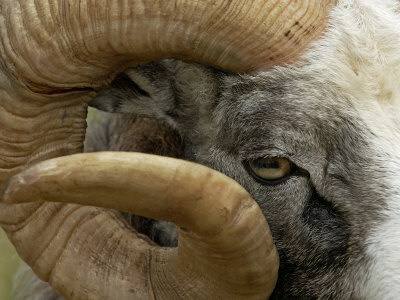
Ram

abraham’s sacrifice

The Hebrew word and root for "ram" means the ram as food, the ram as a sacrifice, the skins dyed for the tabernacle. It means a pillar, door post, door jambs, pilaster (support). It means strong man, leader, chief, mighty tree like a terebinth, oak, or palm. In architecture, it is the term that refers to the projecting ledge or covering that surrounds the top and two sides of a door (Jesus said, "I am the door of the sheep." Jn. 10:7) on a building, often adorned with columns. It means powerful, mighty, strength, strong God. The Hebrew word for ram makes up the root of the name "El", which is part of the name of God. So the ram is identified with the Father, God.
The horns of the ram in Hebrew has the meaning to radiate, emit beams, shine, rays of light.
The ram was used as a sacrifice in the worship of the tabernacle as a peace offering(Lev. 9:4, 18, 16:3), a trespass offering (Lev. 19:22), as the ram of consecration (Ex. 29:15-22, 27, 31, 32), and as the ram of atonement (Num. 5:8).
As we know, God provided a ram caught in a thicket (entwined or braided branches, as a sukkah, or tabernacle) as a sacrifice in place of Abraham's son, Isaac (Gen. 22:13). We say that this ram represents Jesus, but I believe that the ram depicted in this encounter is the Father. Abraham travelled with Isaac to "the land of Moriah". What does "Moriah" mean? The Concordance says it means "Chosen by Jehovah". But the Hebrew words mean "to see, look at, perceive, consider, to be visible, to appear, to be shown, to look at each other, to face, Jah (Jehovah)", or the Father God. Abraham is brought to a place where he will see God face to face. He will perceive and consider God, Who is making Himself visible in this place, and in this situation, a situation of sacrifice.
I am saying that the ram in scripture is a depiction of the Father. A ram, as an animal, is a father, or sire, to its offspring, which are lambs.
I would also like to expand this thought by looking at the unconditional faithfulness and fealty of the relationship between Jesus and His Father:
"Then Jesus answered and said to them, "Most assuredly, I say to you, the Son can do nothing of Himself, but what He sees the Father do; for whatever He does, the Son also does in like manner. For the Father loved the Son, and shows Him all things that He Himself does; and He will show Him greater works than these that you may marvel."    Jn. 5:19-20
The above statement is very emphatic and clear and many times Jesus emphasizes the fact that He only says and does the things that He sees His Father doing (Jn. 8:38, 10:32, 37-38, 14:31, etc.).
I believe that one reason the Son is so determined to serve His Father so faithfully is because He saw His Father sacrifice Himself. Perhaps you may think this is a radical statement, but I believe the Son's relationship with the Father may very well be based upon this. Let us look at the following scripture:
"Then Jesus said to them, "When you lift up (crucify) the Son of Man, then you will know that I am He, and that I do nothing Myself; but as My Father taught Me, I speak these things. And He who sent Me is with Me. The Father has not left Me alone, for I always do those things that please Him."                                                           Jn. 8:28-29
The Son is emulating the Father, including even in His death. Why should we think that the crucifixion, or sacrifice, is excluded from the acts the Son sees the Father, Himself, doing?
Jesus makes it clear to us that no one takes His life from Him, but He freely gives it up:
"Therefore My Father loves Me, because I lay down My life, that I may take it again. No one takes it from Me, but I lay it down of Myself. I have power to lay it down, and I have power to take it again. This command I have received from My Father."          Jn. 10:17-18
Jesus told us in Jn. 5:19-20, (see above) that whatever the Father does, the Son does in like manner (likewise: equally, in the same way).  Can't we therefore assume that the Son willingly lays down His life because He saw His Father do it also?
We may ask how the Father can sacrifice Himself, laying His life down, when He is not flesh, but Spirit? When He is eternal and everlasting? We can only say that Jesus sacrificed Himself before He became flesh, while He was Spirit, so this is possible:
"All who dwell on the earth will worship Him, whose names have not been written in the Book of Life of the Lamb slain from the foundation of the world."        Rev. 13:8
The Lamb, the offspring of the Ram, was slain before He was ever born in the flesh on earth. Before the foundation of the world, Jesus and the Father were one, the Father being in the Son (Jn. 17:20-26), when also the Lamb was slain in the Spirit.
A father does not ask a son to do something he has not done himself, or is not willing to do himself.
A son who only does what he sees his father doing, does not give up his life, unless he has seen his father do the same.
This only begotten Son emulates His Father in all ways. Even when He sacrificed Himself, He was taking us to the place, Moriah, where He could show us the Father.
"...Lord, show us the Father...He who has seen Me, has seen the Father." (Jn. 14:8-9).

Our Father is the Ram of sacrifice.

"Now Behold the Lamb"
https://www.youtube.com/watch?v=7CK1R1suY6U

"Worthy Is The Lamb"
https://www.youtube.com/watch?v=LAplJ0_jDFc


Tuesday, September 8, 2015

Lulav


Recently we have been studying the three fall feasts of Israel, and it has been a blessing and revelation for us. The last feast of the series is the Feast of Tabernacles, also know as the Feast of Ingathering. It occurs during the ingathering of the fall harvest. Much can be written about the Feasts, and their importance to Christians, even as they have been practiced by generations of Jewish people. The Feasts are as much apart of our faith as the Word of God. Jesus observed the feasts faithfully. I cannot go into full detail of the feasts, and Tabernacles specifically, as it could fill a book, and I am no expert on the subject, but I would like to look at a particular aspect of it that I thought was extremely precious and important. Tabernacles, being the final feast, seems especially important to the End Times in which we live. 
Part of the observance of Tabernacles is the building of a structure called a "sukkah". It is a four-sided structure that can have an opening on one side. Another part of the feast is gathering together, or bundling, of four types of vegetation called the "lulav". It is taught that the lulav represents the four-lettered Name of the LORD, yod, he, vaw, he. To me, even the sukkah, because it has four sides, can also represent this holy Name. Any time there is a grouping of four in scripture, we should pay special attention to its revelation of God's Name, known as the Tetragrammaton. I believe that when we hold that lulav in our hands, we are holding onto the Name of the LORD. I believe that when we enter into the sukkah, we are entering into the Name of the LORD. This is very important in these times.
It is said that the four components of vegetation that make up the lulav should represent our attitude and practice toward God. I think these same four items can also represent God's character and promises towards us.

In our study we learned that the lulav bundle is made up of the following:
Etrog, a citrus branch and fruit, represents the heart-our love for Him, and His love for us. It is a love that bore, and continues to bear, the fruit of salvation.
Lulav, is a straight date palm frond, and represents the spine, uprightness or righteousness, steadfastness in our relationship with God, and His faithfulness, righteousness and the steadfastness of God's promises to us.
Hadas, three myrtle branches, whose leaf shape represents the eyes, the vision and discernment. Our eyes are always to be lifted up and open to Him, as His eyes are always seeking us out, and seeing ahead to provide for us.
Aravah, two willow branches kept moist (willows grow by the water). They represent victory over the enemy, and, by shape, the lips, particularly when used by us in prayer. Likewise, God's lips are continually speaking into our lives, and Jesus' lips are continually making intercession for us.

It is so important as we enter these perilous End Times, that we understand the power of holding onto, and entering into, the Name of the LORD, as symbolized in these practices of the Feast of Tabernacles.
Scripture tells us the provision that has been given to us within the Name of the LORD:

"The name of the LORD is a strong tower; The righteous run to it and are safe."  Pro. 18:10
"May the LORD answer you in the day of trouble; May the name of the God of Jacob defend you."          
"Some trust in chariots, and some in horses; But we will remember the name of the LORD our God."           Psalm 20:1, 7
"Our help is in the name of the LORD, Who made heaven and earth."     Psalm 124:8
"And it shall come to pass: That whoever calls on the name of the LORD shall be saved."
                                                 Joel 2:32, Acts 2:21, Rom. 10:13
"So shall they fear the name of the LORD from the west, and His glory from the rising of the sun; When the enemy comes in like a flood, the Spirit of the LORD will lift up a standard against him."       Isa. 59:19
There are so many more scriptures about the power and defense found in the name of the LORD, and in the name of Jesus.

In the End Times, many will be desperate to enter into a name, any name, and to be covered by something, anything:
"And in that day, seven women shall take hold of one man saying, "We will eat our own food and wear our own apparel; only let us be called by your name to take away our reproach."
                                                        Isa. 4:1
"And the kings of the earth, the great men, the rich men, the commanders, the mighty men, every slave, and every free man, hid themselves in the caves and in the rocks of the mountains, and said to the mountains and rocks, "Fall on us, and hide us from the face of Him who sits on the throne and from the wrath of the Lamb!"       Rev. 6:15-16

But for those who have understanding, they will run to another name, to the greatest name, the name that saves and defends, the name that is above every name. They will run into the covering (sukkah) of the name of the LORD:
One will say, "I am the LORD's; Another will call himself by the name of Jacob; Another will write with his hand "The LORD's", and name himself by the name of Israel."   Isa. 44:5

Like the lulav, let us hold His name in our hands. Let us run into His name, and be enveloped and covered by His name, like being covered within the sukkah, in this Feast of Ingathering, in this Feast of Tabernacles.

Our Father's name is in the lulav and sukkah of Tabernacles.


"Sukkot Song-Call Upon His Name"
https://www.youtube.com/watch?v=5vrrlktOvU4

"We Will Run"
https://www.youtube.com/watch?v=vqgHd7mXYVQ

"The Name of the LORD is a Strong Tower"
https://www.youtube.com/watch?v=A9jf0RNfUFc

"Names of God"
https://www.youtube.com/watch?v=T5-6gwssX0Y

"Sinnerman"
https://www.youtube.com/watch?v=Bn5tiuZU4JI

Friday, August 28, 2015

Glory


Spitzer Colorful Masterpiece - 4 Options Available

When we hear about the glory of the LORD, it brings to mind images of light, and splendor. There is more to understand about it, though, There is another side to the glory.
The Hebrew word for glory is "kabod". It means glory, honor, abundance, riches, reverence, splendor, weightiness. The root word of kabod is the word "kabad". It includes many of the meanings noted above, such as rich, honorable, be made abundant. Also included in the meaning of the root word for glory, "kabad", are the meanings to be heavy, weighty, grievous, to be hard, burdensome, to make heavy, dull, unresponsive. This root word "kabad" is used in some scriptures that deal with the judgment of God:

"And the LORD said, Because the cry of Sodom and Gomorrah is great, and because their sin is very grievous..."                    Gen, 18:20

"But when Pharaoh saw that there was respite, he hardened his heart, and hearkened not unto them; as the LORD had said."     Ex. 8:15, 8:32, 9:34, 10:1

"But the hand of the LORD was heavy upon Ashdod, and He destroyed them, and smote them with emerods, even Ashdod and the coasts thereof."      1 Sam. 5:6

As we can see in the above verses, there are two sides to the glory of God.
The glory of the LORD also presided over the judgment of the rebellion of Korah, Dathan, and Abiram (Num. 16:19-21).
The glory of God is  also the measure that will measure all of us:
"for all have sinned and fall short of the glory of God."         Rom. 3:23
By this measure, we all fail except for the fact that Jesus made it possible for us to see the other side of God's glory.

Those who love God, and have received Him as their LORD, see one side of the glory through Christ. It's beautiful, and shining. It is for their enrichment, sanctification, provision and for their covering and protection:

"...the glory of the LORD appeared in the cloud. And the LORD spoke to Moses saying, "...at twilight you shall eat meat, and in the morning, you shall be filled with bread."
                                                                            Ex. 16:10-12
:And there I will meet with the children of Israel, and the tabernacle shall be sanctified by My glory."                                                                  Ex. 29:43

"Then the LORD shall create above every dwelling place of Mount Zion, and above her assemblies, a cloud and smoke by day and the shining of a flaming fire by night. For over all the glory, there will be a covering. And there will be a tabernacle for shade in the daytime from the heat, for a place of refuge, and for a shelter from storm and rain."    Isa. 4:5-6

"That He would grant you, according to the riches of His glory, to be strengthened with might through His Spirit in the inner man."       Eph. 3:16

"And my God shall supply all your need according to His riches in glory by Christ Jesus."
                                                                         Phil. 4:19

Considering the above scriptures, it is no wonder that in Jesus' last prayer before His suffering, as He was praying for His disciples, it was important to Him to pray regarding the glory of His Father:
"And the glory which You gave Me I have given them, that they may be one just as We are one:  I in them, and You in Me; that they may be made perfect in one, and that the world may know that You have sent Me, and have loved them as You have loved Me."  
                                                                        Jn.  17:22-23
We have become one with Christ and with the Father by the inclusion into His glory. This same glory perfects us, even as it unites us. Even if it seems that we are broken into millions of splintered parts in the Body of Christ, being in His glory unites us. It is vital that this glory of God shines from each of us as a witness and a testimony to others who desperately need it.

Numbers 14:21 and Habakkuk 2:14 tells us that the whole earth will be filled with the glory of the LORD, and with the knowledge of His glory, but, sadly, not all will see the same side of the glory. We are living in a time that is calling us to pray, calling us to sober watchfulness, for the glory is coming, and is even now here.

Our Father's glory has two sides.


"The Glory of Your Presence"
https://www.youtube.com/watch?v=psuYGOHJ-1s


"Battle Hymn of the Republic"
https://www.youtube.com/watch?v=e4Xz7WV_qJs


Monday, August 24, 2015

Submarines

submarine : the submarine under the water


I was reminded this morning of something the Lord taught me many years ago. When we are called by the Lord out of darkness and into His marvelous light, we wonder what place we have in the Body of Christ. I can remember so many saying that the Lord called them to be pastors, or prophets, or evangelists, and so on, but especially pastors. Everyone sitting next to me in church claimed they were supposed to be pastors. How could this be?! It was not my job to judge, but it seemed to me that many were coveting offices and positions that they weren't really called to. You probably remember a lot of this going on as well.
At this point, the Lord began to tell me the story of the submarine and the aircraft carrier. I kid you not!
He showed me a huge U.S. aircraft carrier sitting in the sea. Aircraft were being launched from its deck. The planes were coming and going from her. It's large crew were scurrying across its deck. It was very dramatic and impressive. You could almost hear the naval theme "Anchors Aweigh" blasting through the air! (Listen Here). The Lord said that some in the Body were like this aircraft carrier- certainly a mighty weapon in warfare.
Then He showed me a long, dark submarine. He made me think about the characteristics of this vessel. I saw it quietly submerge, going dark, and silent, disappearing beneath the waves. It could travel through shallower depths, even coming very close to a nation's coastline. It also travelled into the deep abysses and canyons of the oceans. It was designed for this purpose, to withstand the depths. Its smaller sized crew often had to spend lengths of time whispering, or not speaking at all, in order for the vessel to run silently. It "saw" differently, through a periscope. It "heard" differently, by the pings of sonar. It was at its most dangerous when you couldn't see it. It could stay silently submerged for up to six months. It could launch nuclear weapons. If all land and air armaments were attacked and destroyed, the last line of defense is the submerged nuclear submarine. But its strength is that fact that it is not seen, heard, nor detected. It is not a showy vessel, nor beautiful to look at, and you certainly can't launch or land aircraft on it, not even a  helicopter. When it runs on the surface of the water, it is not very maneuverable, but under the water, it can turn beautifully, rise and dive sharply and quickly. It is your worst enemy, or your greatest tool of defense. It is specially designed to fill its purpose. It is not as outwardly impressive as an aircraft carrier, but it is perfect for what is needed.
When I considered it, I thought, "Aircraft carriers are very cool, but it's awesome to be a submarine."
Sometimes in the Body of Christ we all want to be aircraft carriers, and indeed, I'm sure many are. But if you have spent many years feeling frustrated or unhappy because you are not being used by God as an aircraft carrier, may I make the case for, and ask you to consider, that it may be time to think about the awesomeness of submarines. I am thrilled and fulfilled, and so grateful to my Father that I only have to surface every six months or so. Since He showed me this wonder, I am so happy in the deep, and in the silence, "hearing" and "seeing" in the special way that He has equipped me to operate. Bless Him always.
You know that the Apostle Paul taught us in scripture that we are not all the same part of the Body, and each part has its own value and purpose. Each part needs the valuable gift of the other parts in order to function as a whole. Yet we still desire certain parts over others. This can turn out very sadly, and be very destructive.
The rebellion of Korah, Dathan, Abiram, and On against the anointing, and calling of Moses and Aaron is just such an example. They coveted the leadership position, and encouraged 250 of the best leaders of the Israelites to join in their rebellion. I would like to look at Korah's story for a moment. Korah was a descendent of Levi's third son, Kohath. Levi's other two sons were Gershon and Merari. The descendants of Gershon and Merari were given charge of the outer areas of the Tabernacle and court, the panels, curtains, frames, ropes, pegs, etc. that went into that assembly. These items were loaded onto carts to be moved from place to place with the people of Israel as they travelled through the wilderness. But the Kohathites were in charge of the inner curtains and furnishings. This included the altars, the lamp stand, the showbread table, the ark of the covenant. These items differed from the others because they could not be loaded onto carts to be moved. The Kohathites had to carry these things on poles on their shoulders. Not only that, but they could not touch the items, which had to be wrapped in special protective coverings (Num. 4). Touching the items meant death. So the Kohathites, which included Korah, had to shoulder these things on poles, rather than put them on a cart. Korah and others were dissatisfied with their place, and assignment. Though they expressed their resentment with Moses, they really resented God, because their roles were determined and assigned by Him.
Their rebellion ended in the horror of their destruction, as they, and all who were with them, were swallowed up by an earthquake (Num. 16). But Num. 26:11 tells us something interesting:
"Nevertheless, the children (sons) of Korah did not die."
The sons of Korah were not destroyed with their father. One descendant of Korah is the prophet Samuel (the descendants of Levi are listed in 1 Chron.6). The Sons of Korah fought alongside David, and were appointed by him as singers and psalmists in the Tabernacle, and Temple later. The Sons of Korah wrote 25 of the Psalms: 42-50, 62, and 72-85. Their Psalms express a spirit of great gratitude and longing for God. Psalm 42 is the inspiration for our great worship song "As the Deer Panteth for the Water".
Korah wanted to be Moses, and coveted his position. But Korah was a worshipper. God specially gifted and designed him and his progeny for this great purpose. How sad that he only saw what someone else had, and did not see his own great gift and destiny.
We cannot afford to live our lives coveting someone else's calling and purpose.  Our Father has designed each of us for a specific purpose. We cannot continue to reject His headship, and His design for us.

Our Father has designed spiritual submarines too!

"As the Deer"
https://www.youtube.com/watch?v=-gaT4q9eJ1U


Saturday, August 22, 2015

Teaching


Childlike Faith Sermon PowerPoint Template

I realized a wonderful moment with the word of God recently. It is not a major teaching, or a deep concept, but when I saw it, the beauty, love, and wisdom of it brought tears to my eyes, and I marveled that I had not realized the principle long before.
The LORD God speaks beautifully, and with great wisdom, about teaching our children about Him, and about His word.
From Deut. 11:18-21 He commands us:
"Therefore you shall lay up these words of mine in your heart and in your soul, and bind them as a sign on your hand, and they shall be as frontlets between your eyes.
You shall teach them to your children, speaking of them when you sit in your house, when you walk by the way, when you lie down, and when you rise up.
...that your days and the days of your children may be multiplied in the land of which the LORD swore to your fathers to give them, like the days of the heavens above the earth."

Our heavenly Father is giving us the perfect way to teach our children about Him. It is a simple way. It is a way that is natural, spiritual, and understands the way children learn.
After all, not many of us can sit for an hour or more, and take in all someone is telling us. But the Father tells us that learning is more effectively done a little at a time:
"Whom will He teach knowledge? And whom will He make to understand the message?...
For precept must be upon precept, precept upon precept,
line upon line, line upon line,
Here a little, there a little."                Isa. 28:9-10

According to Deut. 11, above, the perfect opportunities to teach children about the LORD, are found in small everyday activities that we all share as families. Even the most common activities can be used to tell our children something about the LORD, and His word. I'm sure if I just give a few examples, many more will come to your mind.
When we wake up in the morning, we can tell our children that the LORD's mercies are new every morning. So if something went wrong yesterday, or if we made a mistake, or did something to hurt someone else, we can be sure that the LORD is waiting to give us a new start. We can tell them that if we ask the LORD to forgive us, He is faithful to do so. There are new gifts and mercies appointed to our lives every day.
When we sit down to eat, we can tell our children how the LORD miraculously supplied His people with manna from heaven, when they were in a place where there was no food. We can tell them that while we enjoy bread to eat, Jesus is our Bread of Life. He feeds us life, He sustains our lives more than natural food does.
When we enter our house, we can tell our children how Jesus told us that in His Father's house, there are many mansions, and how Jesus has prepared a place for us in that awesome house. We can tell our children how King David said in the Psalms "I was glad when they said unto me, Let us go into the house of the LORD."
When we walk somewhere with our children, we can tell them how Jesus said "I am the way, the truth and the life."
When we just sit down together, we can use that as an opportunity to tell the children how Jesus is seated at the right hand of the Father, and we are seated there with Him, even while we are seated here on the earth.
I'm sure many more examples are coming to your mind of how we can use simple daily opportunities to teach our children about the LORD.
The results of teaching our children according to Deut. 11, is like the days of the heavens above the earth!
How simple, but how wise, and brilliant He is in telling us this. How much easier it is for a child to learn the ways of God by hearing some gem of truth every day, from everyday life.

Our Father wants us to teach our children about Him.

"Jesus Loves Me"
https://www.youtube.com/watch?v=6JxCgo6iPrg

"Teach Me Your Ways"
https://www.youtube.com/watch?v=lfTTU5w8Vb4

Thursday, July 23, 2015

Goshen


Photo: Egypt. Pyramids. The land of Goshen with pyramids in the distance


The place called Goshen, in Egypt, plays an important role in Genesis 46 and 47. I think the spiritual place of Goshen also plays an important role in today's time and events.
As there was a great famine in Israel, Joseph instructed his newly reconciled family to come to Egypt, and settle in Goshen. He pointed out specifically that "every shepherd is an abomination to the Egyptians." (Gen. 46:34).
The word "Egypt" means in part "double straits (narrow place), enclosure, siege works, distress, bind, besiege, confine, cramp, shut in, show hostility, treat as a foe, to press upon, to compress, to overrun walls of defense". The spiritual place of Egypt is very confining, very oppressive, with a feeling that there is no where to turn, no options of escape. You are pressed in on all sides.
So, perhaps we can see why the Egyptians might find shepherds an abomination. The word "shepherd" is beautiful. It means to pasture, to tend, to graze, to feed, a companion, a special friend, to guard, to care for, to look upon with pleasure, to govern, to rule, to nourish, to feed, to delight in, etc. It is used metaphorically to describe God, and is indeed, one of His names, Jehovah Rohi, the LORD our Shepherd. A shepherd brings the flock or herd to a wide pasture to graze, and ensures a water supply, for cattle and flocks are always thirsty. They physically protect the flock, even at the risk to their own lives, against predators. A spiritual place that tries to confine and enclose, cramp and shut in, would find a true shepherd a great threat to its purpose.
God does not bring us to a place of death. He always brings us to a place of life. How can Egypt, especially as described above, ever be considered a place of life? Within the place called Egypt, God instructed His people through His servant Joseph, who was also a shepherd in his youth, as well as being a governor (shepherd) to Egypt to guide them through seven years of famine. Joseph instructed his brethren to abide in the land of Goshen in Egypt.
The word Goshen means "drawing near". Goshen is a place we come to, if we are wise and obedient, where even in times of pressing and besieging, it becomes a place where we can "draw near" to our Father God, our source of all things that pertain to life. In a place of Egypt there is nothing else that can deliver us, there is nothing  and no one else that can relieve us and restore us. Goshen is that place of drawing near where we can say, even in dire straits:
"The LORD is my shepherd;
I shall not want.
He makes me to lie down in
green pastures;
He leads me beside the
still waters.
He restores my soul;
He leads me in the paths of
righteousness
For His name's sake.
Yea, though I walk through the
valley of the shadow of death
I will fear no evil;
For You are with me;
Your rod and Your staff,
They comfort me.
You prepare a table before me
in the presence of my enemies;
You anoint my head with oil;
My cup runs over.
Surely goodness and mercy
shall follow me
all the days of my life;
And I will dwell in the house
of the LORD
Forever."
                              Psalm 23

It is necessary for us the dwell in the land of Goshen (drawing near), especially when we find ourselves in Egypt. Sometimes we cry out for our Father to draw near to us, but it is essential that we draw near to Him.
"But it is good for me to draw near to God;
I have put my trust in the LORD God,
that I may declare all Your works."            Ps. 73:28

"Assemble yourselves and come;
Draw near together,
You who have escaped from the nations."           Isa. 45:20

"And you will seek Me and find Me, when you search for Me with all your heart.
I will be found by you, says the LORD, and I will bring you back from your captivity..."
                                                                            Jer. 29:13-14

"...let us draw near with a true heart in full assurance of faith, having our hearts sprinkled from an evil conscience and our bodies washed with pure water. Let us hold fast the confession of our hope without wavering, for He who promised is faithful."   Heb. 10:22-23.

"Draw near to God and He will draw near to you. Cleanse your hands you sinners, and purify your hearts, you double-minded."          James 4:8

If we follow our Shepherd to the land of Goshen, where He is leading us, we will find our pasture and still water, even in the place of confinement and besieging.

Our Father has a place called Goshen.


"Draw Me Nearer"
https://www.youtube.com/watch?v=teC0cmS_Y_o

"Lord, I thirst for You"
https://www.youtube.com/watch?v=HOC7XGmzFJg

"Pray"*
https://www.youtube.com/watch?v=MC4kbteMLCg&sns=em

* Thanks to Fran B. for the song "Pray"
**Photo at the top of the page-Goshen area, Egypt

Sunday, July 12, 2015

Garden

Garden
July, 2015

We can get a glimpse of the eternal will and purpose of God as we look at some scriptures dealing with gardens. Even as Adam's marriage to Eve (see "Marriage" post), and all of our marriages, are a type and shadow, a picture, of Christ's relationship with His Church-Bride, I think even the Garden into which the man and woman were placed, points us to a fascinating prophetic image of the Bride of Christ. The Bride has been kept veiled and protected, and, at most, we have had small glimpses of her. But it is now the time to see her more clearly. If we look under the veil, we can see the beauty, the anointing, and the importance of the Bride, not only to Jesus, but to our Father as well by looking at the prophetic picture of the garden. 
The first garden that comes to mind is the Garden of Eden in Genesis.
"The LORD God planted a garden eastward in Eden, and there He put the man whom He had formed..."        Gen. 2:8
 
So, as we can see above, the man was not created in the Garden of Eden, but was put there after the Garden had been planted. If we do a word study of the underlined words of this above verse, we will find some remarkable things.
  • The LORD God planted- means He fastened or fixed the Garden into place
  • He fastened a garden-  meaning an enclosed garden, a chaste woman, a bride.
An example of a garden being used to describe a  bride can be found in Song of Songs 4:12-15:
         "A garden enclosed is my sister, my spouse,
          a spring shut up, a fountain sealed.
         Your plants are an orchard of pomegranates
          with pleasant fruits..."
  • This Garden/Bride was fastened eastward- aforetime, antiquity, that which is before
  • This Garden/Bride was fastened in antiquity, at the beginning, in Eden- pleasure, luxury, dainty, delight, finery.
So, this dainty, delightful Garden/Bride was fixed or fastened from the beginning, in antiquity. Into this Garden/Bride,
  • the LORD God put- set in place, ordained, appointed, directed, made for a sign
  • the man- mankind, human being, rubbed red, shown red, emit redness.
  • that He had formed- pre-determined, pre-ordained, planned of divine purpose
This special being, Adam, was divinely purposed, even before he was created, to be placed in this Garden/Bride. For what divine purpose was he placed there? We can read that purpose in Gen. 2:15:
"Then the LORD God took the man and put him in the garden of Eden to dress and keep it.
  • The LORD God took the man- fetch, lay hold of, seize, take in the hand, marry, take a wife, carry off, be removed
  • The man was put in the garden to dress it- to work, serve as a subject, to serve with Levitical service, to be led to serve.
  • And he was to keep it- keep, guard, observe, give heed, protect, save life, treasure up, celebrate, keep (Sabbath, covenant, commands), perform a vow, preserve
The man was ordained and appointed for service in the same manner of the priesthood, in order to preserve and guard the Garden/Bride, to keep the commands and covenant of God regarding the Garden/Bride. He was physically and spiritually moved from one location to another in order to begin this service. The man was created and formed in a pre-determined divine plan for this important priesthood service.
What we can see is the importance of this Garden/Bride depicted in Genesis that caused the LORD God to fasten it onto the earth, and to appoint a priest to care for, preserve and protect it. The meaning of the Garden/Bride was important enough that when the man neglected to do the service that the LORD God had pre-ordained him to do, he was forced to leave the Garden/Bride, and he could never enter again. This is covered in mystery in many ways, but we can get a beginning glimpse into the divine purpose from scripture.
First of all, the Garden/Bride contained the three Persons of the Trinity. The Father and Son are present in the Garden/Bride, the Son being represented by the Tree of Life that was in the very center of the Garden/Bride. The cool Winds (Ruach) (Gen. 3:8) in the Garden/Bride represent the reviving and refreshing presence of the Holy Spirit. The Garden/Bride ushered in the presence of the LORD God for fellowship with the man.
The Garden/Bride of the Song of Songs mentioned above, is also described as containing very precious trees, plants, and herbs that were used in creating the anointing oil of the priests and kings, and also of use for medicinal purposes. In fact, in another garden of scripture, the Garden/Bride  in which Jesus prayed before He was crucified, was called "Gethsemane", which means an oil or wine press (also oil used for anointing), and also meaning a medicament or unguent, which is used for healing. It is, to this day, full of very old olive trees. All of these things paint a lovely picture for us of some of the qualities of the beautiful Garden/Bride.
The prophet Isaiah admonishes and encourages the people of God to extend their soul to the hungry, and satisfy the afflicted so that they can then become lighted from within by the LORD, who will make them like a watered garden, whose springs of water will not ever fail (Isa. 58:10-11). That whole chapter of Isaiah gives us a further look into God's calling for us as that Garden/Bride. The Garden/Bride is a place of ministry, a place of comfort and healing to those who have need. A creative power, and a restoring and rebuilding purpose flows from the Garden/Bride, if she will walk in that calling of God as we see in the next verse (Isa. 58:12):
"Those from among you
Shall build the old waste places;
You shall raise up the foundations
of many generations;
And you shall be called the
"Repairer of the Breach",
"The Restorer of Paths to Dwell in".
 
The Bride in New Testament scripture plays a very important role in the earth, especially in End-Time events, and is a purpose and calling in every believer's life.
The Bride in the Book of Revelation plays a part with the Holy Spirit in calling and bringing the return of the Messiah to rule and reign on the earth (Rev. 22:17).
As Isaiah prophesied about the Garden/Bride above, together with the Lamb of God, the Bride has a part in bringing forth the New Creation, even the descending of the New Jerusalem to the earth, "being adorned as a Bride for her Husband" (Rev. 21:2). And once again, the presence of God will dwell with men.
"God Himself will be with them and be their God." (Rev. 21:3). AMEN.
An important thing to note before we leave this topic: all of the gardens mentioned in the above scriptures were directly fed by living waters. A mighty river came from Eden to water that garden. The meaning of the word used here for "river" is to flow, to shine, to be radiant, to flow together, even describing a conflux of people, to give light, to be glad, to rejoice. It is the river of salvation, the river of the Gospel of Good News. After passing through the Garden/Bride, it became four mighty rivers that watered other lands. The Gospel of Salvation flows through the Garden/Bride, and from her, it is dispersed throughout other lands and peoples in all directions. The Garden/Bride of Song of Songs, and Isaiah 58 were both watered by springs and fountains within and without them. The Garden of Gethsemane, mentioned above, is beside the Kidron Valley, where a river flows during the rainy season. The Garden/Bride of Rev. 21 and 22 had a pure river of water of life running through her. Trees with healing leaves also grew in her. What are these waters mentioned here, but the written and living Word, Jesus (Jn. 7:37-38). The relationship between the garden and the water is a close one. A garden cannot be watered by water that is not physically touching it. It is necessary to keep ourselves close, even right next to, the source of our water if we wish to become that Garden/Bride. A garden far separated from its water source soon becomes a desert, a wasteland.
Although the first Adam failed to fulfill his priestly service, not only to the Garden/Bride, but to his own natural bride as well, the Second Adam, Jesus Christ, kept all that the Father had placed into His care and hands, and He kept them in, and by, the power of His Father's name (Jn. 17:12). He is very desirous of His Bride, and the coming Marriage Supper of the Lamb.
The beauty, mystery, purpose and anointing of the Bride of Christ is revealed by our Father even back in the Book of Genesis, and throughout scripture. It is ready to be revealed in us, to us, and through us. It is for us to seek it out, and unveil it.
 
Our Father has fastened a Garden/Bride in the earth.
 
"In The Garden"
 
"O Come, O Come Emmanuel"
 
"Comfort Ye, My People"
 
*Special thanks Pastor Ken S. for his encouragement and feedback, and to Fran B. for her thoughts and contributions to this post
 ** Photo at the top of the page-Garden of Gethsemane, Jerusalem, Israel